
Name CardsFirst Set Of Botany Cards
The first photo is the maker's own. The other shots are illustrative.
Inv. no. NIE-0195A1
- Maker
- Nienhuis Montessori, since 1929
- Approval
- AMI
- Card Material
- Plastic
- EAN
- 8719924010379
Final price incl. VAT. Delivery €5.90, €129.10 to go for free delivery.
Advice, warranty and returns are handled by us.
Why it costs €19.90
Behind the price of the original are things you can check yourself.
AMI approval
The material is approved by the Association Montessori Internationale (AMI). Nienhuis has made Montessori materials since 1929.
A verifiable original
The EAN 8719924010379 is on the box. It is the maker's number, not ours.
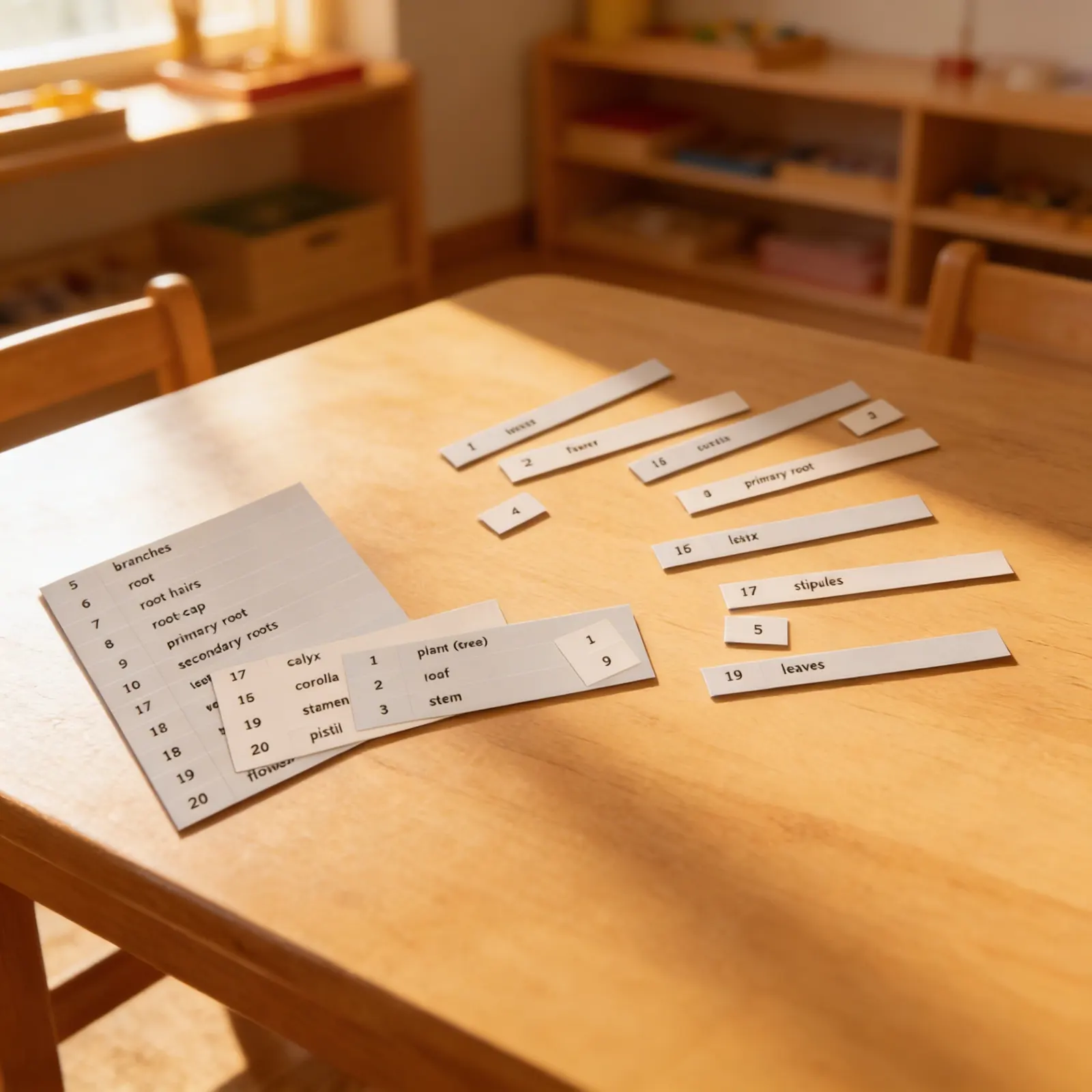
Name Cards in a child's hands
The Name Cards for the First Set of Botany Cards are two sets of plastic labels with the nomenclature of classification. The labels carry only the names and no pictures, so they are used together with the first set of botany cards, which is a separate item. They are meant to let the child connect a name with the card it belongs to: the child reads the name, finds the card and places the name next to it. The labels are plastic and are wiped clean with a damp cloth. For children aged 6 to 12.
Scientific Vocabulary
Builds foundational botanical terminology through visual association and repetition.
Reading Development
Supports reading skills through word-picture matching activities.
Classification Skills
Introduces systematic thinking about the classification of plants.
How to present it
3 tips for parents
- Keep a small set of mastered cards accessible for spontaneous review during daily activities
- Create a nature journal where children can draw and label plants using learned vocabulary
- Visit botanical gardens or nurseries to connect the names on the cards with living plants

If you are not sure it suits your child, we answer in person.
Norbert Kovalčín, founder of Faborino · write to him
There is no review here yet. We will ask you for one after you buy. Write the first review
What's in the Box
- Plastic name labels: 2 sets with the nomenclature of classification
Size and material
| Packaging | 33 × 12 × 1 cm |
| Card Material | Plastic |
| Recommended Age | 6-12 years |
Care
Wipe clean with damp cloth
Frequently Asked Questions
What is in this pack?
Two sets of plastic labels with the nomenclature of classification, for the first set of botany cards. The picture cards are not included.
What age group benefits most from these botany nomenclature cards?
These labels are intended for children aged 6 to 12.
What skills do children develop while using these botanical nomenclature cards?
Children develop botanical vocabulary, reading, classification abilities and scientific observation. The cards also support concentration through matching activities and logical thinking.
Product safety
Manufacturer: Nienhuis Montessori, Anders Celsiusstraat 15, 7442 PB Nijverdal, Netherlands
Name Cards