
Pastry BrushBaking Activity
The first photo is the maker's own. The other shots are illustrative.
Inv. no. NIE-408900
- Maker
- Nienhuis Montessori, since 1929
- Product size
- 15 × 4 cm
- Handle
- Natural wood
- Bristles
- Natural fibers
- EAN
- 8719924047320
Final price incl. VAT. Delivery €5.90, €145.40 to go for free delivery.
Advice, warranty and returns are handled by us.
Pastry Brush in a child's hands
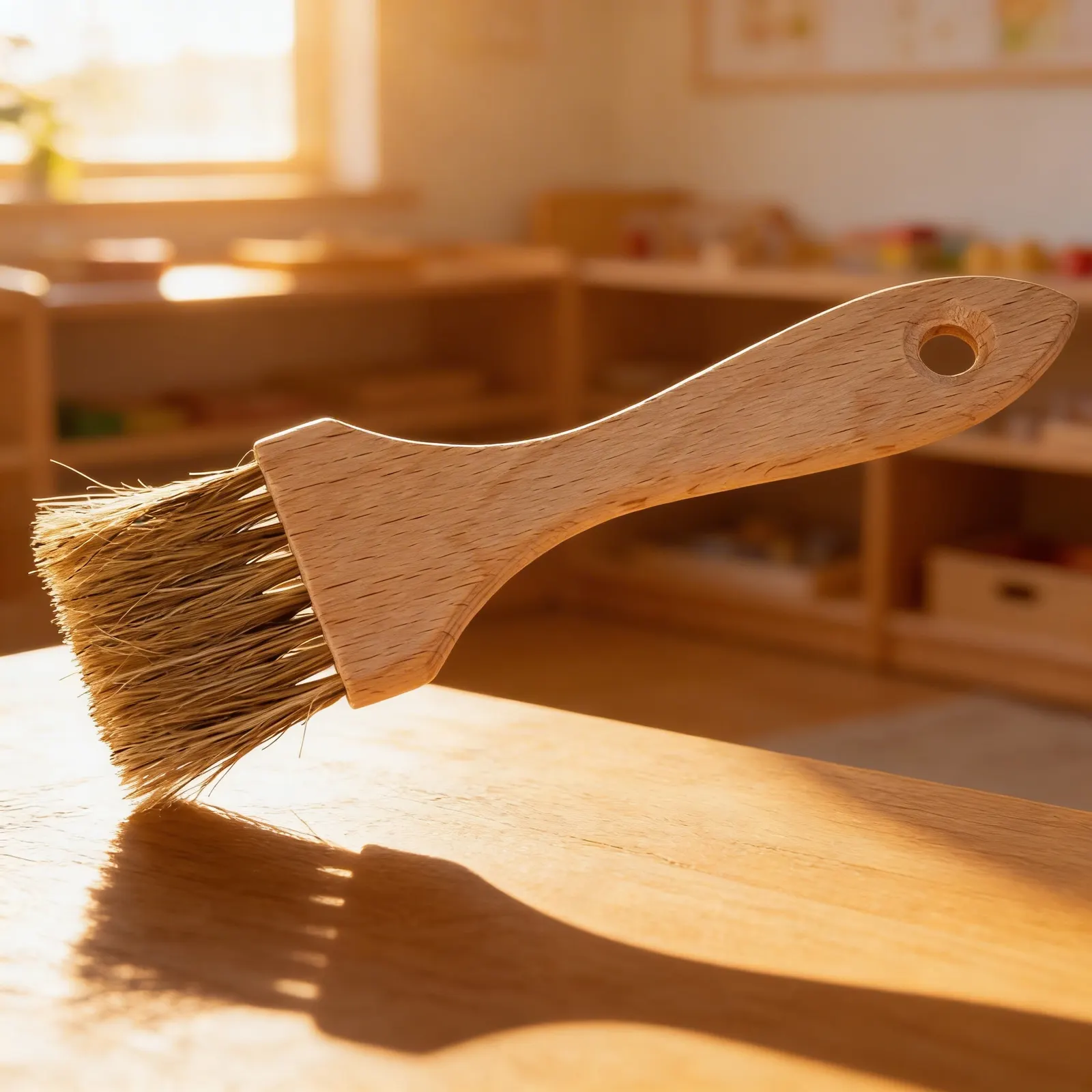
A pastry brush in untreated beech with light horsehair, 15 x 4 cm. Brushing egg or butter onto pastry is one of the few kitchen jobs where doing it carefully shows in the finished thing an hour later, which is a long feedback loop for a small child and worth the wait. Horsehair holds liquid without dripping it, and the flat head covers a bun in two strokes. Untreated wood, so wipe and dry it standing. The baking tools are separate items.
Fine Motor Control
Brushing movements refine wrist rotation and finger coordination essential for writing preparation.
Practical Life Skills
Using real kitchen tools builds confidence and independence in food preparation activities.
Hand-Eye Coordination
Precise brushing actions develop visual-motor integration through purposeful movements.
Care of Environment
Learning to clean and maintain kitchen tools fosters responsibility and order.
How to present it
Place the pastry brush on a tray with a small dish of flour and a dark placemat. Add a small container for collecting swept flour.
- 1Demonstrate holding the brush with thumb and fingers wrapped around the handle
- 2Sprinkle flour lightly on the placemat
- 3Brush flour from left to right in smooth strokes
- 4Sweep flour into the collection container
- 5Invite the child to try
3 tips for parents
- Keep the brush accessible in a low drawer or basket in your kitchen
- Allow brushing of safe surfaces during actual cooking times
- Accept imperfect results - the process matters more than perfection

If you are not sure it suits your child, we answer in person.
Norbert Kovalčín, founder of Faborino · write to him
There is no review here yet. We will ask you for one after you buy. Write the first review
What's in the Box
- Pastry Brush: Natural wood handle with fiber bristles
Size and material
| Product size | 15 × 4 cm |
| Packaging | 15 × 5 × 1 cm |
| Handle | Natural wood |
| Bristles | Natural fibers |
| Recommended Age | 2.5-6 years |
Care
Hand wash with mild soap, air dry bristles down
Frequently Asked Questions
What practical life activities can my toddler do with this pastry brush?
Children can use this brush for spreading oil or butter on bread, brushing flour off work surfaces, cleaning tables with water, brushing crumbs into a dustpan, and painting with water outdoors. These activities develop hand-eye coordination and prepare the hand for writing.
Is this pastry brush safe for children under 3 years old?
Yes, this brush is specifically designed for ages 0-3 with a child-sized handle and soft natural bristles. Always supervise young children during use, especially those who still explore with their mouths. The natural materials are non-toxic, but the brush should be used for its intended purpose.
How do I clean and maintain the natural bristles?
Rinse the brush with warm water after each use and gently squeeze out excess moisture. Allow it to air dry completely with bristles facing down. For deeper cleaning, use mild soap occasionally. Natural bristles may shed initially but will stabilize with use.
What skills does using a pastry brush develop in toddlers?
Using the pastry brush strengthens pincer grip, develops wrist rotation and control, enhances hand-eye coordination, and builds concentration. The precise movements required prepare the hand muscles for holding a pencil and support the development of fine motor skills essential for writing.
Can this brush be used with real food in toddler cooking activities?
Absolutely! This authentic kitchen tool is perfect for real cooking experiences like brushing egg wash on pastry, spreading butter on toast, or oiling baking pans. Using real tools for meaningful tasks builds confidence and independence while teaching practical life skills.
Product safety
Manufacturer: Nienhuis Montessori, Anders Celsiusstraat 15, 7442 PB Nijverdal, Netherlands
Pastry Brush