
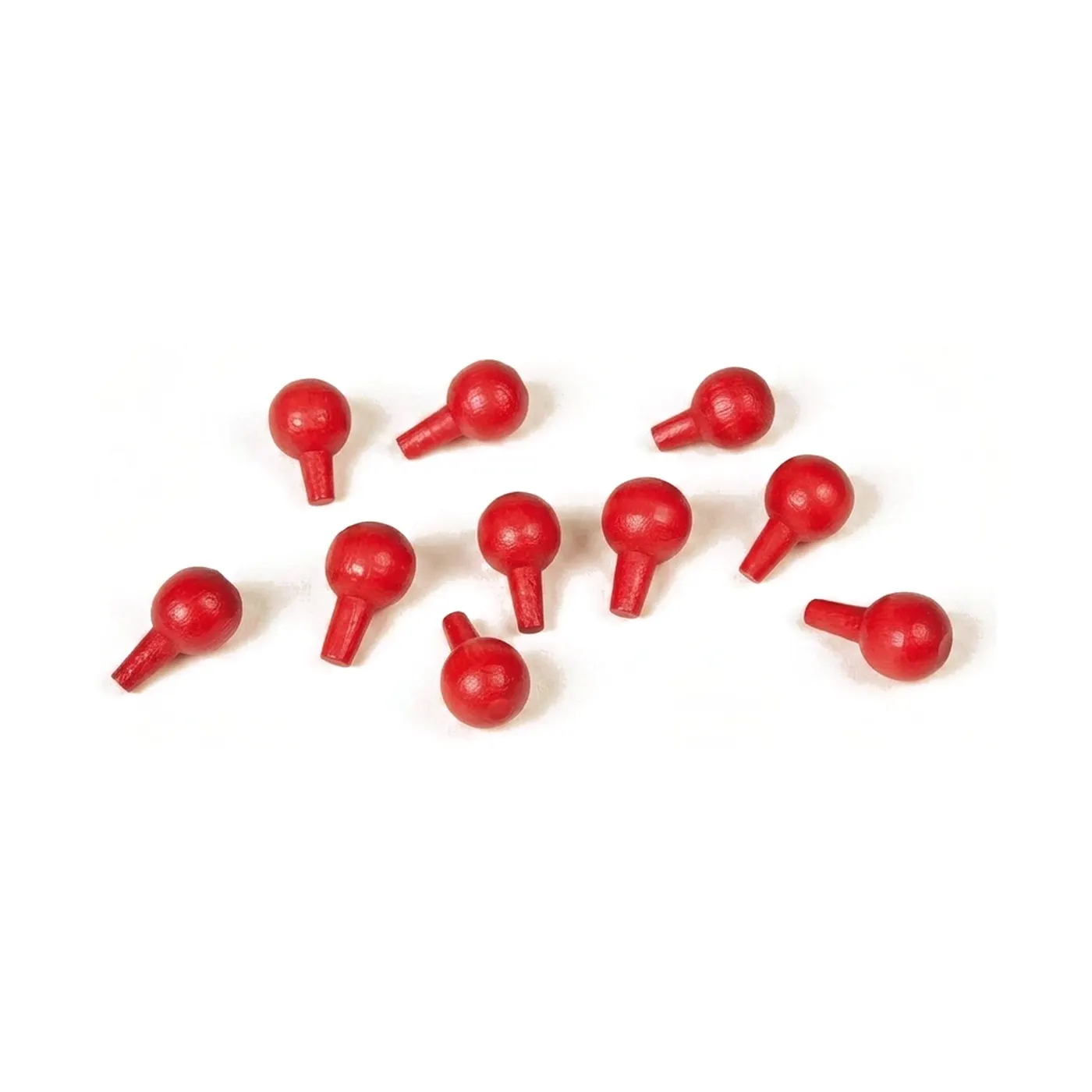
Pegs For The Algebraic Peg Board
The first photo is the maker's own. The other shots are illustrative.
Inv. no. NIE-013600
- Maker
- Nienhuis Montessori, since 1929
- Approval
- AMI
- Storage Box
- Solid wood with finger joints
- Pegs
- Durable plastic
- EAN
- 8719924007294
€169.90
Final price incl. VAT. Free delivery.
✓ In Stock. Delivery in 5 to 9 working days.
1
Spare part for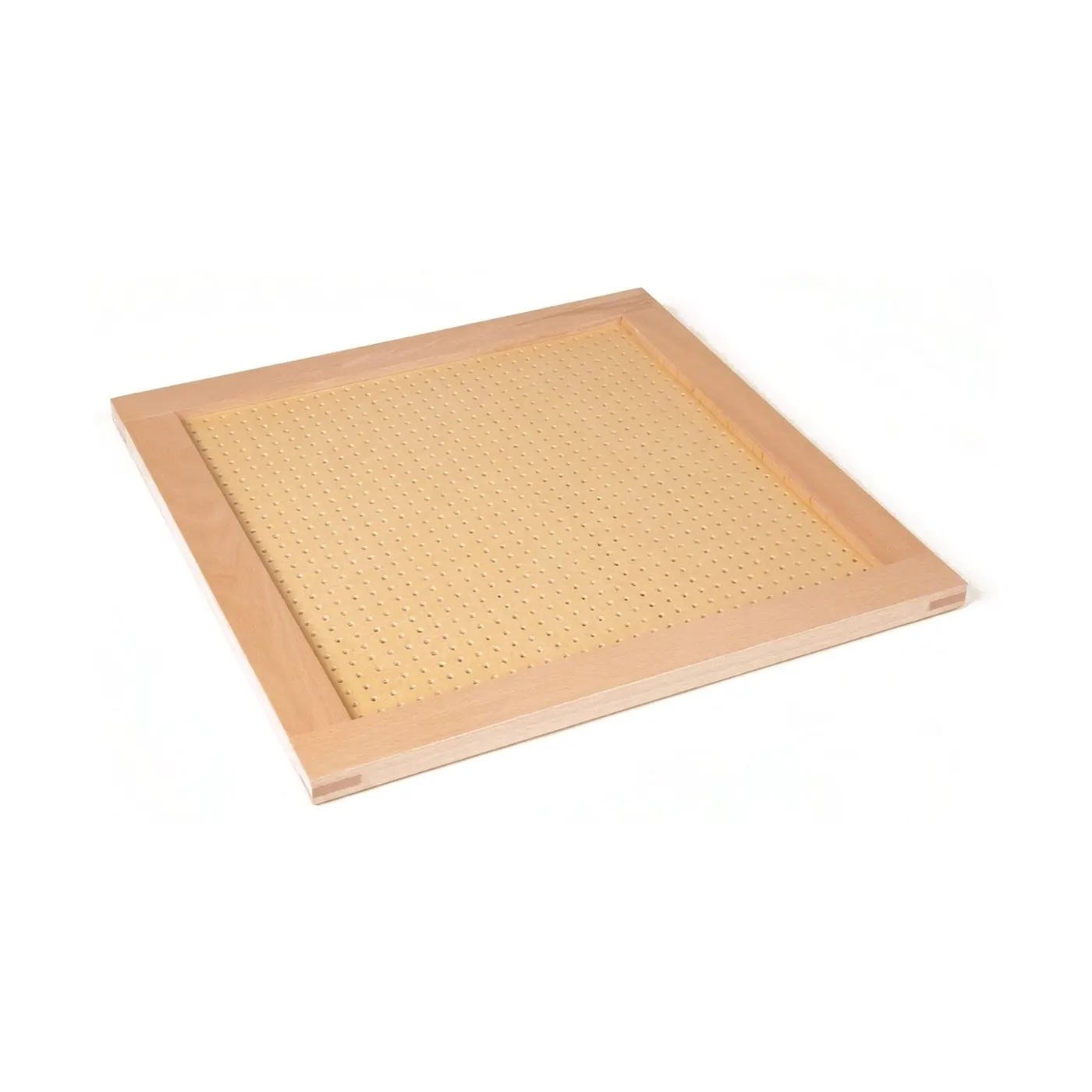 Algebraic Peg Board €94.90
Algebraic Peg Board €94.9030 daysto return
Advicebefore and after
Invoicefor companies
Advice, warranty and returns are handled by us.
The original
Why it costs €169.90
Behind the price of the original are things you can check yourself.
AMI approval
The material is approved by the Association Montessori Internationale (AMI). Nienhuis has made Montessori materials since 1929.
A verifiable original
The EAN 8719924007294 is on the box. It is the maker's number, not ours.
What the child does
Pegs For The Algebraic Peg Board in a child's hands
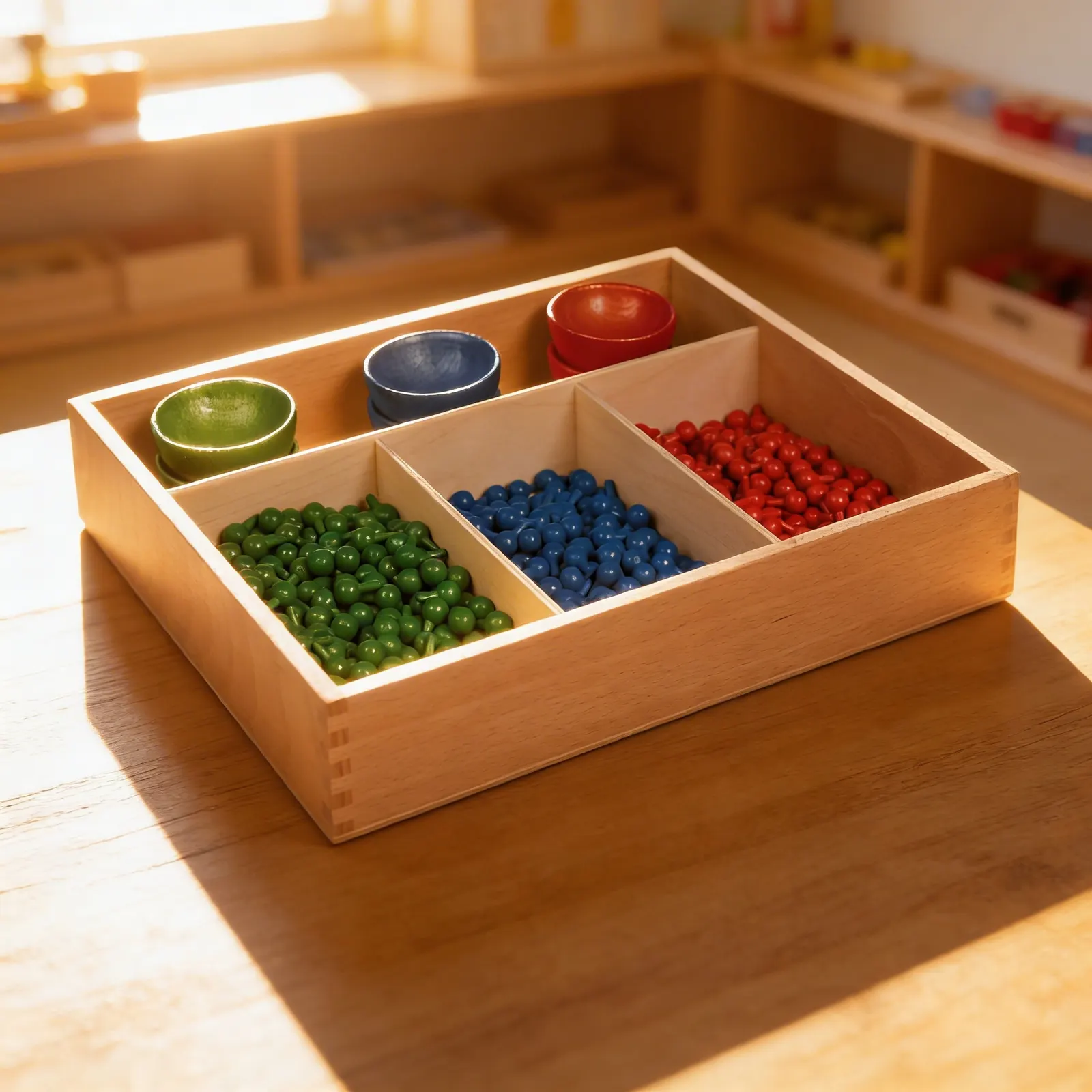
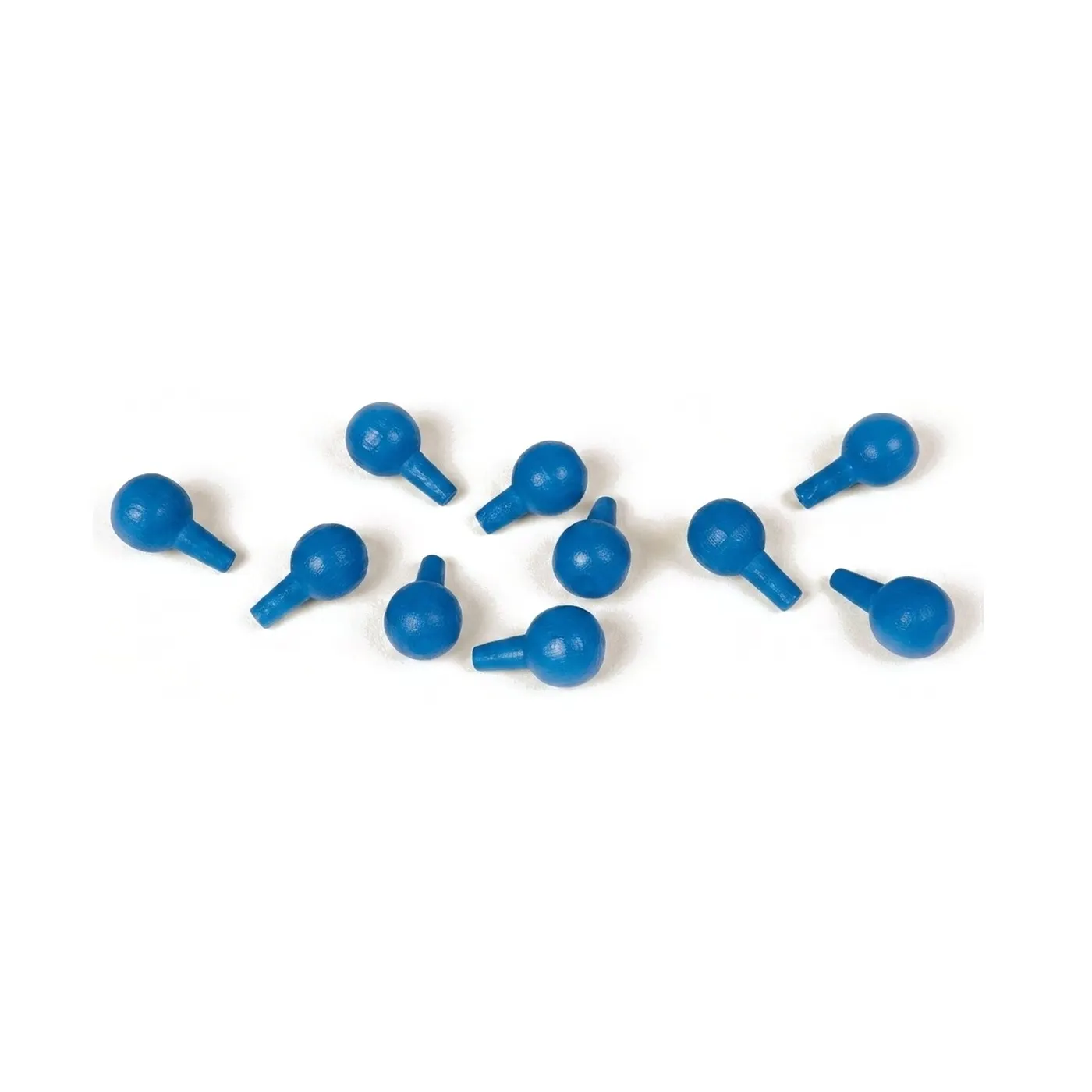
The colour coded pegs and cups that the Algebraic Peg Board runs on, stored in a wooden box with a lid. Sold as the consumable half of that material, so this is the set to reorder when the pegs have thinned out or a class has grown, rather than replacing the board itself. The colours are the working part: they carry hierarchical value across the board, so a peg's colour says which category it belongs to no matter where it sits. Wood with plastic, for ages 6 to 12.
Abstract Thinking
Color-coded pegs help children transition from concrete to abstract mathematical concepts through visual representation.
Algebraic Reasoning
Supports understanding of variables, expressions, and equations through hands-on manipulation.
Pattern Recognition
Different colored pegs enable exploration of mathematical patterns and relationships.
Organization Skills
The compartmented storage system teaches systematic arrangement and classification of materials.
Activity Guide
How to present it
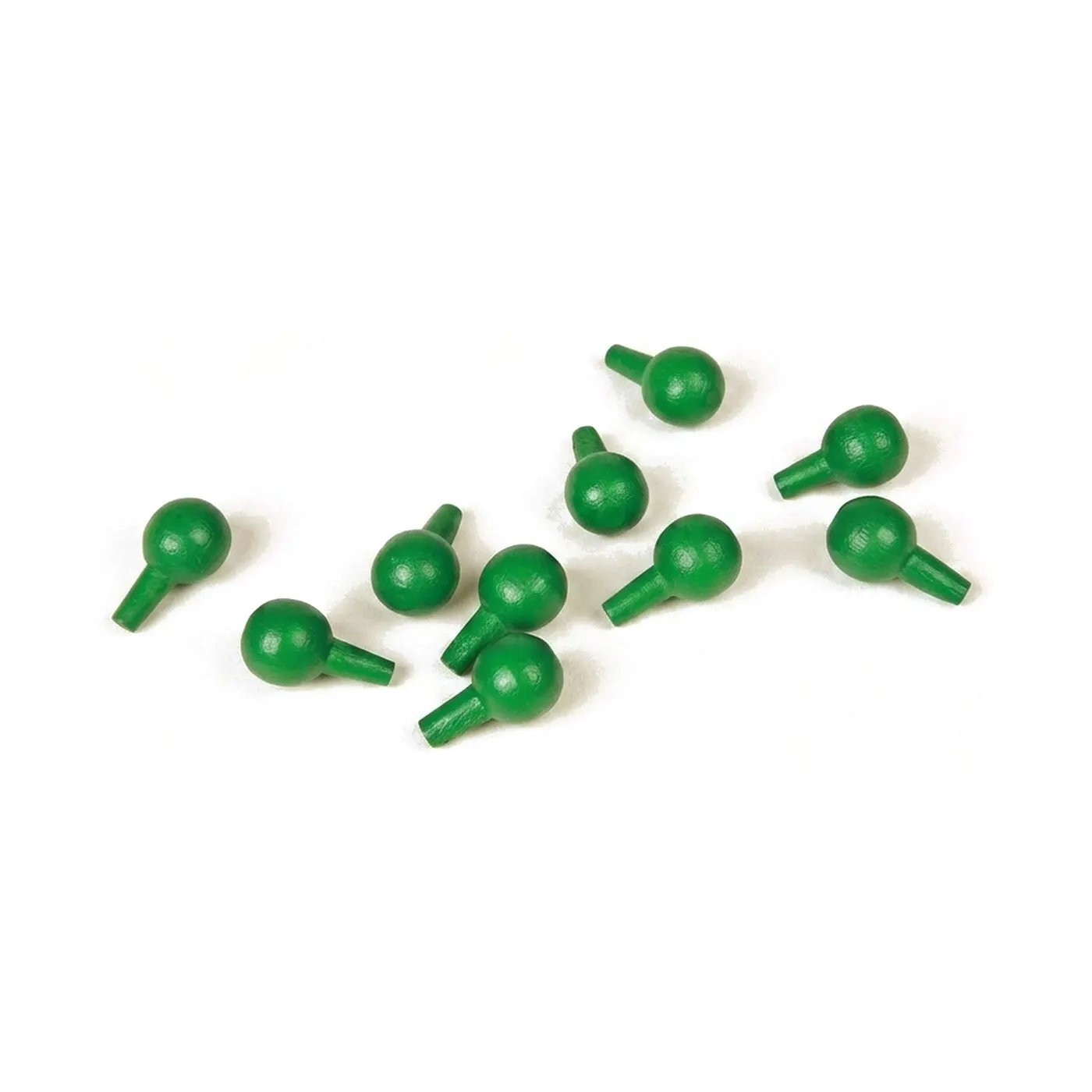
Place the wooden storage box on a mat. Open each colored lid to reveal the compartments. Set the Algebraic Peg Board nearby. Designate red pegs as positive units, blue as negative units, and green as variables.
- 1Begin with simple expressions using only red pegs to represent positive numbers like 3 + 2
- 2Introduce blue pegs for subtraction problems, showing how they 'cancel out' red pegs
- 3Add green pegs to represent unknown quantities, building expressions like 2x + 3
- 4Create equations by placing pegs on both sides of the board's center line
- 5Solve equations by manipulating pegs, maintaining balance throughout
3 tips for parents
- Practice simple peg patterns at home using colored counters or blocks if you don't have the full set
- Ask your child to explain what each color means - their explanation reveals their understanding
- Connect peg work to real situations like temperature changes (red for increases, blue for decreases)
From the same maker
Spare parts
Why it is in our selection
If you are not sure it suits your child, we answer in person.
Norbert Kovalčín, founder of Faborino · write to him
There is no review here yet. We will ask you for one after you buy. Write the first review
Details
What's in the Box
- Wooden Storage Box: With 6 compartments and finger-jointed construction
- Red Pegs Set: With matching red lid
- Blue Pegs Set: With matching blue lid
- Green Pegs Set: With matching green lid
Size and material
| Packaging | 32 × 26 × 7 cm |
| Storage Box | Solid wood with finger joints |
| Pegs | Durable plastic |
| Compartment Lids | Wood |
| Recommended Age | 6-12 years |
Care
Wipe wooden box with damp cloth; wash plastic pegs with mild soap if needed
Frequently Asked Questions
What exactly is included in this peg set?
This set includes color-coded plastic pegs in three distinct colors (red, blue, and green) along with a handcrafted wooden storage box featuring six compartments with matching colored lids. The pegs are specifically designed to work with the Montessori Algebraic Peg Board for representing algebraic expressions visually.
Do I need to purchase the Algebraic Peg Board separately?
Yes, these are replacement or additional pegs for the Algebraic Peg Board, which must be purchased separately. These pegs cannot be used independently without the board as they are designed specifically to fit into the board's holes for creating algebraic representations.
How do the different colored pegs help with learning algebra?
The three colors (red, blue, and green) allow children to visually distinguish between different algebraic terms, variables, or operations. For example, red might represent positive values, blue for negative values, and green for variables, making abstract algebraic concepts concrete and easier to understand through color association.
What age group is this material appropriate for?
These pegs are designed for children ages 6-12, aligning with the Montessori elementary curriculum. They support the progression from concrete mathematical operations to abstract algebraic thinking, typically introduced in upper elementary when children are developmentally ready for pre-algebraic concepts.
How many pegs come in each color?
The exact quantity of pegs per color is designed to provide sufficient materials for comprehensive algebraic work on the peg board. The six-compartment storage box suggests there are two compartments per color, ensuring ample pegs for creating complex algebraic expressions and equations.
Product safety
Manufacturer: Nienhuis Montessori, Anders Celsiusstraat 15, 7442 PB Nijverdal, Netherlands
Pegs For The Algebraic Peg Board
€169.90