
Pets 3 Part Cards
The first photo is the maker's own. The other shots are illustrative.
Inv. no. NIE-EC0477A
- Maker
- Nienhuis Montessori, since 1929
- Material
- Durable plastic
- Finish
- Pre-cut with rounded corners
- EAN
- 8719924042929
Final price incl. VAT. Delivery €5.90, €122.10 to go for free delivery.
Advice, warranty and returns are handled by us.
Pets 3 Part Cards in a child's hands
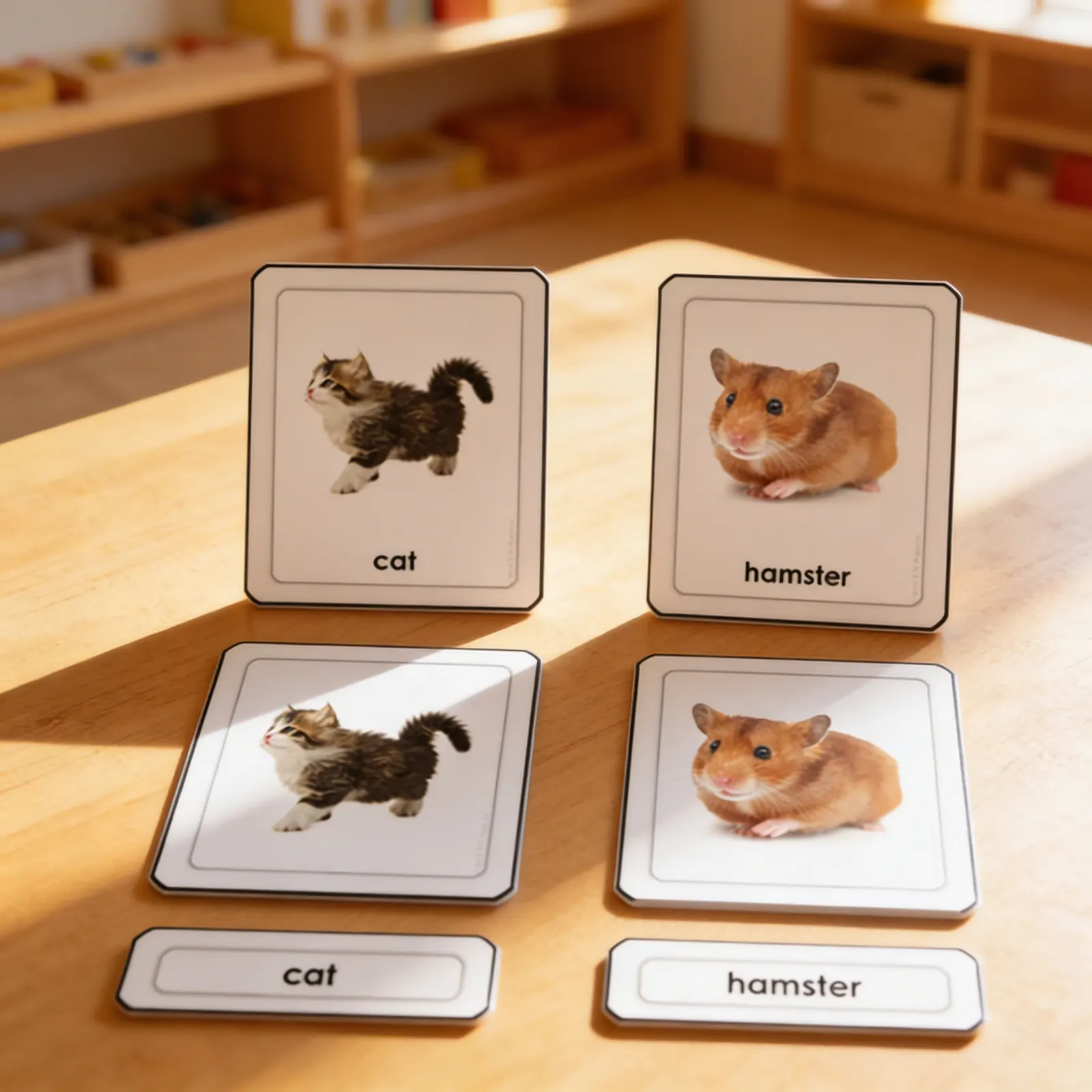
Three part cards for pets, with a real photograph of each. Pets are the animals a child has an opinion about, which is a good place for the naming work to start: the picture is already loaded with something the child wants to say, and the label gives them the word to say it with. Picture, label and control card. Durable plastic with rounded corners. In English. The matching set is a separate item.
Vocabulary Expansion
Introduces pet names and characteristics through visual-word association, supporting early literacy development.
Classification Skills
Children learn to categorize animals as pets versus wild animals, developing logical thinking abilities.
Reading Preparation
Matching labels to pictures builds sight word recognition and prepares for future reading activities.
Visual Discrimination
Distinguishing between different pet images refines visual perception skills essential for reading.
How to present it
Lay out a work mat. Place the picture cards in a column on the left side, spacing them evenly. Keep label cards in a separate pile and control cards stacked face-down.
- 1Present 3-5 pet picture cards, naming each animal clearly
- 2Invite the child to match label cards to pictures
- 3When matching is complete, introduce control cards for self-checking
- 4Demonstrate returning cards to their container in separate groups
3 tips for parents
- Point out pets during neighborhood walks, reinforcing vocabulary from the cards
- Let your child help write shopping lists for pet supplies using learned words
- Create a photo book of family pets or friends' pets to extend the matching work

If you are not sure it suits your child, we answer in person.
Norbert Kovalčín, founder of Faborino · write to him
There is no review here yet. We will ask you for one after you buy. Write the first review
What's in the Box
- Picture Cards: Approx. 6 cards with pet photographs
- Label Cards: Matching name labels for each pet
- Control Cards: Picture-label combinations for self-checking
Size and material
| Packaging | 15 × 15 × 1 cm |
| Material | Durable plastic |
| Finish | Pre-cut with rounded corners |
| Recommended Age | 3-6 years |
Care
Wipe with damp cloth, dry immediately
Frequently Asked Questions
What animals are included in the Pets 3 Part Cards set?
The set typically includes common household pets such as dogs, cats, rabbits, hamsters, guinea pigs, fish, birds, and turtles. Each animal is represented with high-quality, realistic photographs that help children accurately identify different pet species.
How do children use the three-part card format for learning?
Children first match the picture card to the control card (picture with label), then add the separate label card underneath. This progression supports reading development, visual discrimination, and independent self-correction as children can check their work against the control card.
What skills do these cards help develop in 3-6 year olds?
These cards develop vocabulary expansion, reading readiness, visual discrimination, fine motor skills through card handling, classification abilities, and concentration. They also foster empathy and responsibility as children learn about different pets and their characteristics.
Can non-readers use these cards effectively?
Yes, non-readers can start by simply matching identical pictures, building visual discrimination skills. As they progress, they can match pictures to control cards and eventually begin recognizing word shapes and initial letters, making this material suitable throughout the 3-6 age range.
How durable are the cards for classroom or home use?
The cards are typically printed on thick, high-quality cardstock and often come laminated or ready to laminate for extended use. This durability ensures they can withstand frequent handling by young children in both home and classroom environments.
Product safety
Manufacturer: Nienhuis Montessori, Anders Celsiusstraat 15, 7442 PB Nijverdal, Netherlands
Pets 3 Part Cards