
Plant Kingdom Charts
The first photo is the maker's own. The other shots are illustrative.
Inv. no. NIE-ELC4058
- Maker
- Nienhuis Montessori, since 1929
- Product size
- 112 × 30.5 cm
- Material
- Durable plastic
- Finish
- Pre-cut with rounded corners
- EAN
- 8719924044060
Final price incl. VAT. Delivery €5.90, €49.10 to go for free delivery.
Advice, warranty and returns are handled by us.
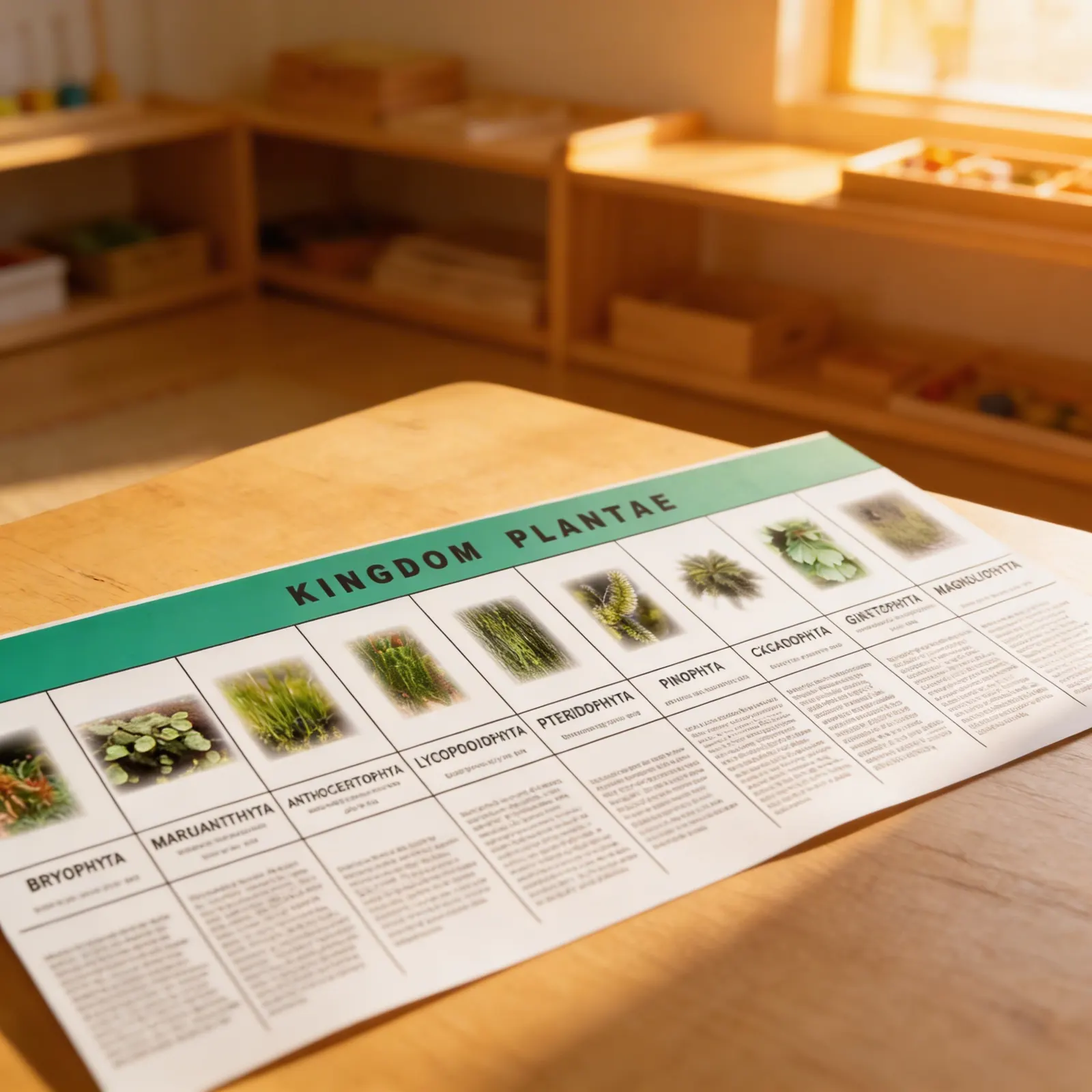
Plant Kingdom Charts in a child's hands
The plant kingdom charts, with the divisions brought up to date against ITIS, the taxonomic database that decides these things now. That is the reason to buy a chart rather than draw one: classification moves, and a room working from a chart printed twenty years ago is teaching a version specialists have already left. Control and mute charts, so the child places and checks. Durable plastic with rounded corners. In English. The fungi charts are a separate item.
Scientific Classification
Introduces botanical taxonomy through visual examples, building foundations for scientific thinking and categorization skills.
Visual Discrimination
Photographic examples help children observe and compare characteristics across different plant groups.
Vocabulary Development
Exposure to scientific terminology and plant names enriches language while maintaining age-appropriate descriptions.
Nature Connection
Fosters appreciation for plant diversity and encourages observation of plants in the child's environment.
How to present it
Mount the Plant Kingdom Charts at child's eye level on a wall or display board. Ensure adequate lighting to highlight photographic details. Place a small rug or standing space in front of the charts.
- 1Begin with the simplest division (bryophytes/mosses), pointing to the photographs while naming each plant group
- 2Invite the child to find similarities between plants within one division, observing leaf shapes, growth patterns, or reproductive structures visible in photos
- 3Progress through divisions from simple to complex, spending time with each chart based on the child's interest
- 4Connect chart images to real specimens or plants visible from classroom windows
3 tips for parents
- Point out examples of chart plants during walks - moss on trees, ferns in shady spots, dandelions in grass
- Visit botanical gardens or conservatories to see exotic examples from each plant division
- Start a home nature journal drawing and labeling plants from different divisions you find together

If you are not sure it suits your child, we answer in person.
Norbert Kovalčín, founder of Faborino · write to him
There is no review here yet. We will ask you for one after you buy. Write the first review
What's in the Box
- Plant Kingdom Chart: 90×60cm laminated educational poster
Size and material
| Product size | 112 × 30.5 cm |
| Packaging | 41 × 29 × 14 cm |
| Material | Durable plastic |
| Finish | Pre-cut with rounded corners |
| Recommended Age | 6-12 years |
Care
Wipe with damp cloth, avoid harsh chemicals
Frequently Asked Questions
What are the ten plant divisions featured on this chart?
The chart covers ten major plant divisions from simple to complex: bryophytes (mosses), hepatophytes (liverworts), anthocerotophytes (hornworts), lycophytes (club mosses), pteridophytes (ferns), cycadophytes (cycads), ginkgophytes (ginkgo), coniferophytes (conifers), gnetophytes, and angiosperms (flowering plants). Each division is illustrated with clear photographic examples.
How large is the Plant Kingdom Chart and what material is it made from?
This is a large-format educational poster designed for classroom wall display. The chart is professionally printed on durable, high-quality paper or card stock that can withstand regular classroom use. The exact dimensions are optimized for visibility from across the classroom while maintaining clarity of the photographic images and text.
Is this chart appropriate for children who cannot yet read?
Yes! While the chart includes scientific classifications and labels, the primary learning occurs through the stunning photographic examples. Young children can explore plant diversity visually, noticing differences in structure, leaves, and reproduction. Teachers guide oral presentations, introducing vocabulary gradually as children show interest and readiness.
How does this chart support the Montessori biology curriculum?
This chart aligns with Montessori's approach to botanical education by presenting real photographic images rather than illustrations, showing the progression from simple to complex organisms, and introducing scientific classification in an accessible way. It supports lessons on plant parts, life cycles, and the interdependence of life, serving as a reference throughout the biology curriculum.
Can this chart be used alongside other Montessori botany materials?
Absolutely! The Plant Kingdom Chart complements botany puzzles, nomenclature cards, plant life cycle materials, and leaf classification work. It serves as a comprehensive reference that ties together individual lessons, helping children see how specific plants they study fit into the larger plant kingdom. It's particularly useful for second-plane elementary extensions.
Product safety
Manufacturer: Nienhuis Montessori, Anders Celsiusstraat 15, 7442 PB Nijverdal, Netherlands
Plant Kingdom Charts