
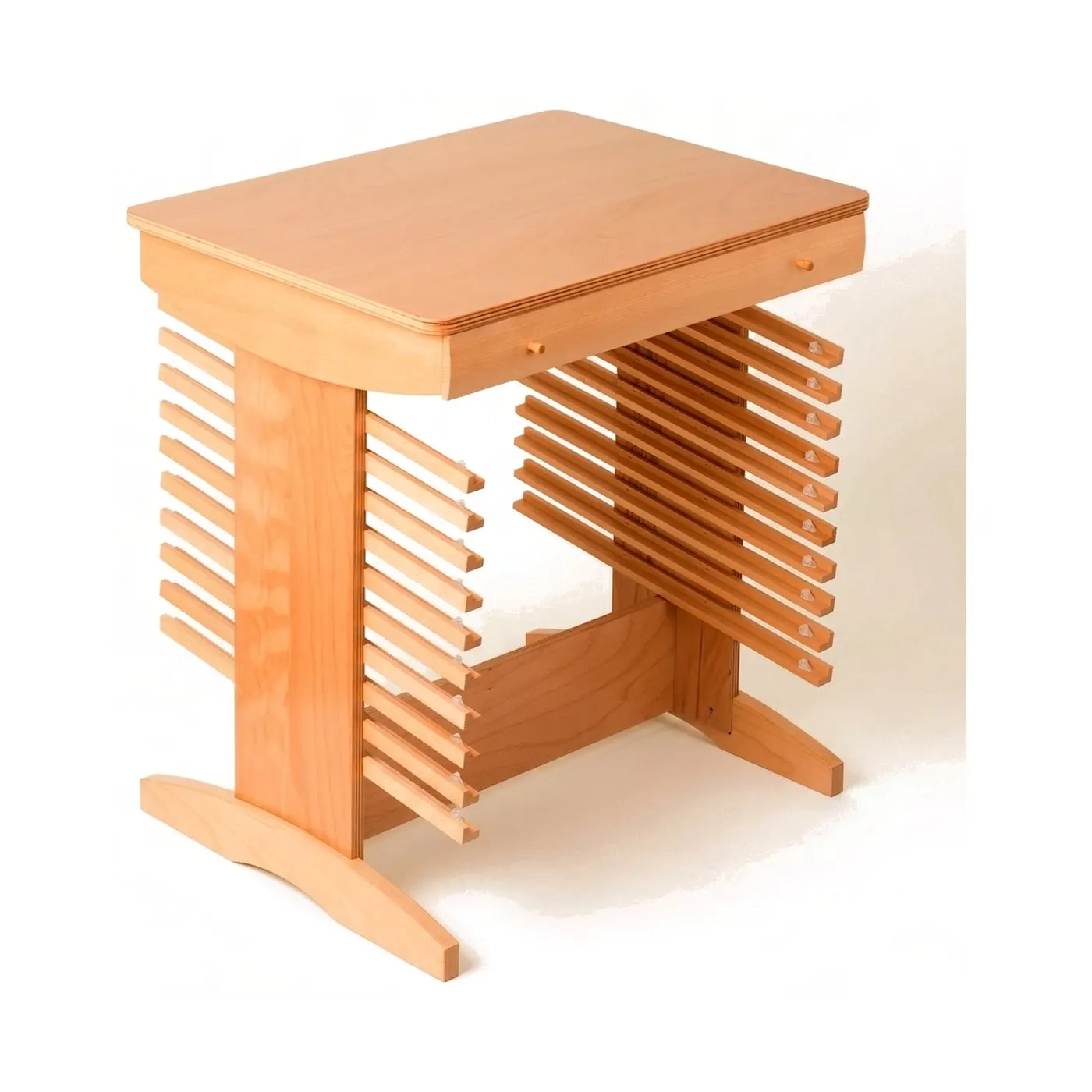
Puzzle MapEurope
The first photo is the maker's own. The other shots are illustrative.
Inv. no. NIE-0176B0
- Maker
- Nienhuis Montessori, since 1929
- Approval
- AMI
- Base Material
- Solid wood
- Finish
- Paint
- EAN
- 8719924008277
€138.90
Final price incl. VAT. Delivery €5.90, €10.10 to go for free delivery.
On backorder. Expected back in stock 6 January 2027. You can order now, we ship the moment it arrives.
1
30 daysto return
Advicebefore and after
Invoicefor companies
Advice, warranty and returns are handled by us.
The original
Why it costs €138.90
Behind the price of the original are things you can check yourself.
AMI approval
The material is approved by the Association Montessori Internationale (AMI). Nienhuis has made Montessori materials since 1929.
A verifiable original
The EAN 8719924008277 is on the box. It is the maker's number, not ours.
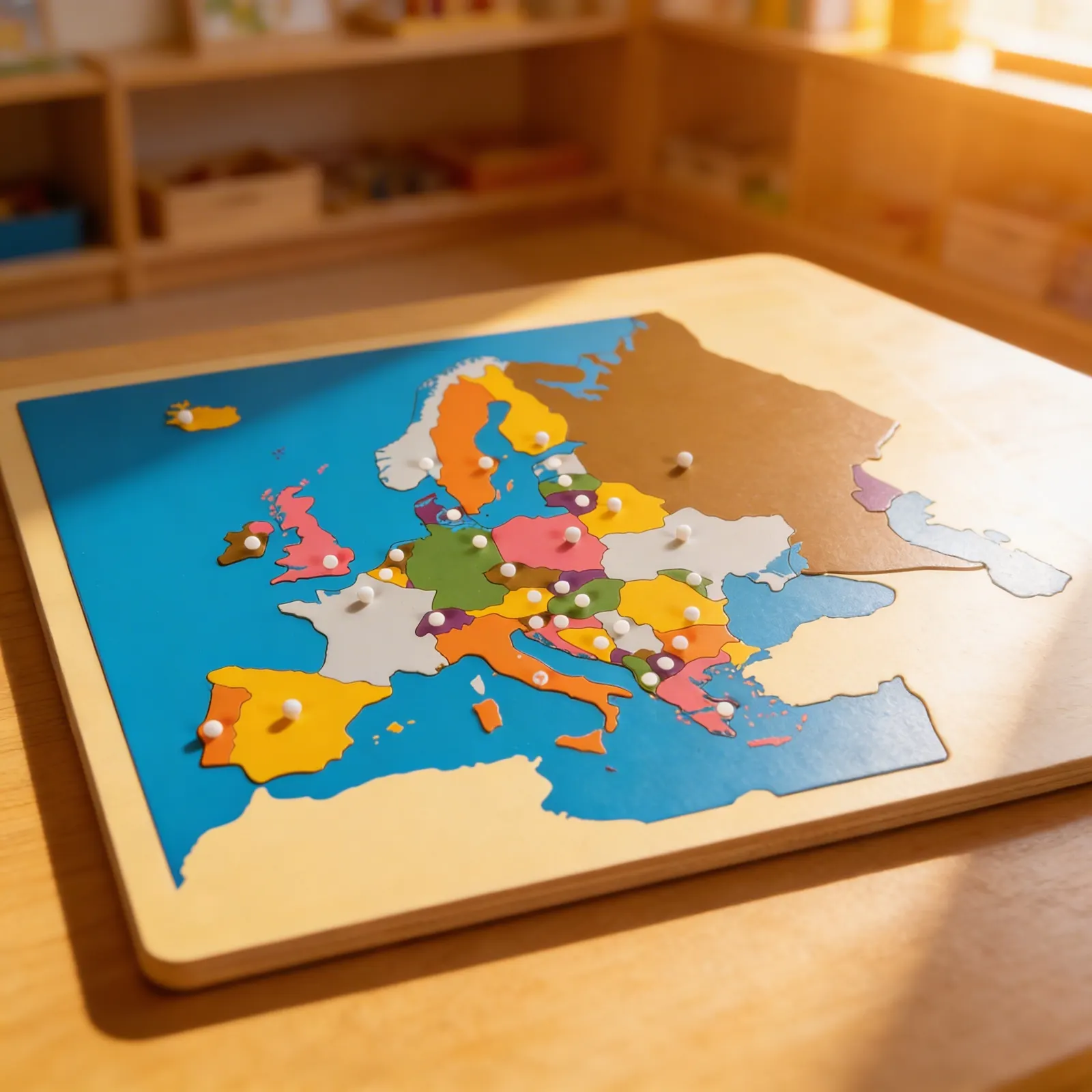
What the child does
Puzzle Map in a child's hands
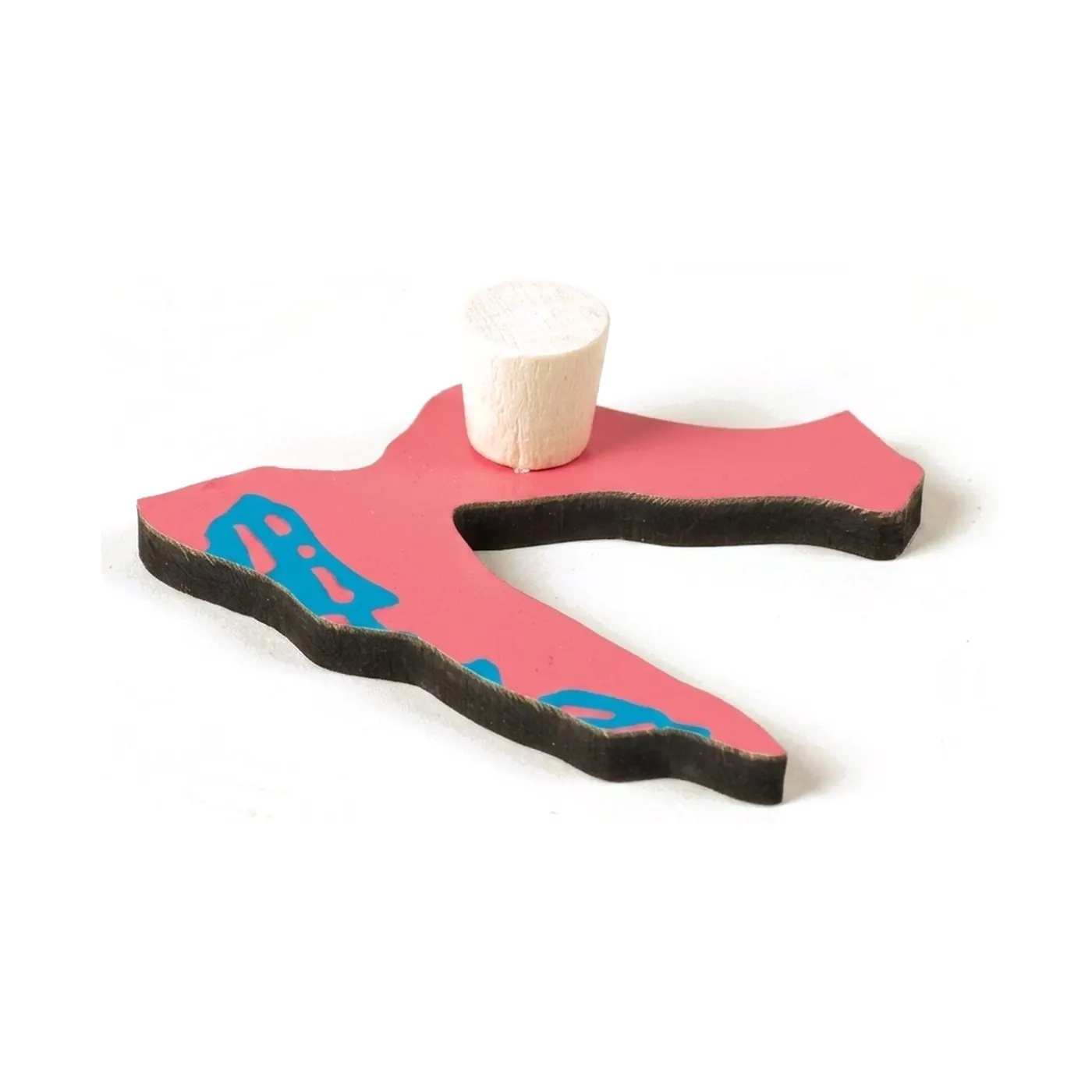
Part of the Puzzle Maps collection, this wooden Europe puzzle map gives young learners a first look at the continent's geography through active discovery. Each country is a removable puzzle piece with its own knob handle, painted in distinct colors to help children identify and memorize European nations. The map features a sturdy wooden base with water areas shown in traditional blue, supporting the Montessori approach to concrete geographical learning.
Geographic Awareness
Children develop spatial understanding of European countries and their relationships through hands-on manipulation.
Fine Motor Development
Grasping knobs and fitting puzzle pieces refines pincer grip and hand-eye coordination.
Visual Discrimination
Distinct colors and shapes help children distinguish between countries and memorize their locations.
Cultural Foundation
Early exposure to European geography prepares children for future studies in history, culture, and current events.
Activity Guide
How to present it
Place the Europe puzzle map on a large work mat. Have a damp sponge nearby for cleaning hands. Ensure adequate space for removing and arranging pieces.
- 1Demonstrate removing one country piece using the knob with your dominant hand's three-finger grip
- 2Place the removed piece to the right of the map frame, naming the country clearly
- 3Trace around the empty space with your index finger, then trace the puzzle piece
- 4Return the piece to its space, demonstrating how to align edges precisely
- 5Invite the child to remove and replace the same country
3 tips for parents
- Share family heritage connections to European countries while your child works with the puzzle at home
- Look for European foods at the grocery store and connect them to countries your child knows from the puzzle
- Keep a simple outline map of Europe posted at child height for quick country identification practice
From the same maker
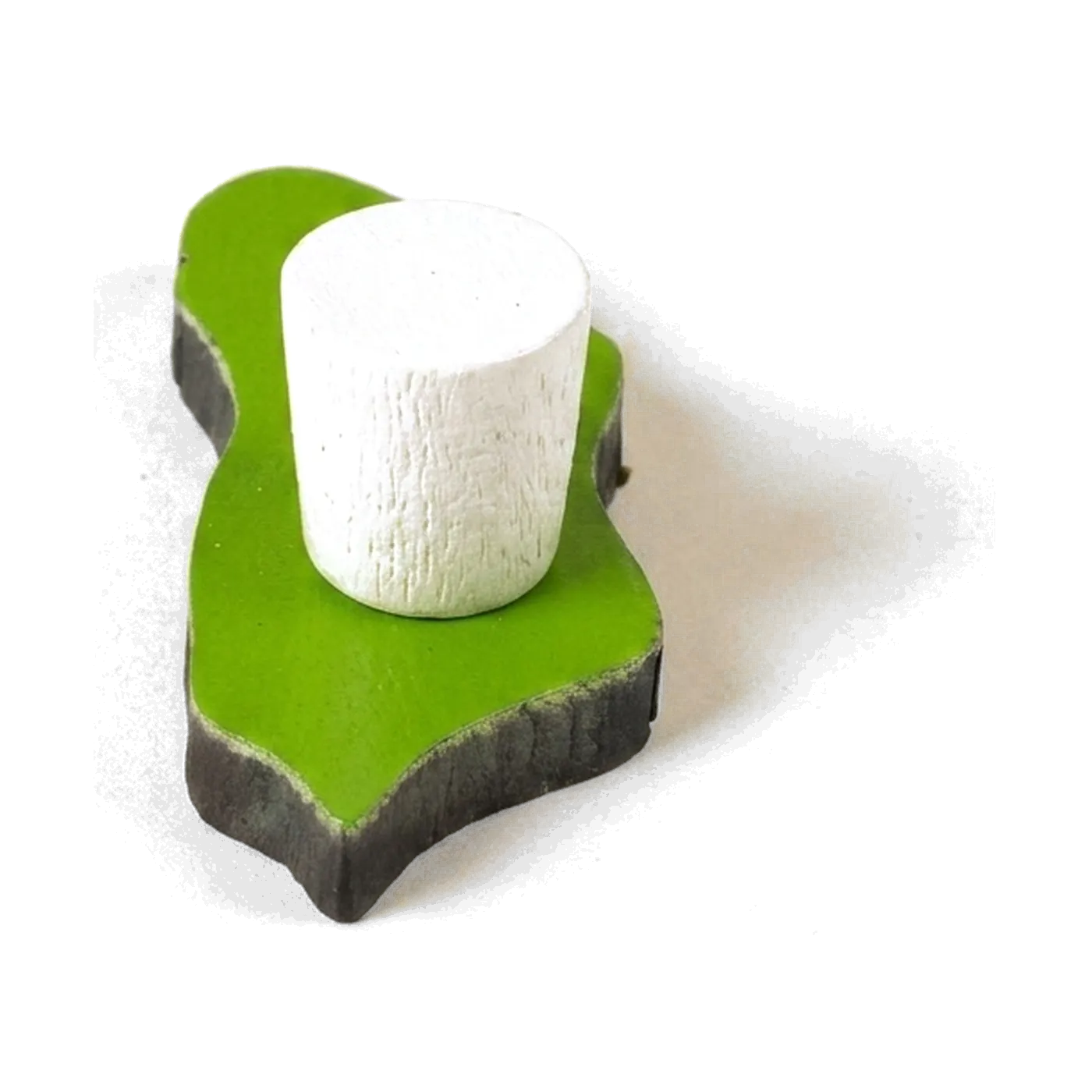
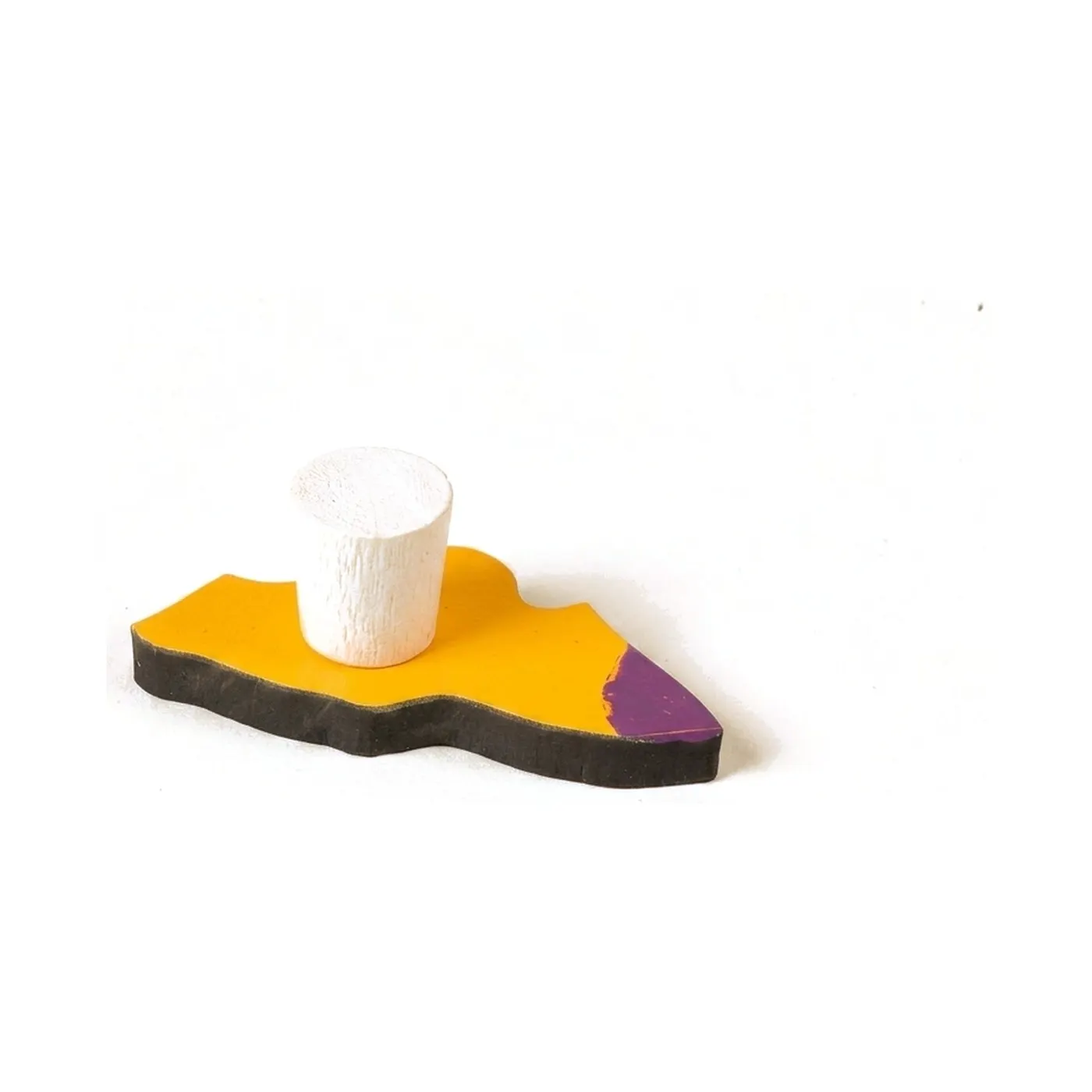
Accessories and spare parts

Why it is in our selection
If you are not sure it suits your child, we answer in person.
Norbert Kovalčín, founder of Faborino · write to him
There is no review here yet. We will ask you for one after you buy. Write the first review
Details
What's in the Box
- Europe Puzzle Map: with removable country pieces
- Country Puzzle Pieces: approx. 30 pieces with knob handles
Size and material
| Packaging | 62 × 50 × 3 cm |
| Base Material | Solid wood |
| Finish | Paint |
| Knobs | Wood |
| Recommended Age | 3-6 years |
Care
Wipe with slightly damp cloth, dry immediately
Frequently Asked Questions
What age is the Europe puzzle map suitable for?
This puzzle map is designed for children ages 3-6 years. The knob handles are sized for small hands, and the difficulty level aligns with early childhood development stages when children begin exploring geography concepts.
Are all European countries included in this puzzle?
The puzzle includes major European countries as individual pieces. Smaller nations may be grouped together or represented as part of larger regions, following traditional Montessori geography materials standards for this age group.
What are the dimensions and materials of the puzzle?
The puzzle features a sturdy wooden base with removable wooden country pieces. Each piece has a knob handle for easy grasping. Water areas are painted in blue, while countries use distinct colors. Specific dimensions vary but are designed for tabletop or floor work.
How does this puzzle support Montessori geography learning?
This material follows Montessori principles by providing concrete, hands-on learning. Children physically handle each country, building muscle memory and spatial awareness. The color-coding and tactile experience help children internalize geographical concepts before moving to abstract map reading.
Can this puzzle be used with other Montessori geography materials?
Yes, this puzzle integrates perfectly with other Montessori geography materials like continent boxes, flag work, and cultural folders. It serves as a foundation for more advanced geography studies and can be paired with books, pictures, and cultural objects from European countries.
Product safety
Manufacturer: Nienhuis Montessori, Anders Celsiusstraat 15, 7442 PB Nijverdal, Netherlands
Puzzle Map
€138.90