
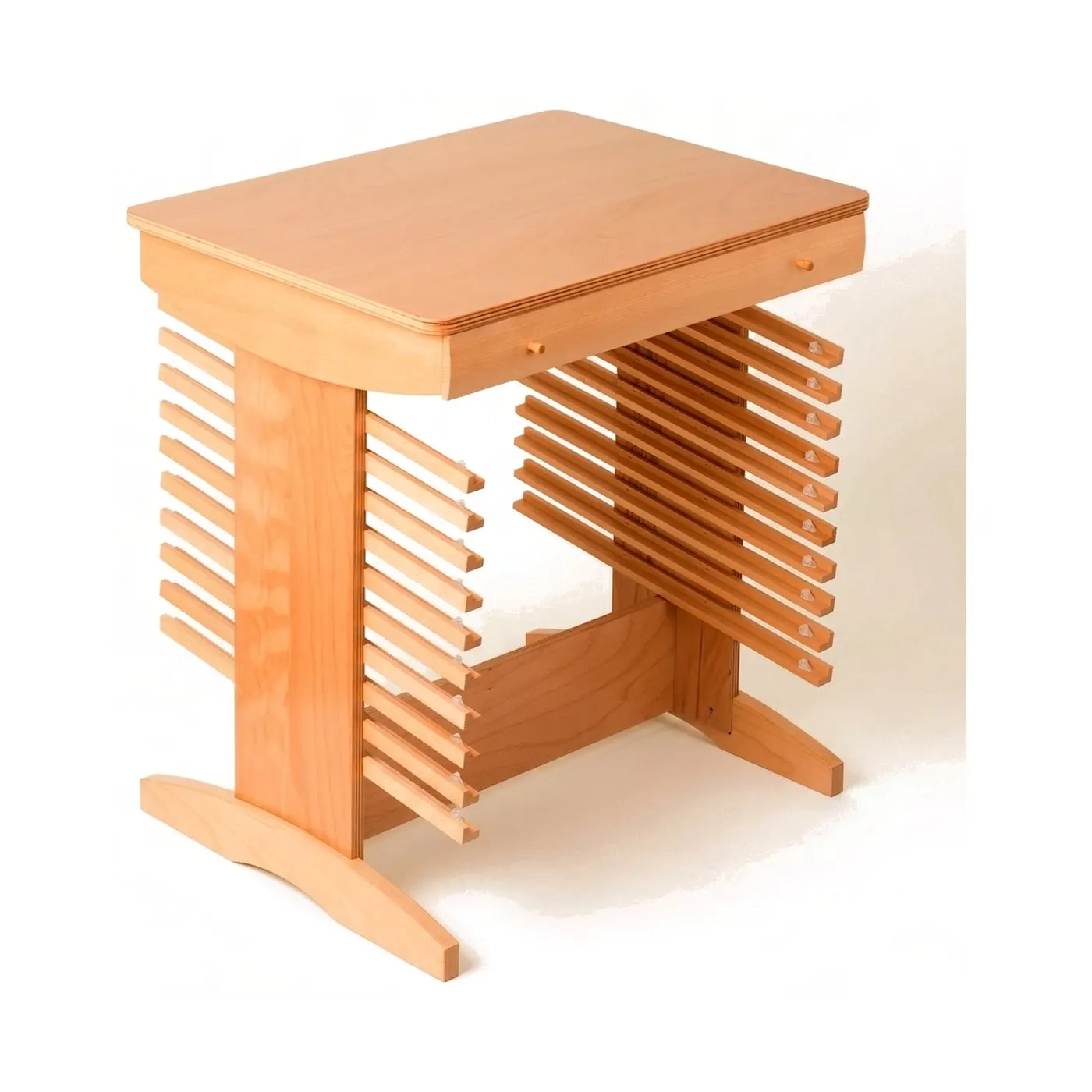
Puzzle MapNorth America
The first photo is the maker's own. The other shots are illustrative.
Inv. no. NIE-0176C0
- Maker
- Nienhuis Montessori, since 1929
- Approval
- AMI
- Primary Material
- Painted wood
- Knob Material
- Wood
- EAN
- 8719924008581
€144.90
Final price incl. VAT. Delivery €5.90, €4.10 to go for free delivery.
On backorder. Expected back in stock 6 January 2027. You can order now, we ship the moment it arrives.
1
30 daysto return
Advicebefore and after
Invoicefor companies
Advice, warranty and returns are handled by us.
The original
Why it costs €144.90
Behind the price of the original are things you can check yourself.
AMI approval
The material is approved by the Association Montessori Internationale (AMI). Nienhuis has made Montessori materials since 1929.
A verifiable original
The EAN 8719924008581 is on the box. It is the maker's number, not ours.
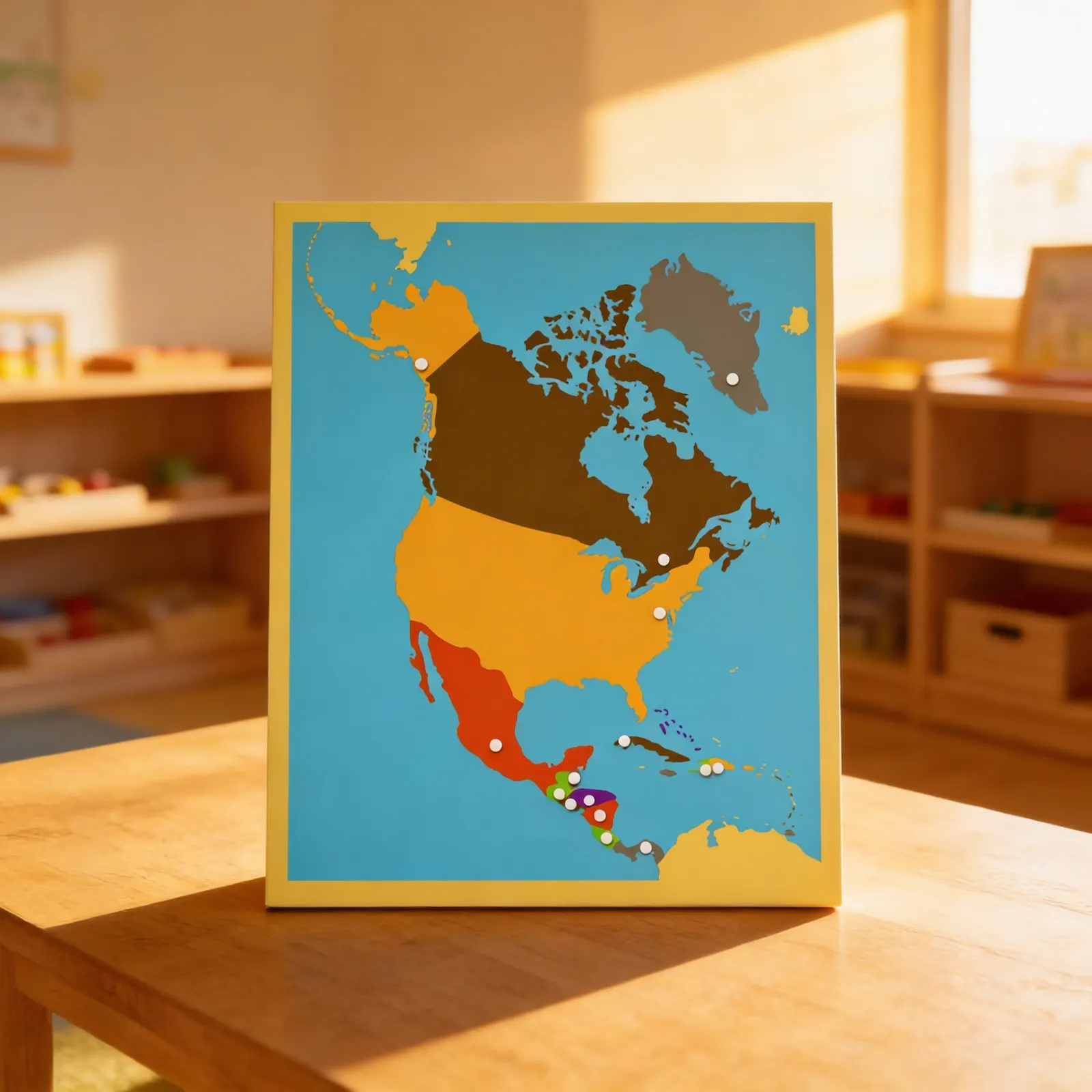
What the child does
Puzzle Map in a child's hands
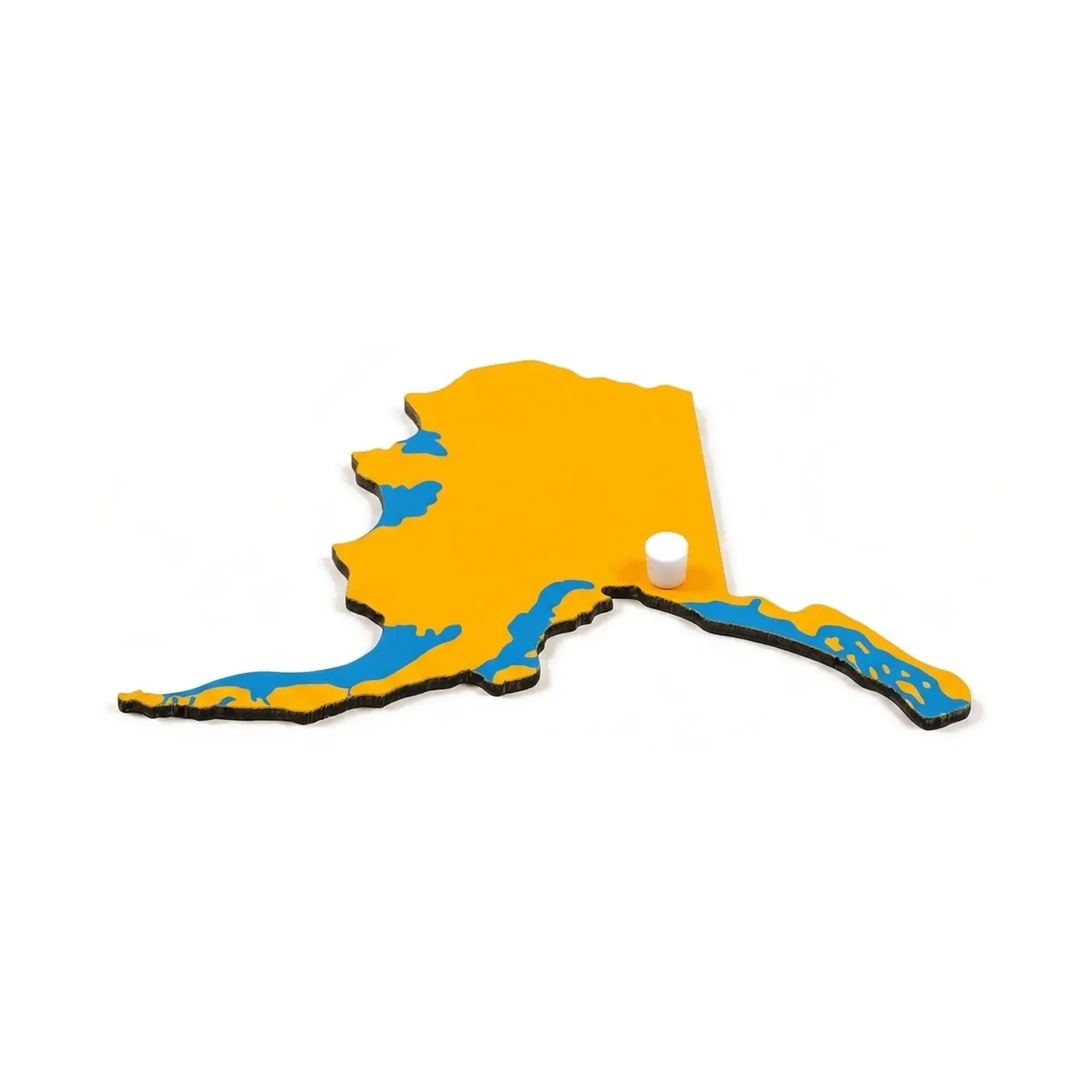
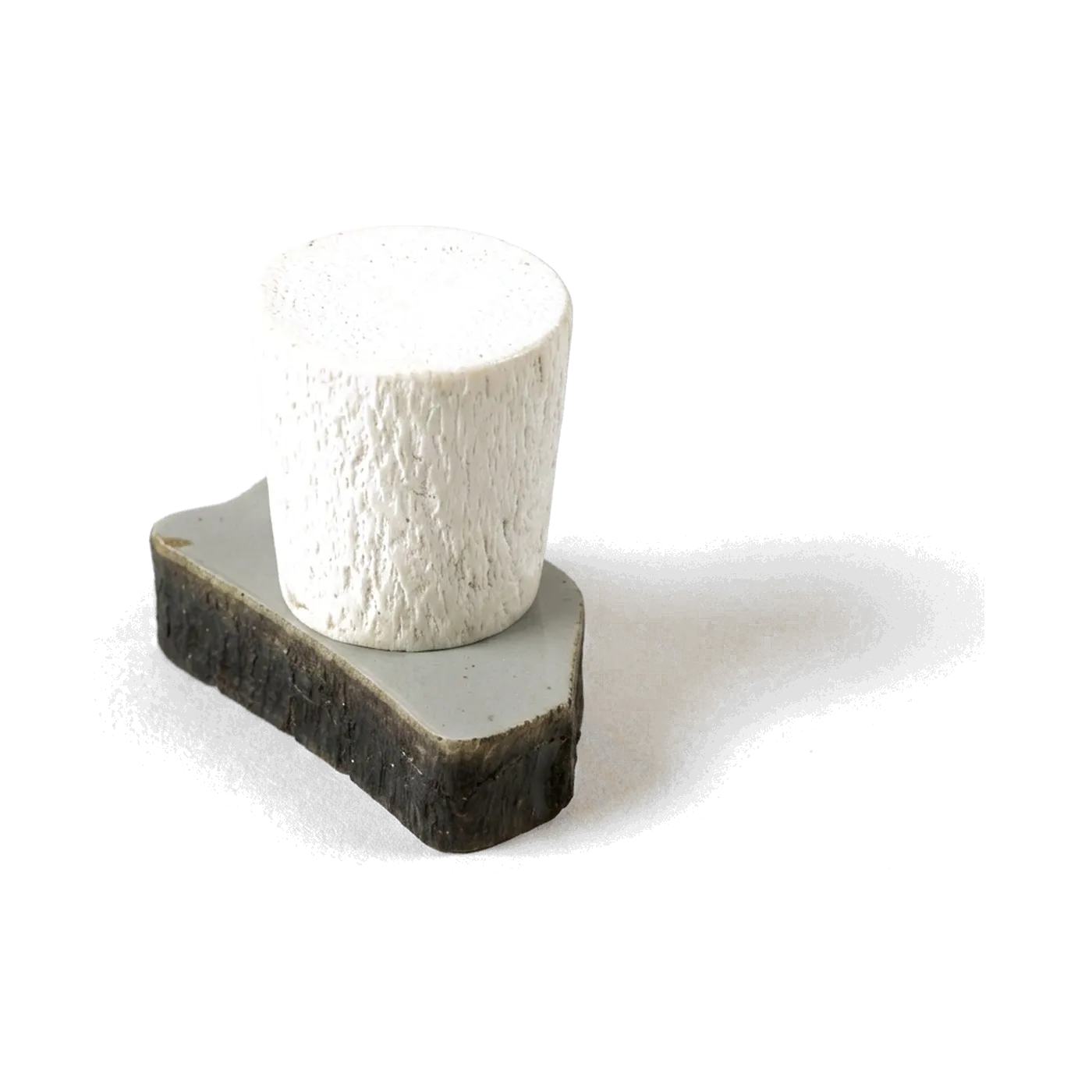
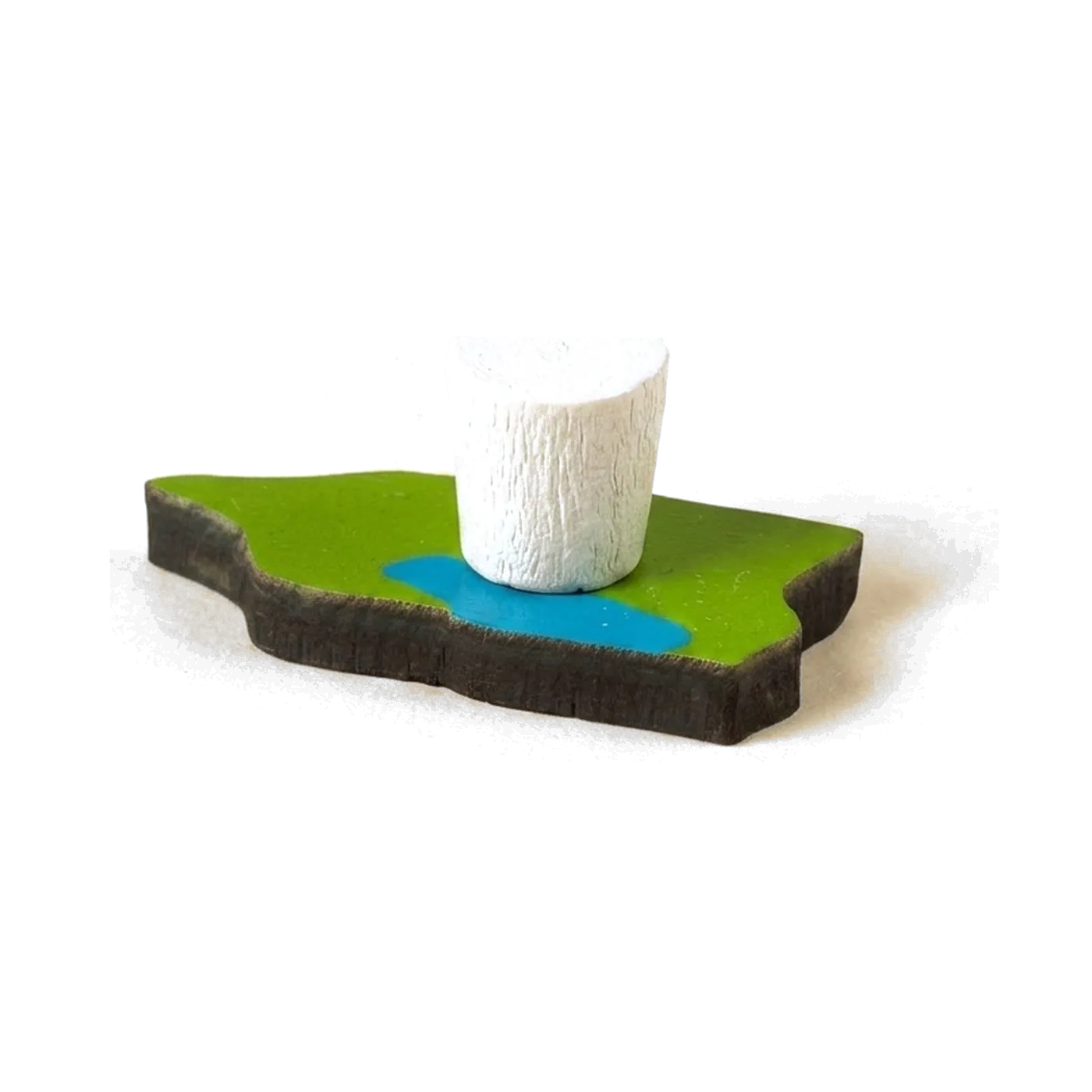
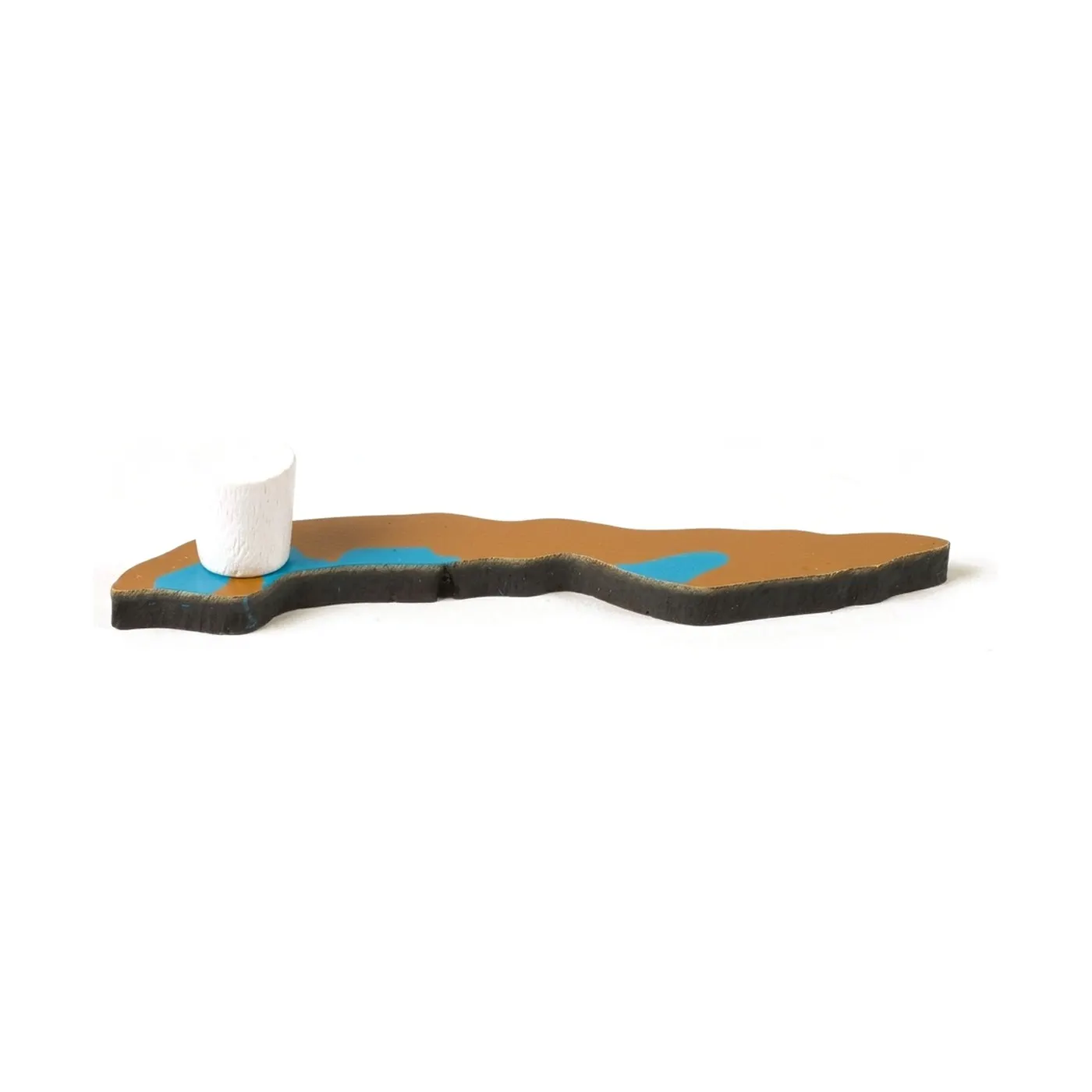
Expertly crafted from natural wood, this North America puzzle map opens the door to the geography of the continent through tactile learning. Each country and region is represented as a removable wooden piece with a knob handle, scaled down for small hands to grasp and manipulate. The distinctive yellow border frame helps children understand continental boundaries while the color-coded regions support visual discrimination and memory of geographical relationships.
Geographical Awareness
Children develop understanding of North American countries, their shapes, sizes, and relative positions through repeated manipulation of the puzzle pieces.
Fine Motor Control
The knobbed pieces encourage proper pincer grip development, preparing the hand for writing while building hand-eye coordination.
Visual Discrimination
Color-coded regions help children distinguish between different countries and territories, strengthening visual perception skills.
Spatial Reasoning
Fitting pieces into their corresponding spaces develops spatial awareness and problem-solving abilities essential for mathematical thinking.
Activity Guide
How to present it
Place the puzzle map on a work mat with all pieces in place. Have a small basket ready for removed pieces. Ensure clean hands for handling the wooden pieces.
- 1Invite the child to explore by removing one piece at a time, starting with larger countries
- 2Name each country as you remove it, placing pieces carefully in the basket
- 3When empty, slowly replace pieces one at a time, naming each again
- 4Invite the child to remove and replace pieces independently
3 tips for parents
- Reference puzzle countries when discussing news, weather, or family heritage at home
- Look at photographs from different North American regions to connect puzzle work to real places
- Create simple matching games using postcards or pictures from puzzle countries
From the same maker
Accessories and spare parts
Why it is in our selection
If you are not sure it suits your child, we answer in person.
Norbert Kovalčín, founder of Faborino · write to him
There is no review here yet. We will ask you for one after you buy. Write the first review
Details
What's in the Box
- Wooden puzzle base: With recessed areas for each piece
- North America puzzle pieces: Approx. 7 removable pieces with knobs
- Yellow border frame: Defines continental boundaries
Size and material
| Packaging | 62 × 50 × 3 cm |
| Primary Material | Painted wood |
| Knob Material | Wood |
| Finish | Paint |
| Recommended Age | 3-6 years |
Care
Wipe with slightly damp cloth, dry immediately
Frequently Asked Questions
What age is the North America puzzle map suitable for?
This puzzle map is designed for children ages 3-6 years old. The knob handles are perfectly sized for developing fine motor skills, while the geographical concepts introduce age-appropriate cultural and spatial awareness.
What countries and regions are included in this puzzle?
The puzzle includes all major countries of North America including the United States, Canada, Mexico, and Central American nations. Each country is a separate removable piece with its own knob handle for easy manipulation.
How does this puzzle support Montessori geography learning?
This puzzle follows Montessori principles by providing concrete, hands-on exploration of abstract geographical concepts. Children develop spatial awareness, learn country locations through muscle memory, and build visual discrimination skills through color-coded regions.
What is the purpose of the yellow border frame?
The yellow border frame serves multiple purposes: it defines the continental boundaries of North America, provides a visual framework for the puzzle pieces, and helps children understand the concept of continents as distinct geographical areas.
What skills does this puzzle map develop?
This puzzle develops fine motor control, hand-eye coordination, spatial reasoning, geographical awareness, problem-solving skills, and concentration. It also introduces cultural studies and builds vocabulary related to countries and geography.
Product safety
Manufacturer: Nienhuis Montessori, Anders Celsiusstraat 15, 7442 PB Nijverdal, Netherlands
Puzzle Map
€144.90