
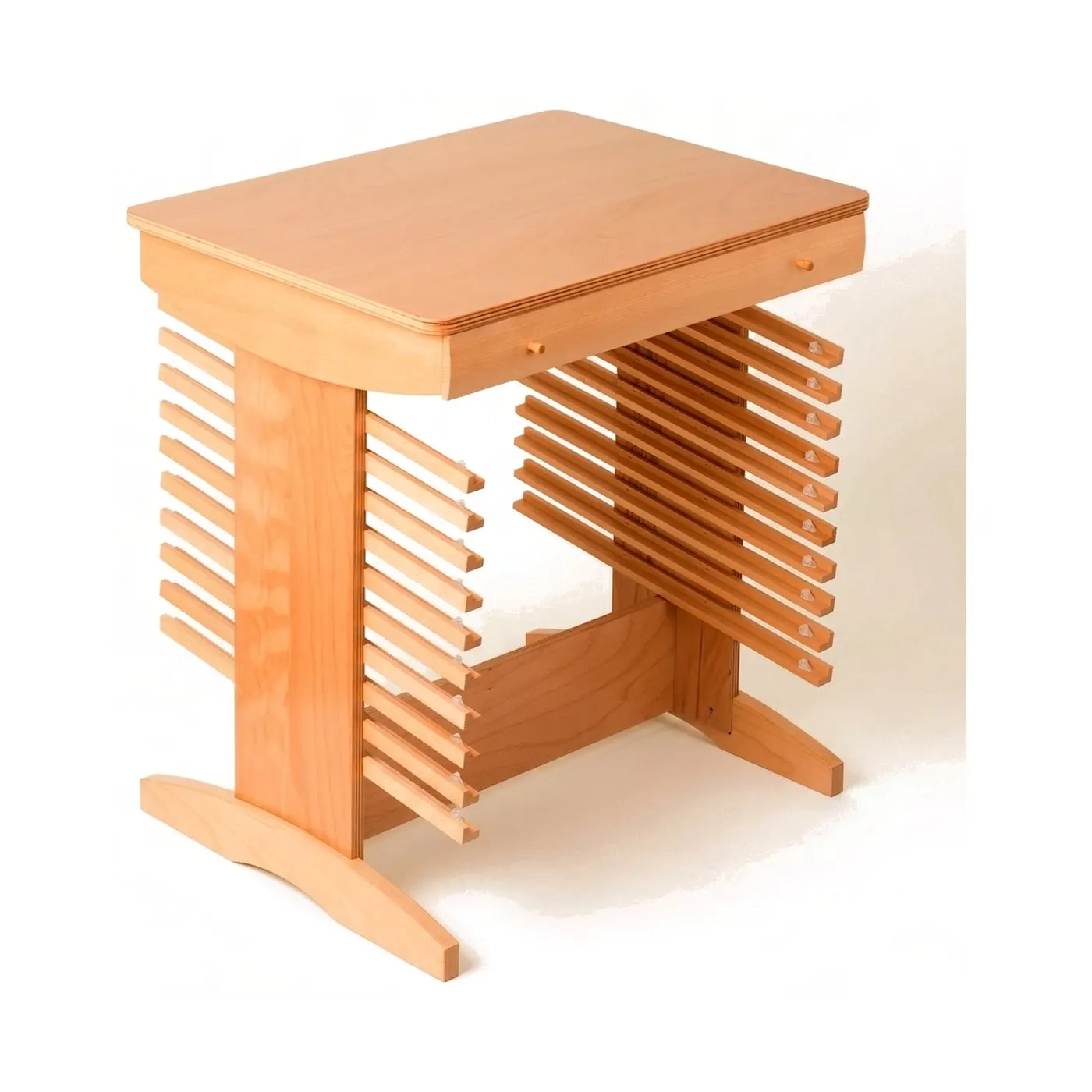
Puzzle MapSweden
The first photo is the maker's own. The other shots are illustrative.
Inv. no. NIE-0175K0
- Maker
- Nienhuis Montessori, since 1929
- Approval
- AMI
- Primary Material
- Solid wood
- Finish
- Paint
- EAN
- 8719924008253
€156.90
Final price incl. VAT. Free delivery.
✓ In Stock. Delivery in 5 to 9 working days.
1
30 daysto return
Advicebefore and after
Invoicefor companies
Advice, warranty and returns are handled by us.
The original
Why it costs €156.90
Behind the price of the original are things you can check yourself.
AMI approval
The material is approved by the Association Montessori Internationale (AMI). Nienhuis has made Montessori materials since 1929.
A verifiable original
The EAN 8719924008253 is on the box. It is the maker's number, not ours.
What the child does
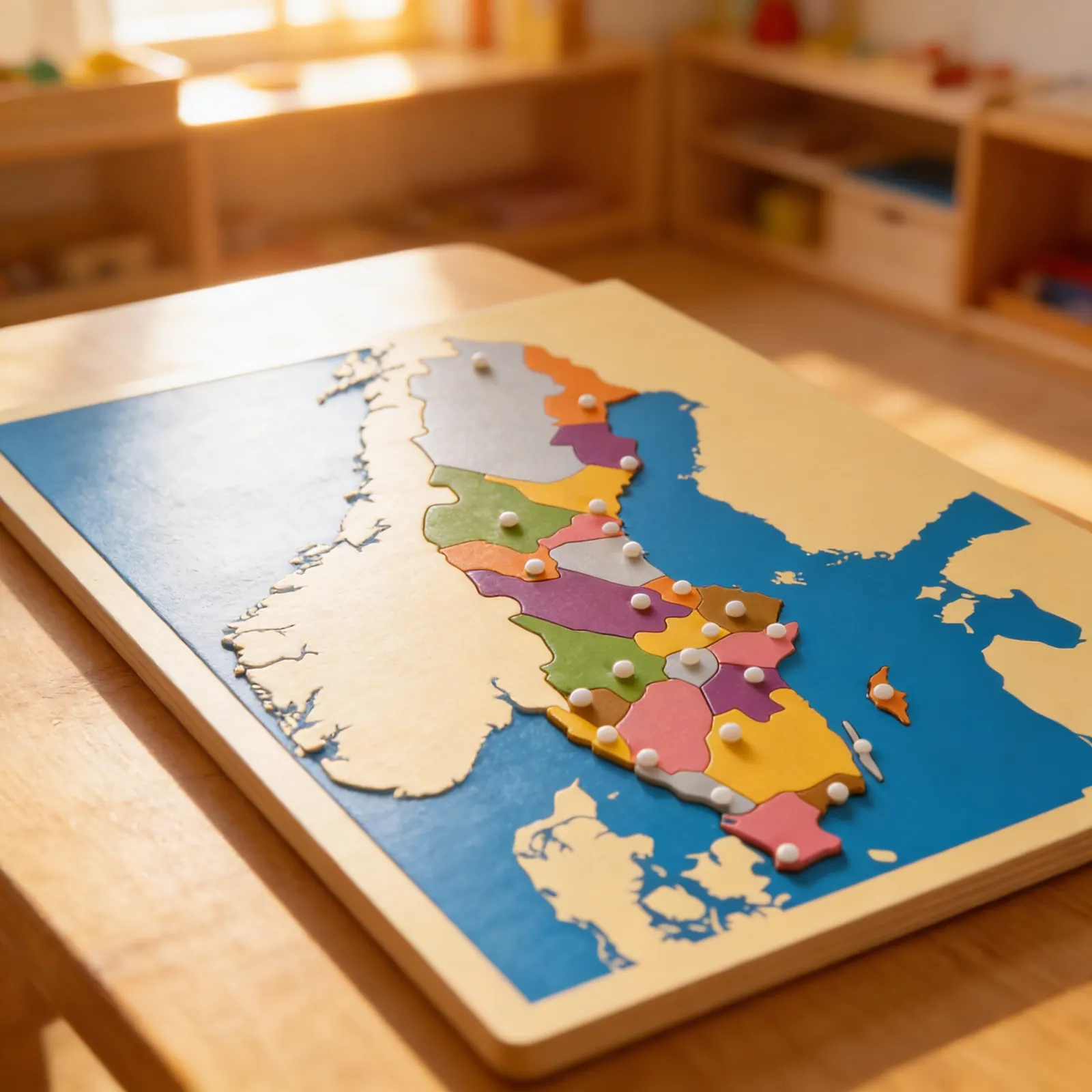
Puzzle Map in a child's hands
A hallmark of Montessori craftsmanship, this wooden puzzle map of Sweden helps children explore Swedish geography through hands-on learning. Each province is represented by a removable wooden piece with its own knob handle, and children can then trace boundaries and build spatial awareness. The map features blue water areas and white capital markers, supporting comprehensive geographical study aligned with Montessori cultural curriculum.
Geographic Awareness
Children develop understanding of political boundaries, spatial relationships, and Swedish geography through tactile exploration.
Fine Motor Refinement
Grasping knobs and fitting pieces precisely strengthens pincer grip and hand-eye coordination essential for writing.
Cultural Understanding
Introduces children to Sweden's regional divisions, fostering appreciation for world cultures and geographic diversity.
Visual Discrimination
Matching province shapes to their spaces develops visual perception skills and attention to detail.
Activity Guide
How to present it
Place the Sweden Puzzle Map on a work mat at the child's table. Ensure all province pieces are correctly positioned. Have a tray nearby for removed pieces.
- 1Invite the child to remove one province piece using the knob, starting with a larger, distinctive shape
- 2Place the removed piece on the tray and invite the child to trace around the empty space with their finger
- 3Have the child trace the removed province piece, then return it to its position
- 4Continue with 2-3 more provinces, allowing the child to work at their own pace
- 5For advanced work, remove all pieces and invite the child to reconstruct the map
3 tips for parents
- Support interest by locating Sweden on a globe or world map together
- Share family connections or travel experiences related to specific Swedish provinces
- Create simple matching games using drawings of province shapes during car rides or quiet time
From the same makerNienhuis
Accessories
Why it is in our selection
If you are not sure it suits your child, we answer in person.
Norbert Kovalčín, founder of Faborino · write to him
There is no review here yet. We will ask you for one after you buy. Write the first review
Details
What's in the Box
- Wooden puzzle board: 30 × 40 cm frame
- Province pieces: Approx. 21 removable pieces with knobs
Size and material
| Packaging | 62 × 50 × 3 cm |
| Primary Material | Solid wood |
| Finish | Paint |
| Handles | Wooden knobs |
| Recommended Age | 3-6 years |
Care
Wipe with slightly damp cloth, dry immediately
Frequently Asked Questions
How many province pieces does this Sweden puzzle map contain?
The puzzle contains 21 removable wooden pieces representing Sweden's 21 provinces (län), each with its own knob handle for easy manipulation by small hands.
What makes this puzzle suitable for children as young as 3 years old?
Each province piece features a wooden knob handle designed for developing pincer grasp, and the pieces are sized appropriately for small hands. The puzzle board has recessed spaces that guide proper placement, supporting independent learning.
How does this puzzle support Montessori geography curriculum?
This puzzle introduces concrete geographical concepts through sensorial exploration. Children can trace province boundaries, identify capitals with white markers, and distinguish land from water areas (shown in blue), building spatial awareness through hands-on manipulation.
What learning extensions can be done with this Sweden puzzle map?
Children can trace provinces on paper, create their own maps, match province cards to pieces, learn capital cities, explore Swedish culture by region, and practice Swedish province names. The puzzle serves as a foundation for deeper cultural and geographical studies.
Is this puzzle self-correcting like other Montessori materials?
Yes, each province piece fits only in its correct location due to the precisely cut shapes, allowing children to work independently and self-correct their work. This builds confidence and encourages repetition for mastery.
Product safety
Manufacturer: Nienhuis Montessori, Anders Celsiusstraat 15, 7442 PB Nijverdal, Netherlands
Puzzle Map
€156.90