
Puzzle Piece Of AfricaTunisia
The first photo is the maker's own. The other shots are illustrative.
Inv. no. NIE-0176F030
- Maker
- Nienhuis Montessori, since 1929
- Approval
- AMI
- Primary Material
- Solid wood
- Finish
- Paint or coating
- EAN
- 8719924009144
Final price incl. VAT. Delivery €5.90, €137.50 to go for free delivery.
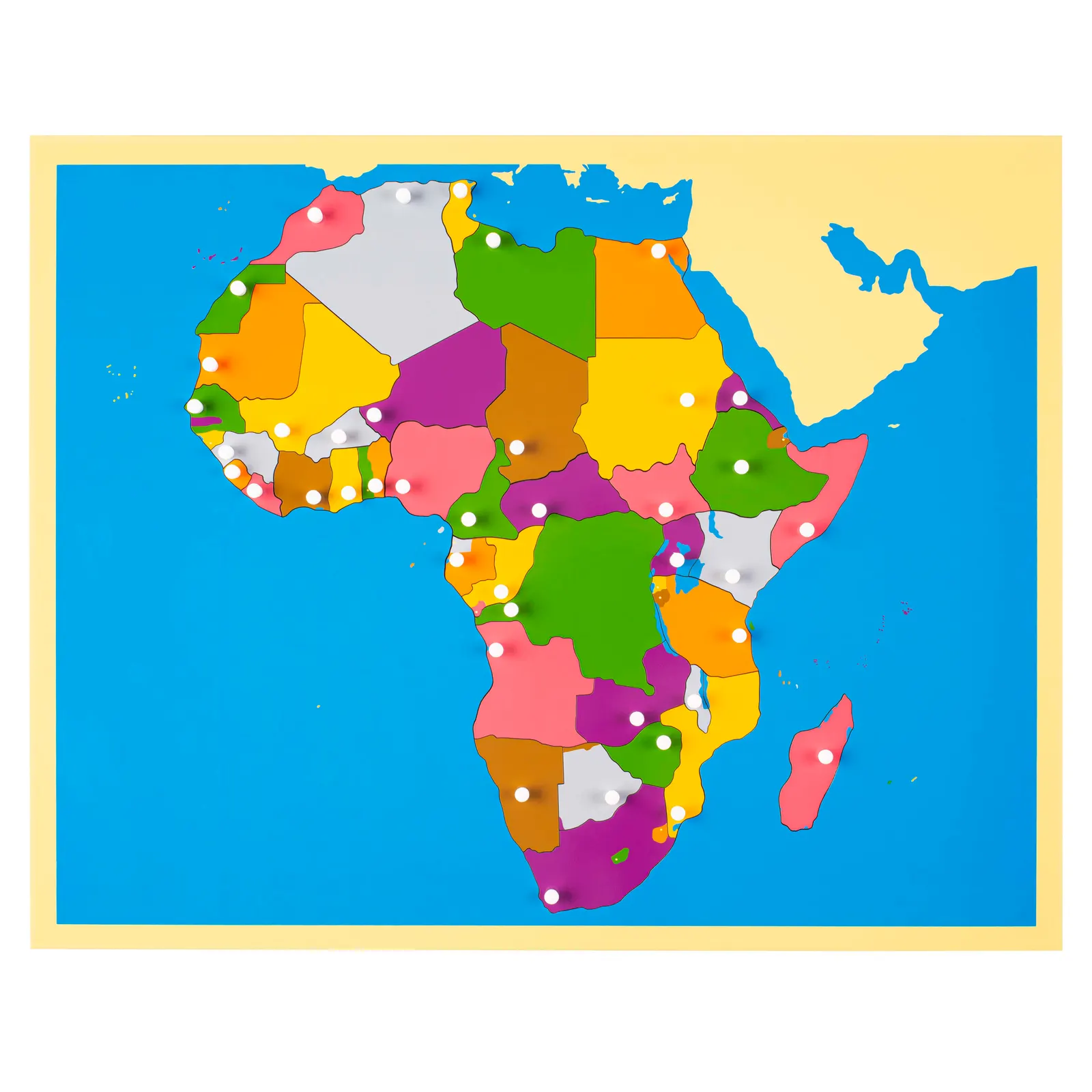 Puzzle Map €171.90
Advice, warranty and returns are handled by us.
Why it costs €11.50
Behind the price of the original are things you can check yourself.
AMI approval
The material is approved by the Association Montessori Internationale (AMI). Nienhuis has made Montessori materials since 1929.
A verifiable original
The EAN 8719924009144 is on the box. It is the maker's number, not ours.
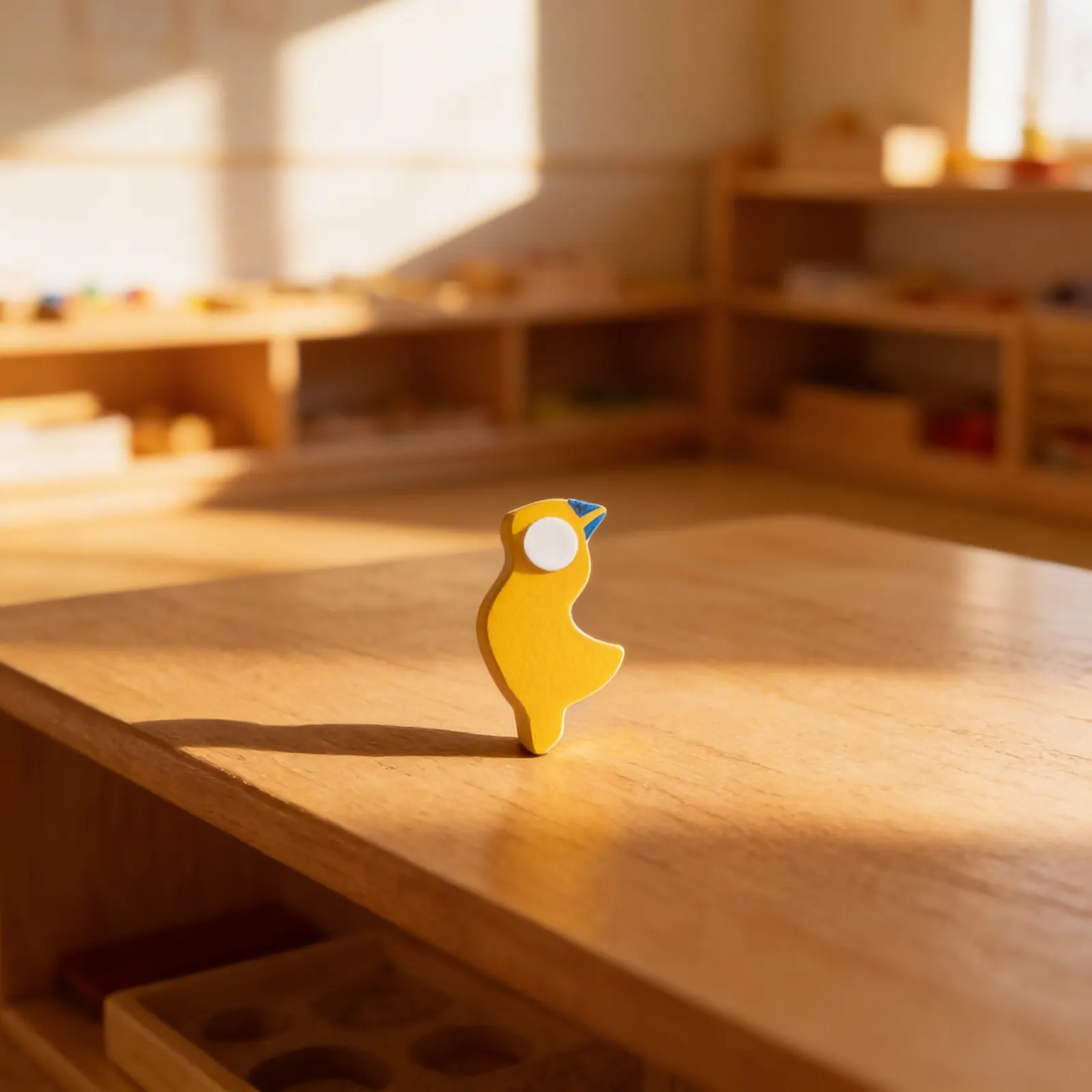
Puzzle Piece Of Africa in a child's hands
Manufactured with meticulous attention to detail, this wooden puzzle piece represents Tunisia, offering children a tactile way to explore North African geography. The smooth-finished piece features a control knob for easy grasping and manipulation, enabling independent exploration of Tunisia's distinctive shape and location. Part of the comprehensive Montessori Africa puzzle map system, this individual piece supports focused study and geographical awareness.
Geographic Awareness
Isolating Tunisia helps children understand its unique shape and position within North Africa, building concrete knowledge of world geography.
Fine Motor Control
The control knob promotes proper pencil grip while placing and removing the piece develops hand-eye coordination.
Cultural Connection
Physical interaction with country shapes creates memorable associations, supporting future studies of cultures and peoples.
Spatial Intelligence
Matching the piece to its outline develops visual discrimination and spatial reasoning skills essential for mathematics.
How to present it
Place the Tunisia puzzle piece on a neutral-colored work mat. Have the complete Africa puzzle map nearby for reference. Ensure clean hands for optimal grip on the control knob.
- 1Invite the child to carry the Tunisia piece using the control knob with thumb and two fingers
- 2Place Tunisia on the mat and trace its border with your index finger, moving clockwise from the northwestern point
- 3Demonstrate lifting and rotating the piece to examine all angles
- 4Show how to match the piece to its space in the Africa puzzle
3 tips for parents
- Point out Tunisia on world maps at home or in books to reinforce recognition
- Share foods from Tunisia while handling the puzzle piece to create cultural connections
- Practice the three-finger grip during everyday activities like picking up small objects

If you are not sure it suits your child, we answer in person.
Norbert Kovalčín, founder of Faborino · write to him
There is no review here yet. We will ask you for one after you buy. Write the first review
What's in the Box
- Tunisia puzzle piece: With integrated control knob
Size and material
| Packaging | 13 × 9 × 1 cm |
| Primary Material | Solid wood |
| Finish | Paint or coating |
| Hardware | Wooden control knob |
| Recommended Age | 3-6 years |
Care
Wipe with slightly damp cloth, dry immediately
Frequently Asked Questions
What age is this Tunisia puzzle piece suitable for?
This Tunisia puzzle piece is designed for children ages 3-6 years, aligning with the Montessori early childhood curriculum for geography studies.
Is this piece compatible with other Montessori Africa puzzle maps?
Yes, this piece is part of the comprehensive Montessori Africa puzzle map system and fits perfectly with standard Montessori continent puzzle maps.
What skills does this Tunisia puzzle piece help develop?
It develops fine motor control through the control knob, geographical awareness, shape recognition, spatial reasoning, and introduces children to North African countries.
What are the materials and safety features of this puzzle piece?
The piece is precision-crafted from smooth-finished wood with rounded edges and a securely attached control knob, meeting safety standards for young children.
How can teachers use this individual country piece in lessons?
Teachers can use it for focused country studies, three-period lessons, matching activities with flags or pictures, and as part of cultural studies about Tunisia and North Africa.
Product safety
Manufacturer: Nienhuis Montessori, Anders Celsiusstraat 15, 7442 PB Nijverdal, Netherlands
Puzzle Piece Of Africa