
Puzzle Piece Of AsiaGeorgia / Armenia / Azerbaijan
The first photo is the maker's own. The other shots are illustrative.
Inv. no. NIE-0176G027
- Maker
- Nienhuis Montessori, since 1929
- Primary Material
- Wood
- Finish
- Paint
- EAN
- 8719924009410
Final price incl. VAT. Delivery €5.90, €137.50 to go for free delivery.
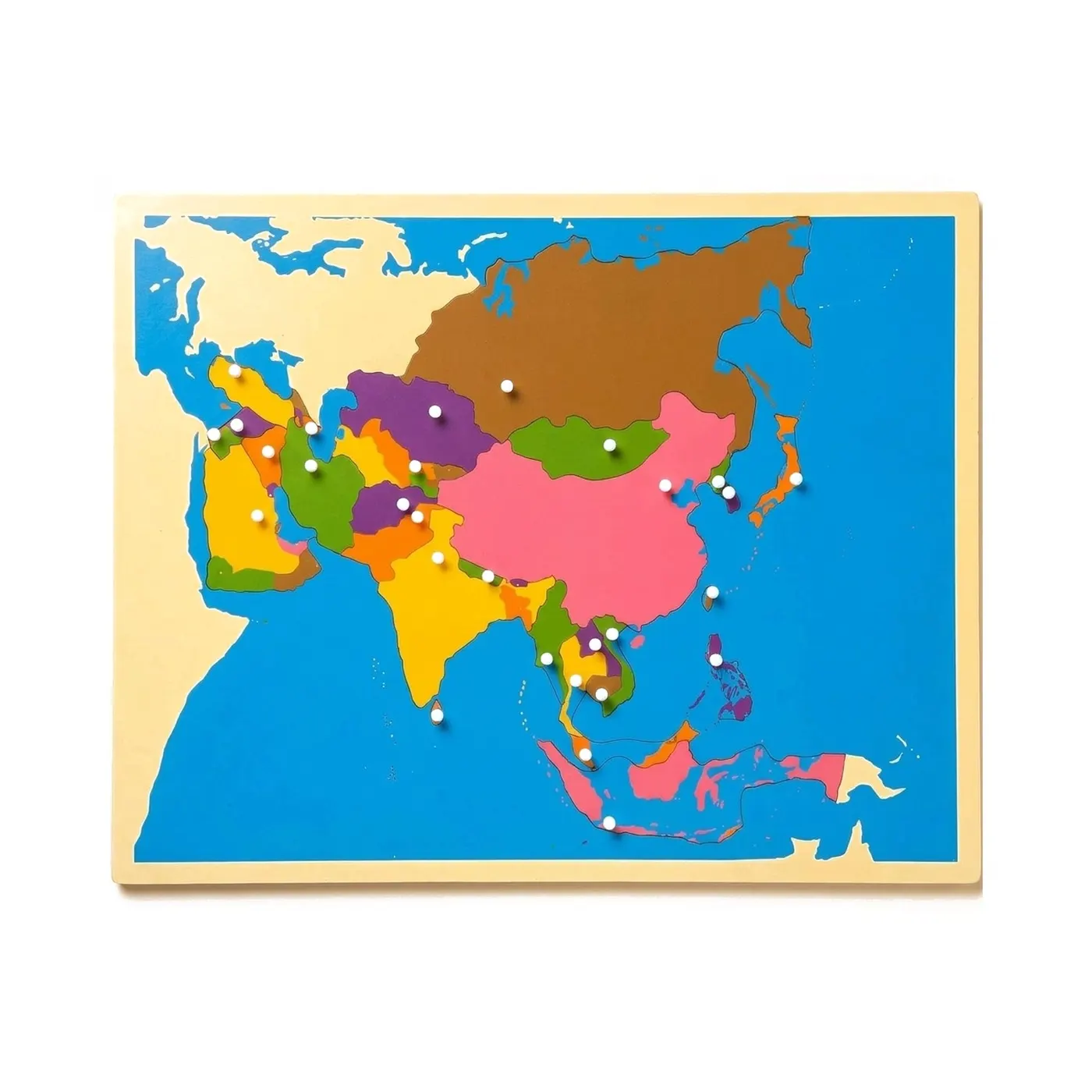 Puzzle Map €154.90
Advice, warranty and returns are handled by us.
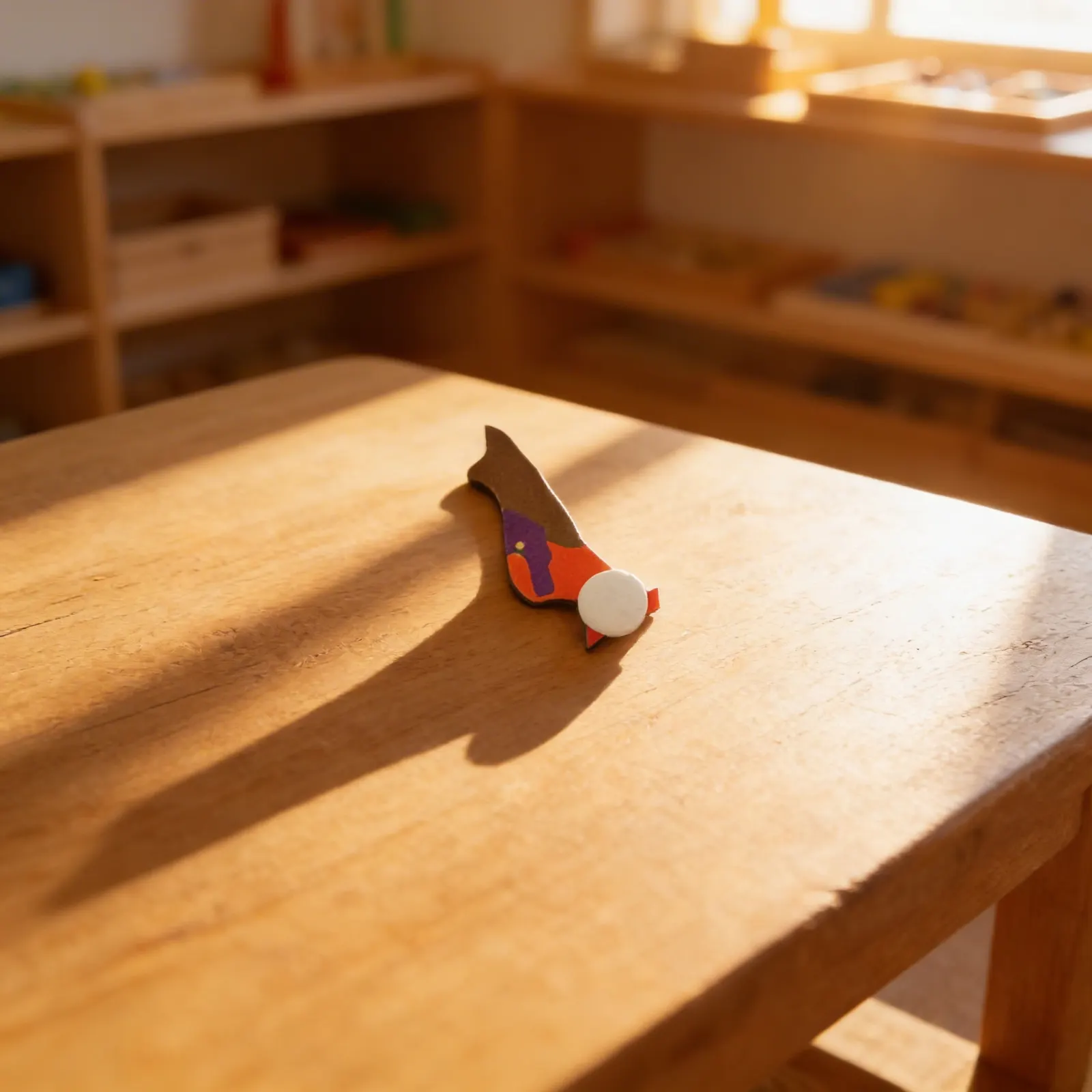
Puzzle Piece Of Asia in a child's hands
This piece covers three neighbouring countries of the South Caucasus at once: Georgia, Armenia and Azerbaijan, which lie between the Black Sea and the Caspian Sea. It belongs to the puzzle map of Asia and is sold without the map. According to Nienhuis it is made of duron and beech, comes in brown, orange and purple and is meant for indoor use. The child lifts the piece by its knob and fits it where the three countries meet on the map. Here Georgia is the country, not the US state. For ages 3 to 6.
Geographic Awareness
Children learn to identify and locate the Caucasus region while understanding how Georgia, Armenia, and Azerbaijan share borders.
Fine Motor Skills
The control knob promotes pincer grip development and hand-eye coordination through precise placement activities.
Visual Discrimination
Color-coded sections help children distinguish between different countries and understand political boundaries.
Cultural Understanding
Introduces children to the concept of neighboring countries and regional relationships in the Caucasus.
How to present it
Place the Asia puzzle map on a work mat. Remove the Georgia/Armenia/Azerbaijan piece and set it on a separate tray alongside the map.
- 1Invite the child to carry the tray to their workspace
- 2Demonstrate grasping the control knob with thumb and index finger
- 3Slowly trace the outline of each country section with your finger
- 4Lift the piece by the knob and place it into the corresponding space on the map
- 5Remove and replace the piece several times, naming the countries
3 tips for parents
- Point out these countries when they appear in news or conversations, connecting the puzzle work to real-world awareness
- Look for foods, music, or cultural items from Georgia, Armenia, or Azerbaijan to make geographical learning multisensory
- Support your child's interest by finding photographs of landscapes from each country to match with the puzzle piece

If you are not sure it suits your child, we answer in person.
Norbert Kovalčín, founder of Faborino · write to him
There is no review here yet. We will ask you for one after you buy. Write the first review
What's in the Box
- Puzzle Piece: Georgia/Armenia/Azerbaijan region with control knob
Size and material
| Packaging | 15 × 10 × 1 cm |
| Primary Material | Wood |
| Finish | Paint |
| Recommended Age | 3-6 years |
Care
Wipe with slightly damp cloth, dry immediately
Frequently Asked Questions
What age group is this Caucasus puzzle piece suitable for?
This puzzle piece is designed for children ages 3-6 years old, aligning with the Montessori early childhood curriculum for geography exploration.
Can this puzzle piece be used independently or does it require the complete Asia map?
This piece is designed as a replacement or additional component for the Montessori puzzle map of Asia. While children can explore the three countries independently, it functions best within the complete continental map framework.
How does the control knob support fine motor development?
The small knob on each country section is specifically sized to encourage proper pincer grip development, strengthening the same muscles children use for writing while they explore geography.
Are the countries color-coded to match standard Montessori geography materials?
Yes, each country (Georgia, Armenia, and Azerbaijan) features distinct colors that typically correspond with Montessori geography color-coding systems, helping children visually distinguish political boundaries.
What learning objectives does this puzzle piece support?
This material introduces spatial awareness, political geography, regional relationships, and cultural awareness while developing fine motor skills, concentration, and visual discrimination abilities.
Product safety
Manufacturer: Nienhuis Montessori, Anders Celsiusstraat 15, 7442 PB Nijverdal, Netherlands
Puzzle Piece Of Asia