
Puzzle Piece Of EuropeThe Netherlands
The first photo is the maker's own. The other shots are illustrative.
Inv. no. NIE-0176B022
- Maker
- Nienhuis Montessori, since 1929
- Primary Material
- Solid wood
- Finish
- Paint
- EAN
- 8719924008468
Final price incl. VAT. Delivery €5.90, €137.50 to go for free delivery.
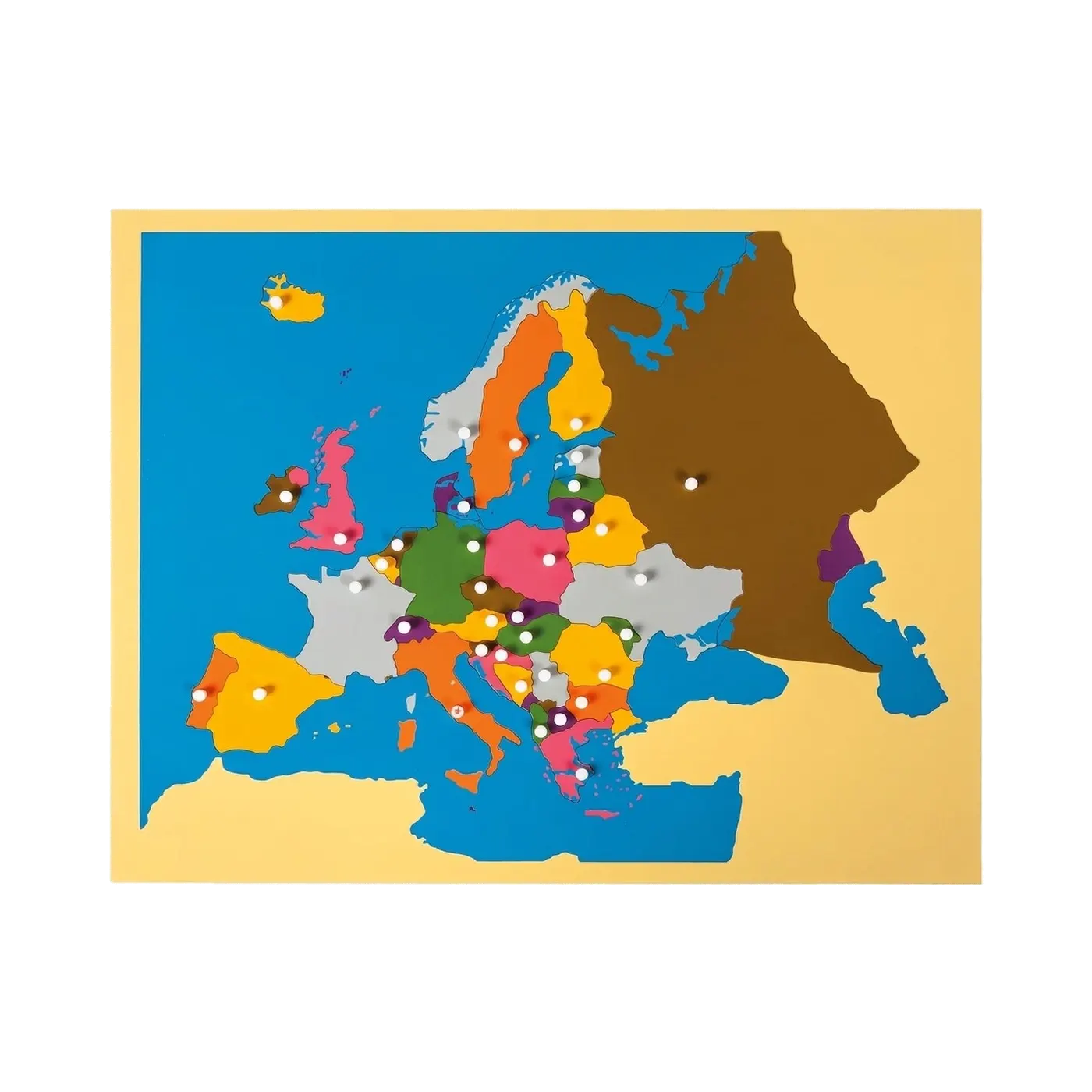 Puzzle Map €138.90
Advice, warranty and returns are handled by us.
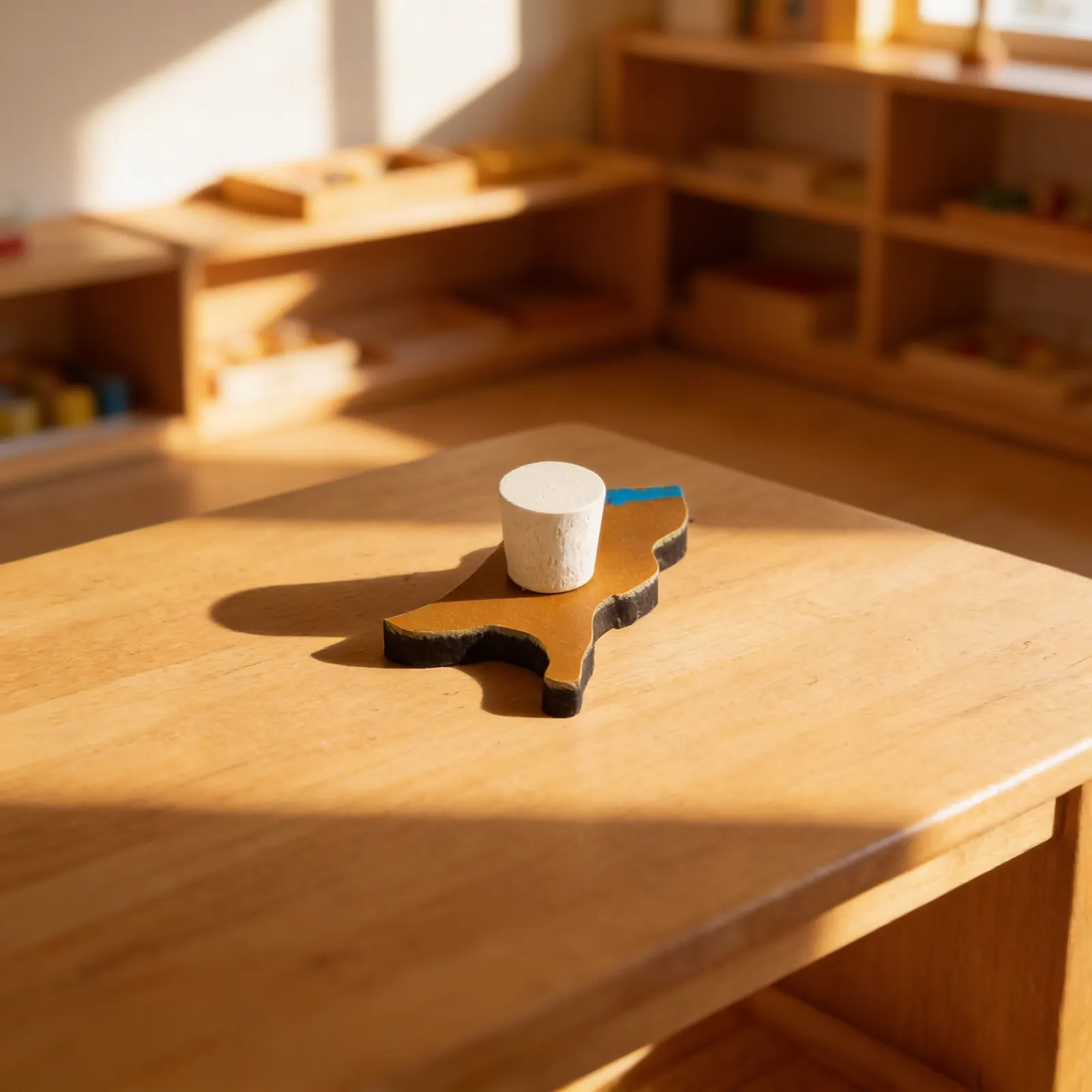
Puzzle Piece Of Europe in a child's hands
The Netherlands piece from the Europe puzzle map, sold on its own. This is the piece where a coastline stops being a natural fact: a good part of the edge a child traces with a finger was drawn by people who pushed the sea back and kept it back, and the country behind it sits lower than the water it borders. A map cannot show that, but the question it raises is worth having. Silk screened and laser cut. The puzzle map is a separate item.
Geographic Awareness
Introduces the shape and location of the Netherlands, building foundational knowledge of European geography.
Fine Motor Control
The control knob promotes proper pencil grip while manipulating the puzzle piece strengthens hand muscles.
Visual Discrimination
Color-coded regions help children recognize and differentiate provincial boundaries within the country.
Cultural Understanding
Supports lessons about Dutch culture, language, and traditions through concrete geographic representation.
How to present it
Place the Netherlands puzzle piece on a neutral-colored work mat. Have the Europe puzzle map nearby for reference. Prepare a small tray with the piece, a soft cloth for handling, and optionally, a magnifying glass for detailed exploration.
- 1Invite the child to carry the tray to their workspace, demonstrating careful two-handed carrying
- 2Show how to grasp the control knob with three fingers, lifting the piece slowly and deliberately
- 3Trace the outer coastline of the Netherlands with your index finger, pausing at notable features
- 4Point to and name 2-3 major provinces, tracing their boundaries within the puzzle piece
- 5Demonstrate placing the piece into the Europe puzzle map, showing how it fits precisely
3 tips for parents
- Look for the Netherlands on different maps at home, weather maps, atlases, or globes
- Cook a Dutch meal together and discuss which province certain foods originate from
- If traveling, help your child locate your position relative to the Netherlands

If you are not sure it suits your child, we answer in person.
Norbert Kovalčín, founder of Faborino · write to him
There is no review here yet. We will ask you for one after you buy. Write the first review
What's in the Box
- Netherlands puzzle piece: With painted provincial regions and control knob
Size and material
| Packaging | 13 × 9 × 1 cm |
| Primary Material | Solid wood |
| Finish | Paint |
| Knob | Wooden control knob |
| Recommended Age | 3-6 years |
Care
Wipe with slightly damp cloth, dry immediately
Frequently Asked Questions
Is this puzzle piece compatible with standard Montessori Europe puzzle maps?
Yes, this Netherlands puzzle piece is designed to fit perfectly with standard Montessori Europe puzzle maps. It maintains the same scale and specifications as traditional Montessori geography materials, allowing seamless integration with existing classroom materials.
What age is most appropriate for introducing this Netherlands puzzle piece?
Children ages 3-6 can benefit from this material, though the ideal introduction is typically around age 4-5 when children have developed sufficient fine motor control and interest in geography. Younger children (3-4) can explore the piece's shape and color, while older children (5-6) can engage with more detailed provincial studies.
How does the control knob help young children?
The control knob is positioned strategically to promote proper pencil grip development while allowing children to manipulate the piece independently. This small knob helps children practice their pincer grasp, builds hand strength, and enables them to place and remove the piece without touching the painted surface.
Are the provinces clearly distinguished on this puzzle piece?
Yes, each of the Netherlands' provinces is painted in a distinct color, making it easy for children to visually differentiate between regions. This color coding supports visual discrimination skills and helps children begin to understand political boundaries within the country.
Can this piece be used independently or does it require the full Europe map?
While designed to complement the Europe puzzle map, this piece can be used independently for focused study. Children can trace around it, create their own maps, study the shape of the Netherlands, or use it with other materials for cultural studies about Dutch geography, making it a versatile learning tool.
Product safety
Manufacturer: Nienhuis Montessori, Anders Celsiusstraat 15, 7442 PB Nijverdal, Netherlands
Puzzle Piece Of Europe