
Puzzle Piece Of North AmericaAlaska
The first photo is the maker's own. The other shots are illustrative.
Inv. no. NIE-0176C001
- Maker
- Nienhuis Montessori, since 1929
- Base Material
- Solid wood
- Surface Finish
- Paint
- EAN
- 8719924008598
Final price incl. VAT. Delivery €5.90, €124.10 to go for free delivery.
Advice, warranty and returns are handled by us.
Puzzle Piece Of North America in a child's hands
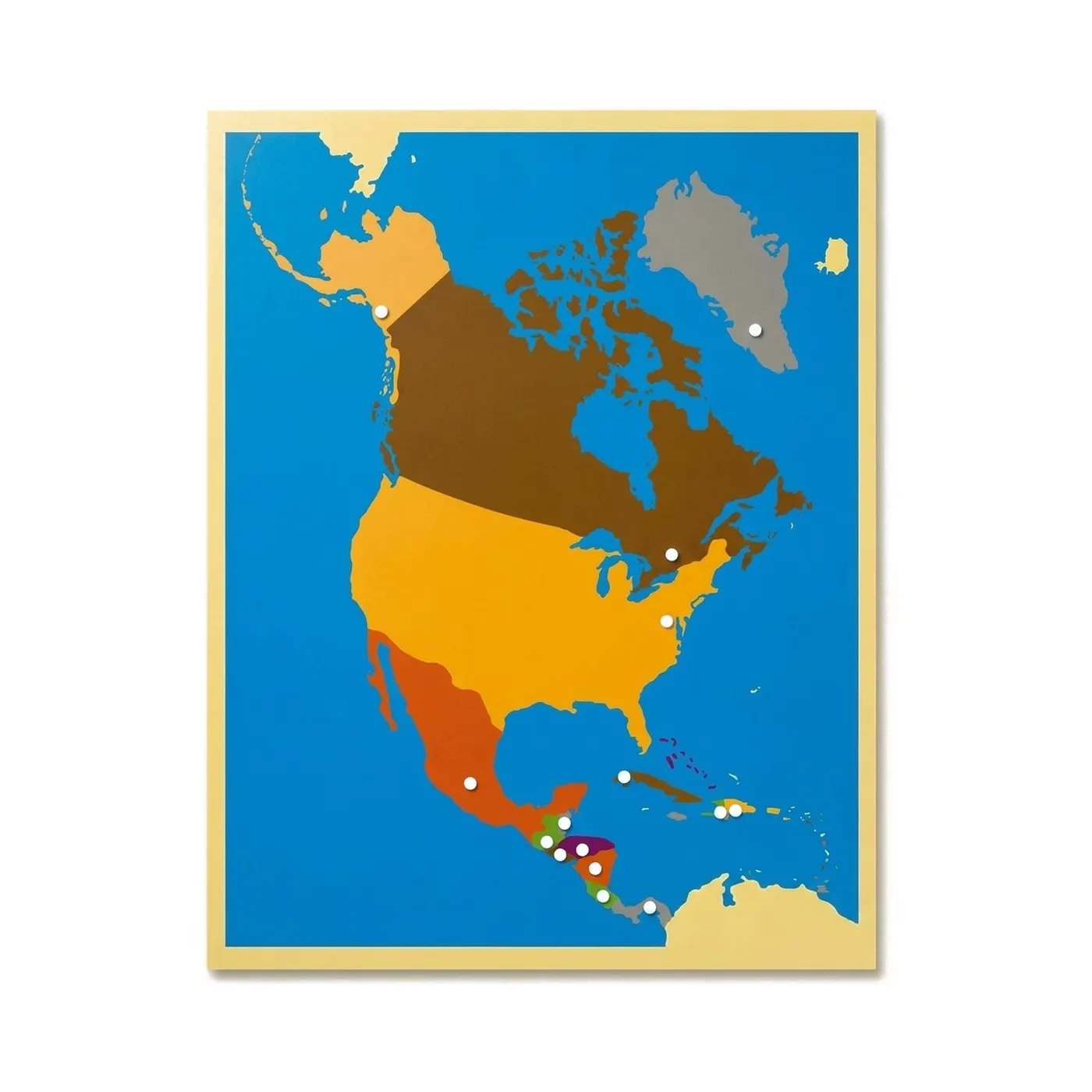
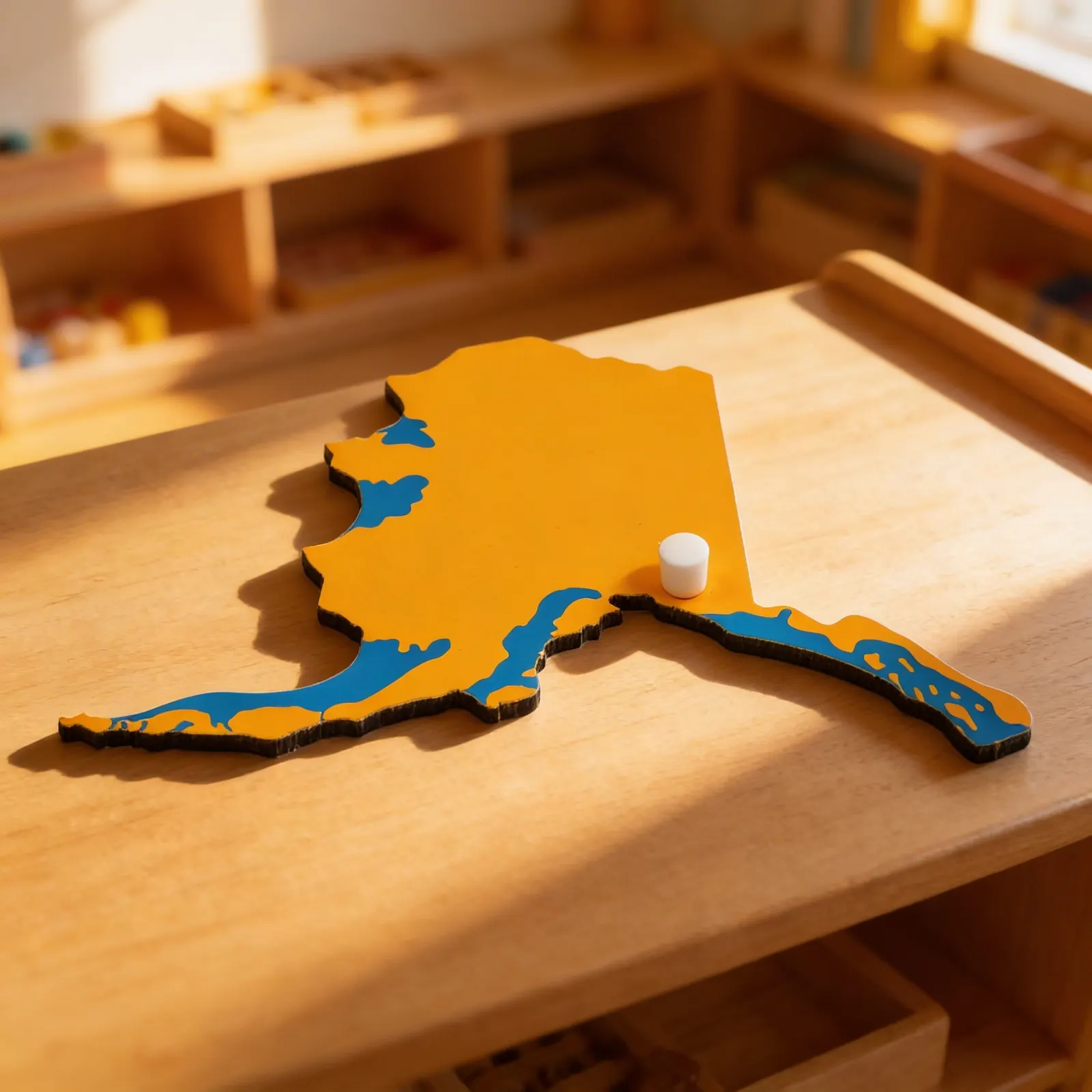
On the puzzle map of North America, Alaska is the piece in the north-western corner of the continent. This product is that one piece, made of wood with a silkscreen print, and the map is not part of it. In our catalogue it is listed among the replacement parts, under the manufacturer's number 0176C001. The child lifts the piece out, turns it by its shape and fits it back where Alaska belongs on the map. It serves work with the map of North America. Packed, the piece measures 16 × 12 × 1 cm. It belongs to geography and is meant for children aged 3 to 6.
Geographic Awareness
Children learn Alaska's unique shape and position relative to North America while understanding its waterways and geographic features.
Fine Motor Refinement
Grasping the cylindrical knob and fitting the piece precisely develops pincer grip and hand-eye coordination.
Spatial Intelligence
Tracing the raised edges helps children internalize Alaska's distinctive shape and develop spatial memory.
Cultural Understanding
Introduces Alaska as part of North America, building foundation for discussions about different regions and their characteristics.
How to present it
Place the Alaska piece on a neutral work mat alongside the North America puzzle base. Ensure good lighting to highlight the painted geographical features.
- 1Invite the child to carry the Alaska piece using the knob, feeling its weight and examining the painted features
- 2Demonstrate tracing the raised edges with two fingers, moving slowly around Alaska's complex coastline
- 3Show how to place Alaska in its correct position on the puzzle map, using the Aleutian Islands as a guide
- 4Remove and replace the piece several times, each time naming 'Alaska' clearly
3 tips for parents
- Look for Alaska on food packaging (especially seafood) to connect the puzzle work to daily life
- Share family travel stories or photos from Alaska to make the geography personal
- During winter, discuss how Alaska's position affects its daylight hours compared to your location

If you are not sure it suits your child, we answer in person.
Norbert Kovalčín, founder of Faborino · write to him
There is no review here yet. We will ask you for one after you buy. Write the first review
What's in the Box
- Alaska Puzzle Piece: With painted geographical features
- Cylindrical Knob: White grip for easy handling
Size and material
| Packaging | 16 × 12 × 1 cm |
| Base Material | Solid wood |
| Surface Finish | Paint |
| Knob | White cylindrical grip |
| Recommended Age | 3-6 years |
Care
Wipe with slightly damp cloth, dry immediately
Frequently Asked Questions
Is this puzzle piece sold separately or as part of a complete map?
This Alaska puzzle piece is sold individually as a replacement or supplementary piece for the North America puzzle map. The complete puzzle map with all states and provinces is available separately.
What geographical features are painted on the Alaska piece?
The piece includes hand-painted major rivers and waterways of Alaska, such as the Yukon River and other significant water features, helping children learn about Alaska's geography while developing their spatial awareness.
How does the cylindrical knob help young children?
The cylindrical knob is specifically designed for the pincer grasp development in children ages 3-6. It allows proper finger positioning while lifting and placing the piece, strengthening the same muscles used for writing.
Can children trace around this puzzle piece?
Yes, the raised edges make it perfect for tracing activities. Children can place paper over the piece and create rubbings, or trace around it to practice Alaska's distinctive shape and improve pencil control.
Product safety
Manufacturer: Nienhuis Montessori, Anders Celsiusstraat 15, 7442 PB Nijverdal, Netherlands
Puzzle Piece Of North America