
Puzzle Piece Of North AmericaCuba
The first photo is the maker's own. The other shots are illustrative.
Inv. no. NIE-0176C005
- Maker
- Nienhuis Montessori, since 1929
- Primary Material
- Wood
- Finish
- Paint
- EAN
- 8719924008635
Final price incl. VAT. Delivery €5.90, €124.10 to go for free delivery.
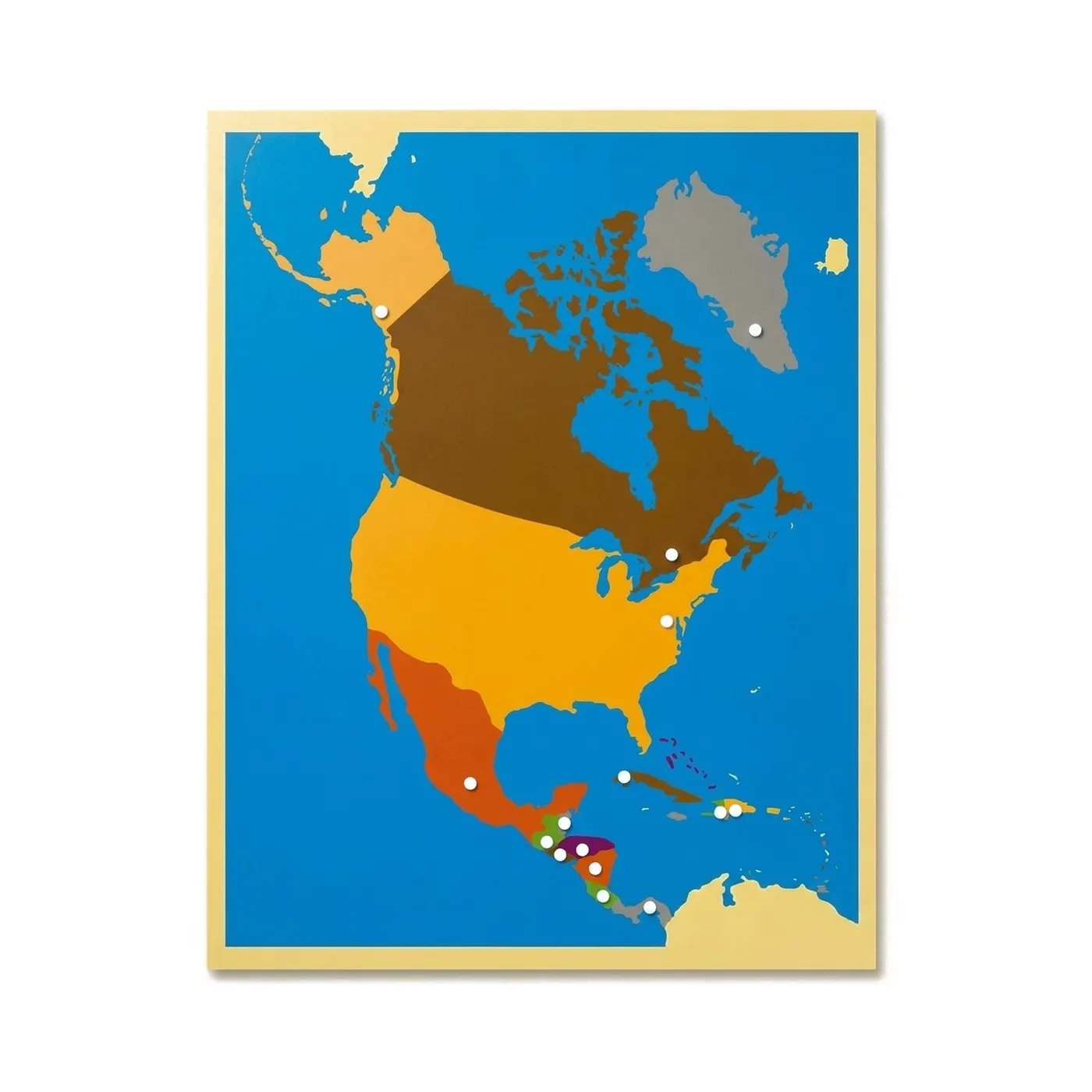
Advice, warranty and returns are handled by us.
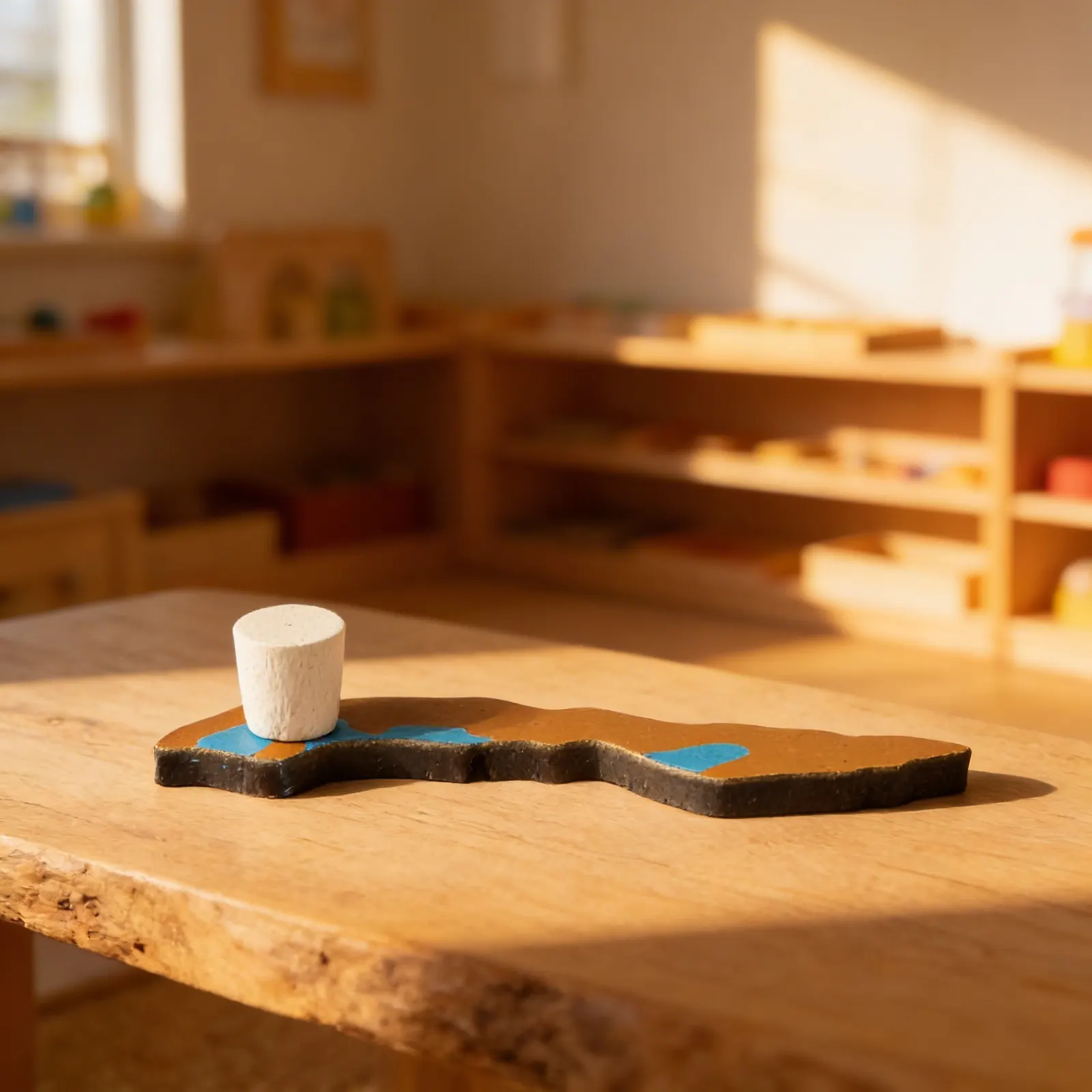
Puzzle Piece Of North America in a child's hands
Cuba is the largest island of the Caribbean, and this piece shows it on the puzzle map of North America; the map is not part of the product. It is brown, and Nienhuis names duron and beech as its material. The child takes it by the knob, notes its long curved outline and places it on the map south of Florida. Cuba is an island, so the child looks for its place in the sea, not on the mainland, and a lost piece of this map can be replaced with it. The piece is meant for children aged 3 to 6.
Geographic Awareness
Children learn to identify Cuba's shape, location, and physical features while developing spatial reasoning skills.
Fine Motor Control
The control knob promotes proper pincer grip and precise hand movements essential for later writing skills.
Sensorial Learning
Tactile exploration of topographical features helps children understand elevation and terrain through touch.
Cultural Geography
Introduces children to Caribbean geography and Cuba's place within North America's broader geographic context.
How to present it
Place the complete North America puzzle map on a work mat. Have a small tray ready with the Cuba piece and a damp sponge for cleaning fingers after handling.
- 1Remove the Cuba piece using the control knob with thumb and two fingers
- 2Trace the outline of Cuba with your index finger, starting at the western tip
- 3Feel the topographical relief, noting mountain ranges and lowland areas
- 4Observe the turquoise painted areas representing surrounding waters
- 5Return the piece to its place in the puzzle using the control knob
3 tips for parents
- Look at family vacation photos or maps showing Cuba's location relative to your home
- Find Cuba on different maps and globes to reinforce recognition of its shape
- Read picture books about Cuban wildlife or culture while having the puzzle piece nearby

If you are not sure it suits your child, we answer in person.
Norbert Kovalčín, founder of Faborino · write to him
There is no review here yet. We will ask you for one after you buy. Write the first review
What's in the Box
- Cuba puzzle piece: With topographical relief and control knob
Size and material
| Packaging | 13 × 9 × 1 cm |
| Primary Material | Wood |
| Finish | Paint |
| Recommended Age | 3-6 years |
Care
Wipe with slightly damp cloth, dry immediately
Frequently Asked Questions
What are the dimensions of this Cuba puzzle piece?
The dimensions vary based on the geographic scale of the North America puzzle map series. This piece is proportionally sized to represent Cuba's actual landmass relative to other North American countries, typically measuring approximately 15-20cm in length.
Can this piece be used independently or does it require the complete puzzle?
While designed as part of the North America puzzle map series, this Cuba piece can be used independently for focused study. However, it reaches its full educational potential when used with the complete puzzle frame, allowing children to understand Cuba's geographic relationship to neighboring countries.
What geographical features are highlighted on this puzzle piece?
The piece features detailed topographical relief showing Cuba's mountain ranges, valleys, and coastal areas. Water areas surrounding the island are painted in turquoise, helping children distinguish between land and sea while learning about Cuba's island geography.
How does the cylindrical knob support Montessori learning principles?
The control knob is positioned strategically to develop the pincer grasp essential for writing preparation. It allows children to manipulate the piece with precision while maintaining focus on the geographic content, supporting both fine motor development and concentration.
What age-appropriate activities can be done with this Cuba puzzle piece?
Children can trace the outline to create maps, use it for sensory exploration of the textured surface, practice vocabulary related to islands and water bodies, and engage in cultural discussions about Caribbean geography. It also supports lessons on capital cities, flags, and basic cultural awareness.
Product safety
Manufacturer: Nienhuis Montessori, Anders Celsiusstraat 15, 7442 PB Nijverdal, Netherlands
Puzzle Piece Of North America