
Rolling PinChild-Sized Baking
The first photo is the maker's own. The other shots are illustrative.
Inv. no. NIE-408500
- Maker
- Nienhuis Montessori, since 1929
- Primary Material
- Natural wood
- Finish
- Smooth
- EAN
- 8719924047283
Final price incl. VAT. Delivery €5.90, €139.50 to go for free delivery.
Advice, warranty and returns are handled by us.
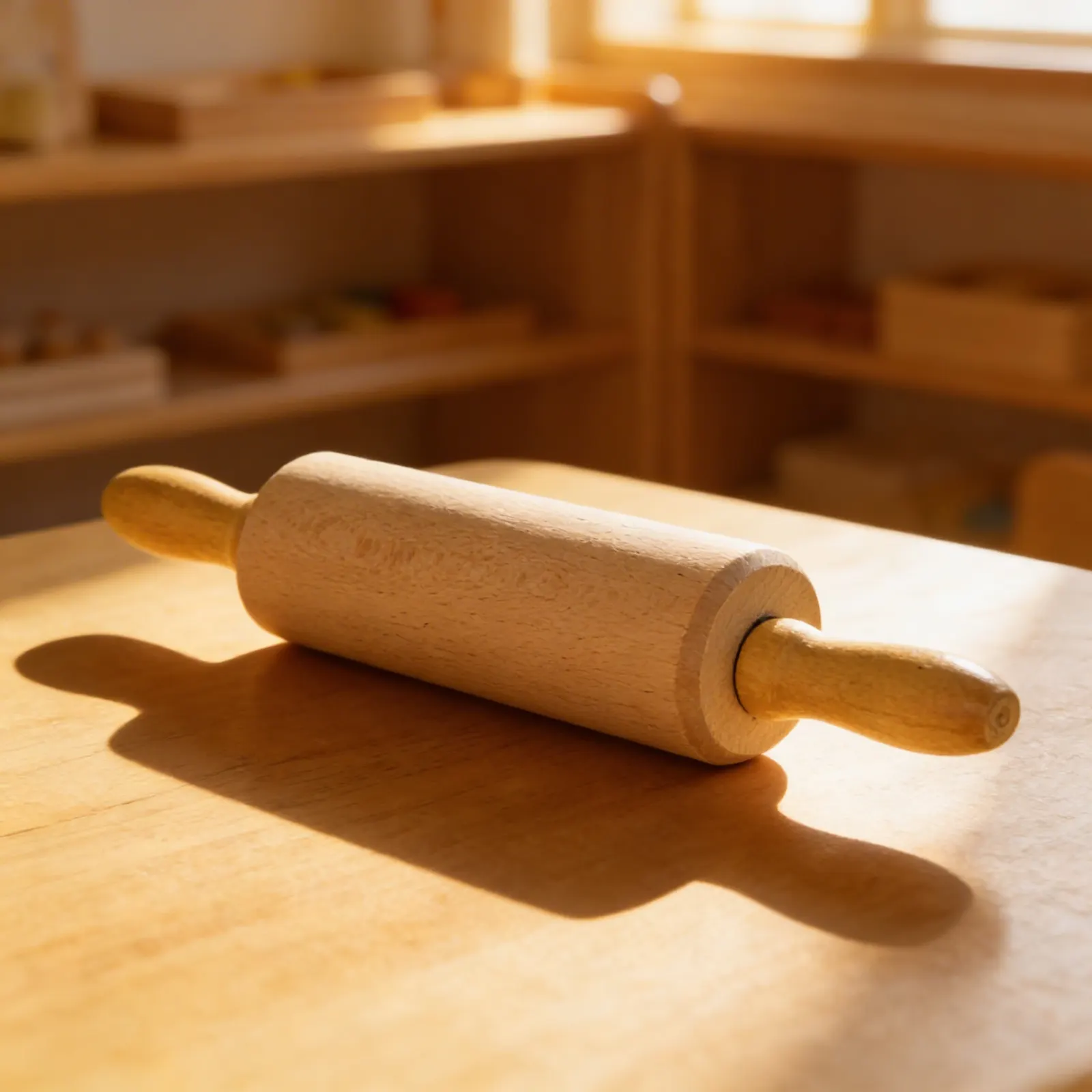
Rolling Pin in a child's hands
A rolling pin in untreated beech, 24 cm long and 5 cm across, sized for a child's reach. Untreated is the deliberate part: nothing seals the wood, so it has to be wiped rather than soaked and dried standing rather than left in the sink, and that care is a second piece of work attached to the first. Twenty four centimetres is short enough that both hands land on the pin rather than the ends of it. Food preparation, dough and pastry.
Bilateral Coordination
Rolling motion requires both hands working together, developing cross-body coordination essential for later writing skills.
Practical Life Skills
Authentic kitchen tool allows meaningful participation in food preparation, building confidence and independence.
Hand Strength
Gripping and applying pressure while rolling develops the hand muscles needed for pencil control.
Sensory Development
The smooth wood texture and rolling resistance provide important tactile and proprioceptive feedback.
How to present it
Place a small ball of playdough or real dough on a low table with the rolling pin beside it. Ensure the work surface is at the child's waist height.
- 1Demonstrate placing both hands on the rolling pin handles, keeping them equidistant from center
- 2Roll forward with gentle pressure, then pull back to starting position
- 3Show how to lift and reposition the rolling pin when the dough spreads
- 4Invite the child to try, observing without correcting
3 tips for parents
- Include your child in real baking activities using their rolling pin
- Accept uneven results - focus on the process, not perfection
- Keep a designated drawer or shelf for child-sized kitchen tools

If you are not sure it suits your child, we answer in person.
Norbert Kovalčín, founder of Faborino · write to him
There is no review here yet. We will ask you for one after you buy. Write the first review
What's in the Box
- Wooden Rolling Pin: Child-sized with rounded handles
Size and material
| Packaging | 24 × 6 × 6 cm |
| Primary Material | Natural wood |
| Finish | Smooth |
| Recommended Age | 0-3 years |
Care
Wipe with damp cloth, dry thoroughly
Frequently Asked Questions
What age is this rolling pin appropriate for?
This child-sized rolling pin is designed for children ages 0-3, though it's most suitable for toddlers 18 months and older who can stand independently and have developed basic hand coordination.
What are the dimensions of this child's rolling pin?
This rolling pin is specifically proportioned for small hands with a smooth cylindrical roller and rounded handles that allow young children to grip and use it comfortably during practical life activities.
Is this rolling pin safe for actual food preparation?
Yes, this wooden rolling pin is crafted from natural, food-safe wood and can be used for real cooking and baking activities under adult supervision, supporting authentic Montessori practical life experiences.
How does this tool support Montessori learning?
The rolling pin develops bilateral coordination, strengthens hand muscles, promotes purposeful movement, and fosters independence by allowing children to participate meaningfully in real kitchen work and food preparation.
How should I clean and maintain this wooden rolling pin?
Clean with a damp cloth and mild soap after use, then dry thoroughly. Occasionally treat with food-safe mineral oil to maintain the wood's condition. Avoid soaking in water or putting in the dishwasher.
Product safety
Manufacturer: Nienhuis Montessori, Anders Celsiusstraat 15, 7442 PB Nijverdal, Netherlands
Rolling Pin