
Short Cylinder: Geometric Solid for Elementary Exploration
Made by Nienhuis Montessori · shipped by Heutink International (Netherlands) About the maker
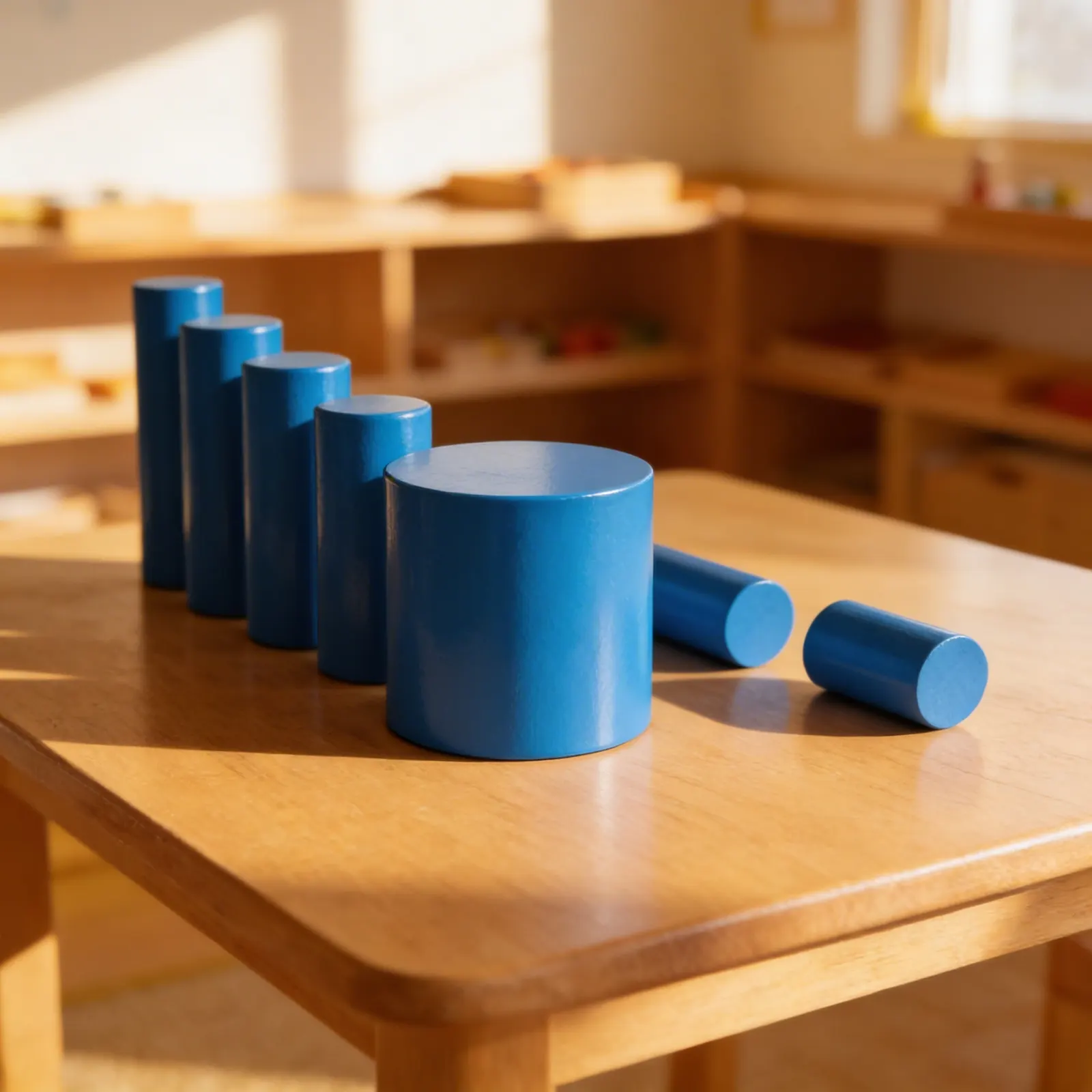
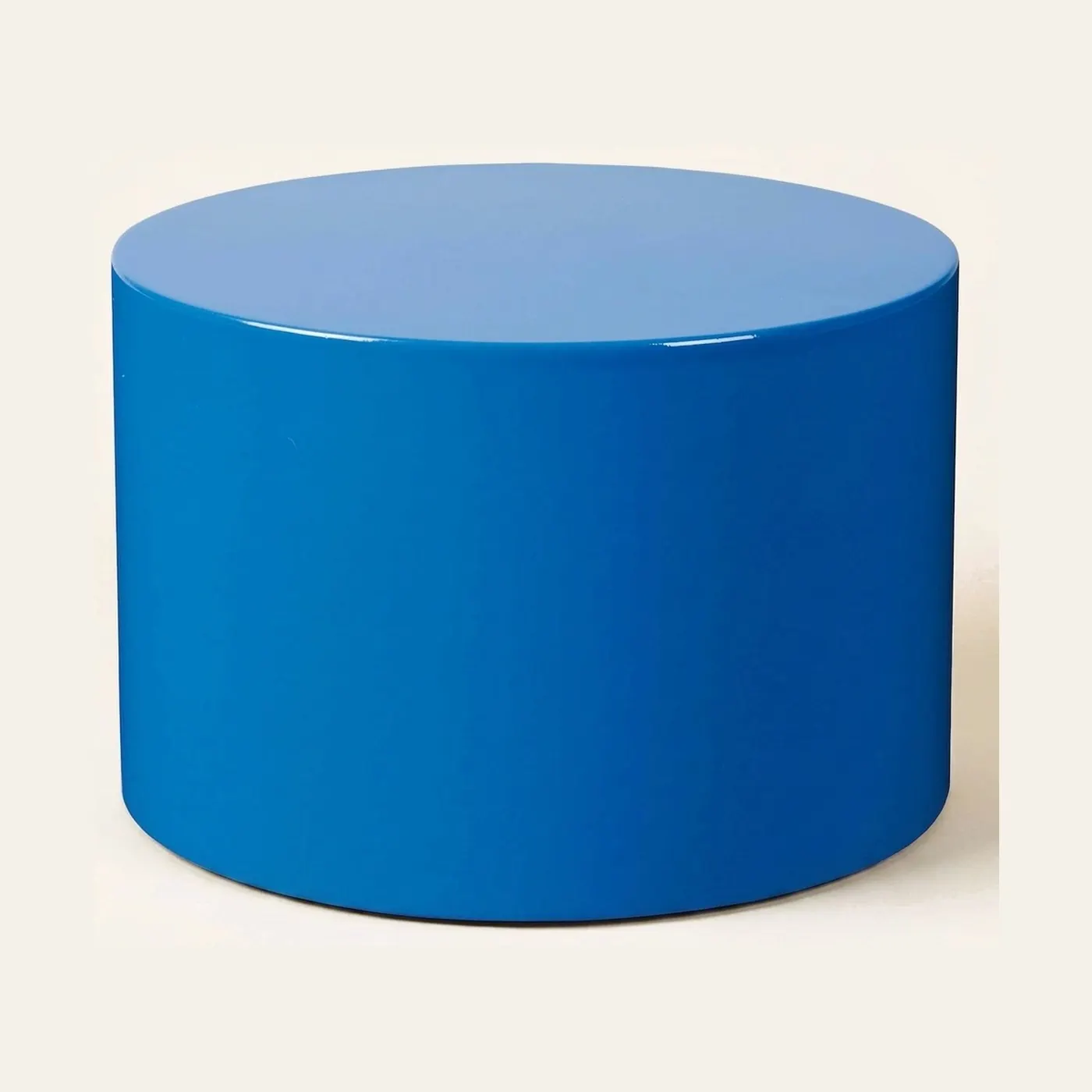
The short cylinder, on the same 10 by 10 cm base as the rest of the volume set but 6.66 cm tall against the standard 20 cm. Its partner is the cone: a cone and a cylinder on the same base and the same height stand in the ratio of one to three, so pouring the tall cone into this short cylinder fills it exactly. A curved base makes that relationship harder to see and more convincing once seen. Sold individually, for ages 6 to 12.
“Free the child's potential, and you will transform him into the world.”
The Short Cylinder embodies Maria Montessori's principle of isolation of quality, presenting the pure cylindrical form for focused exploration.
- Refined stereognostic sense through blindfolded shape recognition
- Understanding of cylindrical properties including curved surfaces and circular bases
- Development of mathematical vocabulary for three-dimensional forms
- Preparation for volume calculations and geometric formulas
Read More
In the elementary years, this material bridges concrete sensorial experiences with abstract geometric concepts, supporting the child's mathematical mind and need for intellectual exploration. The smooth, glossy finish invites tactile investigation, developing the stereognostic sense - the ability to recognize forms through touch alone. This material honors the elementary child's reasoning mind by providing a concrete basis for understanding three-dimensional geometry, volume relationships, and spatial concepts. The precise manufacturing ensures mathematical accuracy, allowing children to discover geometric principles through direct manipulation rather than abstract explanation, following Montessori's belief that the hand is the instrument of intelligence.
How to present it
Follow the Montessori method of presentation for optimal child development.
Place the cylinder on a mat with other geometric solids. Have a blindfold ready. Ensure hands are clean and dry for optimal tactile experience.
- 1
Invite the child to explore the cylinder with eyes open, using two hands to feel all surfaces
Model slow, deliberate movements to encourage mindful exploration - 2
Introduce vocabulary: 'cylinder,' 'curved surface,' 'circular base,' using the three-period lesson
Touch the specific part as you name it - 3
Demonstrate rolling the cylinder to show its unique movement pattern
Compare with how a sphere rolls versus how a cube doesn't roll - 4
Invite stereognostic work with blindfold, identifying the cylinder among other solids
Start with contrasting shapes like cube vs cylinder before adding similar forms
Every Child Is a Little Creator

Heritage
Since 1929

In classrooms
Around the world

European brands
Nienhuis, GAM, Educo

AMI approved
To the association standard
Short Cylinder: Geometric Solid for Elementary Exploration
