
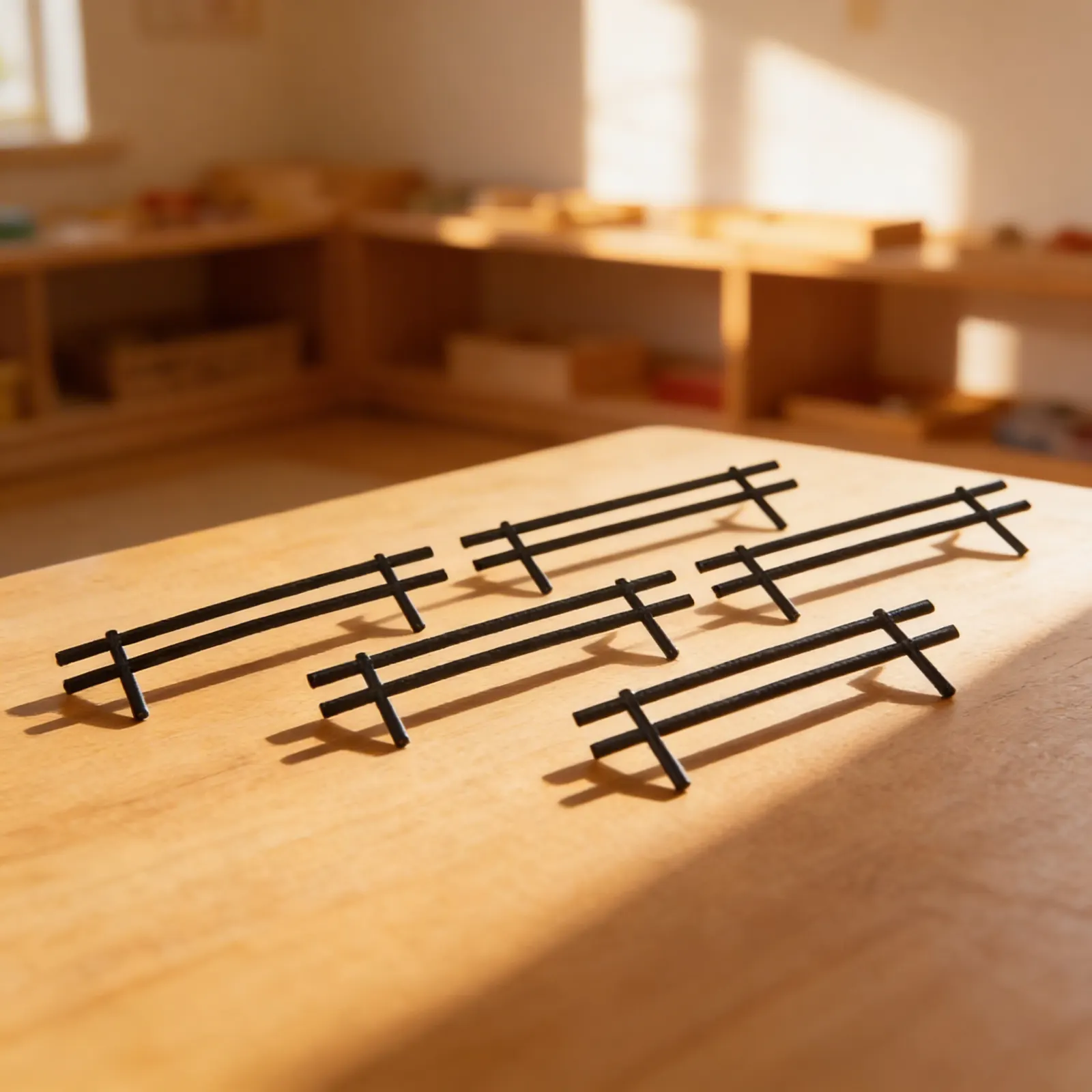
The FarmFences (5)
The first photo is the maker's own. The other shots are illustrative.
Inv. no. NIE-02490015
- Maker
- Nienhuis Montessori, since 1929
- Primary Material
- Durable plastic
- Construction
- Molded two-rail fence design
- EAN
- 8719924011888
Final price incl. VAT. Delivery €5.90, €139.40 to go for free delivery.
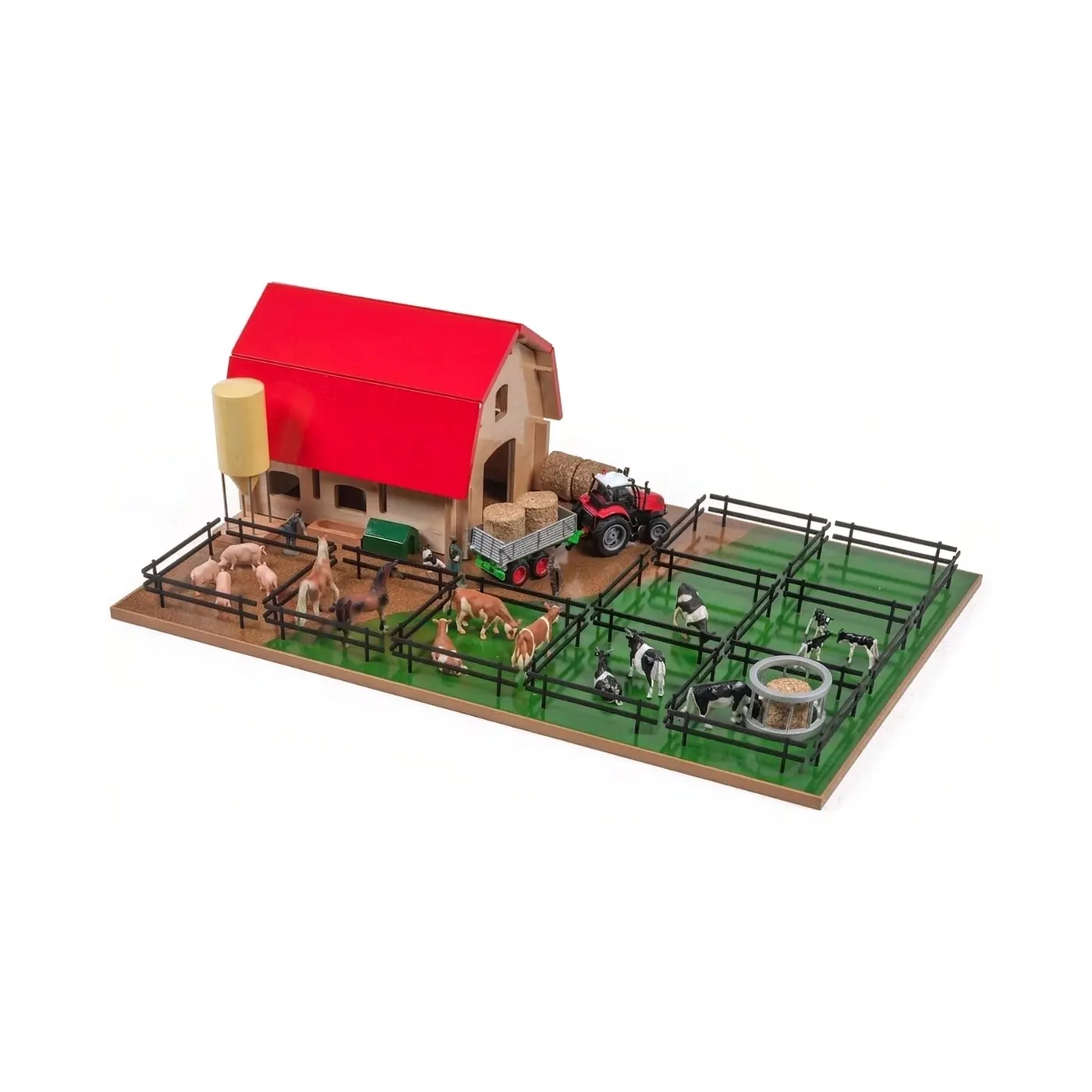 The Farm €431.90
Advice, warranty and returns are handled by us.
The Farm in a child's hands
The Farm: Fences are five fences for The Farm, a Montessori language material. The Nienhuis page describes The Farm as a setting for language enrichment, grammar and reading, with a farmhouse, people, animals, fences and a working base. This pack holds the five fences only, without the other parts. The Farm is meant for indoor use. Packed, the fences measure 16 × 7 × 3 cm. Wipe them with a damp cloth and a little mild soap. For ages 3 to 6.
Spatial Reasoning
Creating enclosures develops understanding of perimeters, boundaries, and spatial relationships through hands-on configuration.
Language Development
Farm play scenarios encourage vocabulary expansion related to animals, farming concepts, and positional language.
Fine Motor Control
Connecting and arranging fence sections strengthens hand muscles and develops precision in manipulation.
Creative Problem Solving
Designing different farm layouts promotes flexible thinking and planning skills through open-ended construction play.
How to present it
Place the five fence sections on a work mat alongside farm animal figurines. Ensure ample space for the child to create different enclosure configurations.
- 1Demonstrate connecting two fence sections at their joining points
- 2Create a simple square enclosure using four sections
- 3Place an animal inside and discuss why animals need enclosures
- 4Invite the child to create their own enclosure design
- 5Encourage creating different spaces for different animals
3 tips for parents
- Visit a real farm or petting zoo to connect play with actual farm experiences
- Create simple maps together of the fence layouts your child designs
- Use household items like blocks to extend fence-building at home

If you are not sure it suits your child, we answer in person.
Norbert Kovalčín, founder of Faborino · write to him
There is no review here yet. We will ask you for one after you buy. Write the first review
What's in the Box
- Fence Sections: 5 identical pieces
- Connection System: Posts designed to interlock
Size and material
| Packaging | 16 × 7 × 3 cm |
| Primary Material | Durable plastic |
| Construction | Molded two-rail fence design |
| Recommended Age | 3-6 years |
Care
Wipe with damp cloth and mild soap
Frequently Asked Questions
What are the dimensions of each fence section?
Each fence section measures approximately 10cm in length and 5cm in height, perfectly scaled for standard Montessori farm animal figurines and creating realistic enclosures for ages 3-6.
How do the fence pieces connect together?
The fence sections feature interlocking ends that snap together securely yet remain easy for small hands to manipulate, allowing children to create various enclosure shapes and sizes independently.
What material are the fences made from?
The fences are crafted from durable plastic that withstands regular classroom use while maintaining realistic brown coloring that resembles authentic wooden farm fencing.
Can these fences be used with other farm sets?
Yes, these fences are designed to complement standard Montessori farm materials and most educational farm animal figurines, enhancing existing collections and supporting integrated learning experiences.
What skills do children develop using these fences?
Children develop spatial reasoning, problem-solving, fine motor control, and mathematical concepts like perimeter and area while creating enclosures, plus language skills through farm-themed storytelling and vocabulary building.
Product safety
Manufacturer: Nienhuis Montessori, Anders Celsiusstraat 15, 7442 PB Nijverdal, Netherlands
The Farm