
The FarmSet Of Farm Animals
The first photo is the maker's own. The other shots are illustrative.
Inv. no. NIE-02490005
- Maker
- Nienhuis Montessori, since 1929
- Approval
- AMI
- Primary Material
- Molded plastic
- Accessories
- Synthetic hay/straw material
- EAN
- 8719924011871
Final price incl. VAT. Free delivery.
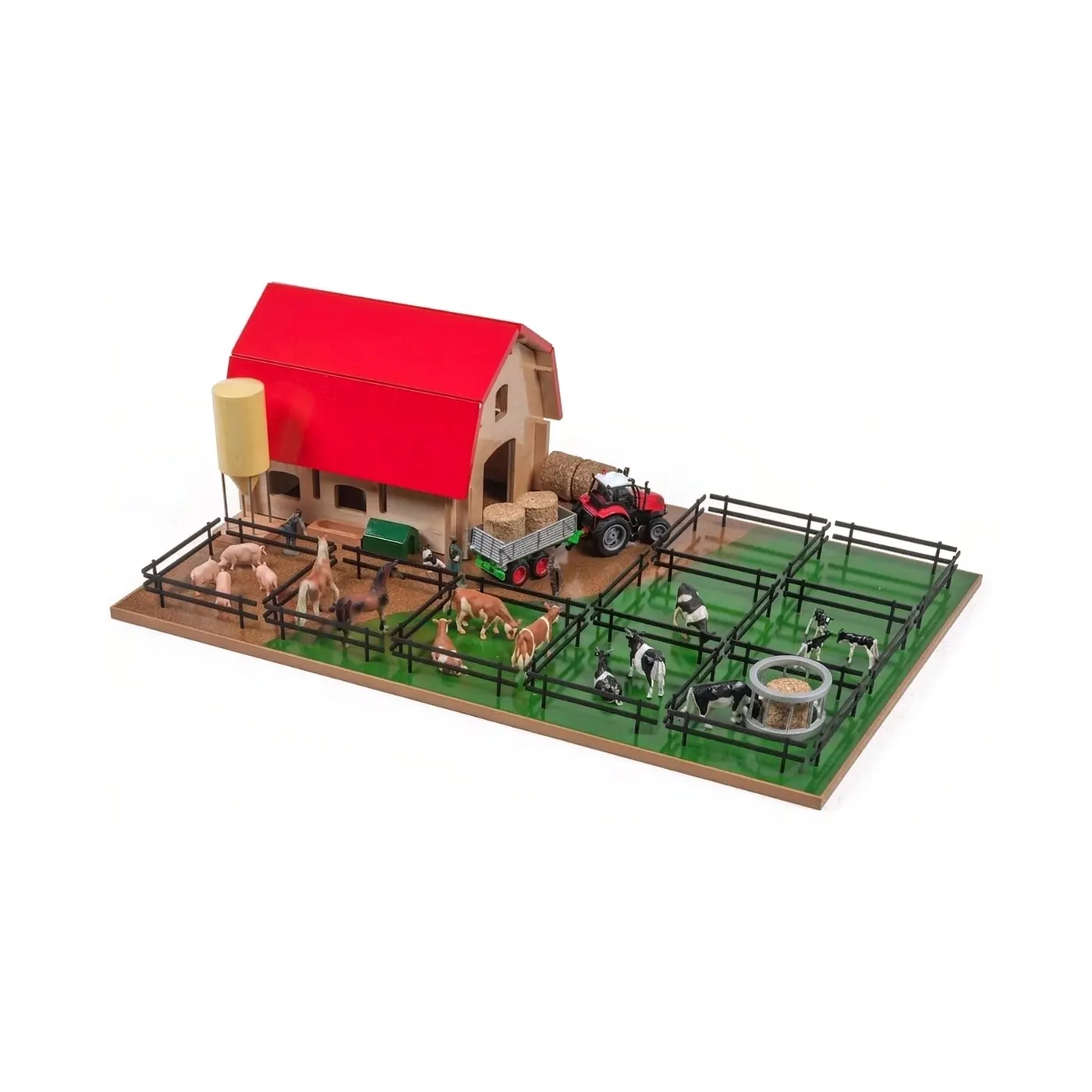 The Farm €431.90
Advice, warranty and returns are handled by us.
Why it costs €151.90
Behind the price of the original are things you can check yourself.
AMI approval
The material is approved by the Association Montessori Internationale (AMI). Nienhuis has made Montessori materials since 1929.
A verifiable original
The EAN 8719924011871 is on the box. It is the maker's number, not ours.
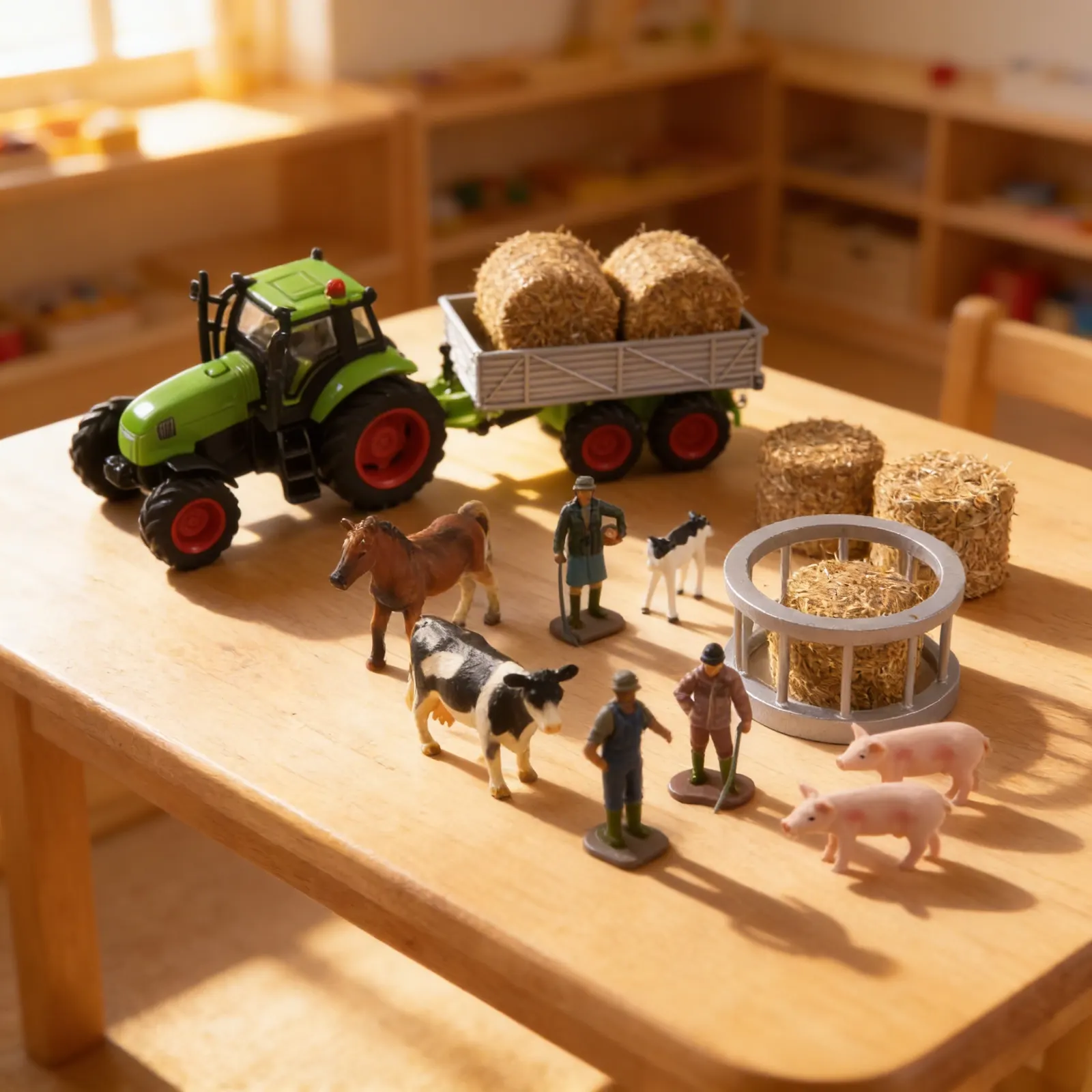
The Farm in a child's hands
The animals that populate the Farm, and the reason the Farm works as a language material at all. A scene with nothing in it prompts nothing; a scene with a cow, a duck and a fence prompts a sentence, and then another. Children use them for naming first, then for the function of words, moving an animal while a friend reads the command that says to. Small figures also survive being carried in a pocket to the mat, which is how most of this work actually starts. Plastic with synthetic fibre, for ages 3 to 6.
Vocabulary Enrichment
Children learn specific terminology for farm animals, equipment, and agricultural concepts while manipulating the figurines.
Classification Skills
Sorting animals by species, size, or habitat develops logical thinking and categorization abilities.
Environmental Understanding
Exploring farm ecosystems helps children understand food sources and human-animal relationships.
Fine Motor Development
Positioning small figurines and accessories refines pincer grasp and hand-eye coordination.
How to present it
Place the farm set in a basket on the cultural shelf at child's eye level. Include a work mat and labels for older children who are reading.
- 1Invite the child to carry the basket to a work mat and explore the contents freely
- 2Name each animal using precise terminology as the child handles them
- 3Demonstrate grouping animals by one characteristic (those with four legs, those with two)
- 4Introduce the farm equipment and vehicles, discussing their purposes
- 5Create simple scenarios using farmers, animals, and equipment together
3 tips for parents
- Visit local farms or petting zoos to connect figurine play with real experiences
- During meals, trace foods back to their farm origins using remembered figurines
- Support vocabulary by using precise animal names and avoiding baby talk

If you are not sure it suits your child, we answer in person.
Norbert Kovalčín, founder of Faborino · write to him
There is no review here yet. We will ask you for one after you buy. Write the first review
What's in the Box
- Farm Animals: Multiple cows, horses, and pigs
- Human Figures: Farmer figurines
- Farm Vehicles: Green tractor with trailer
- Accessories: Hay bales, feeding ring, and other farm equipment
Size and material
| Packaging | 32 × 25 × 2 cm |
| Primary Material | Molded plastic |
| Accessories | Synthetic hay/straw material |
| Recommended Age | 3-6 years |
Care
| Cleaning | Wipe with damp cloth and mild soap |
| Storage | Keep pieces together in designated container |
Frequently Asked Questions
What specific items are included in this 25-piece farm set?
The set includes a variety of realistic plastic farm animals (cows, pigs, sheep, chickens, horses), human figures (farmers), farm vehicles (tractors), and feeding equipment. Each piece is carefully detailed to represent authentic farm life and support children's understanding of agricultural environments.
How does this farm set support Montessori biology learning for ages 3-6?
This set enables children to explore farm ecosystems, animal characteristics, and agricultural relationships through hands-on manipulation. Children can classify animals, learn vocabulary, understand animal needs, and create scenarios that demonstrate farm life cycles and food production concepts.
What is the quality and size of the plastic figurines?
The figurines are made from durable, child-safe plastic with realistic details and proportions. They are appropriately sized for small hands (typically 2-4 inches) while being large enough to prevent choking hazards, making them suitable for independent exploration by 3-6 year olds.
How can teachers integrate this farm set into the Montessori curriculum?
Teachers can use this set for language activities (naming, describing), sorting exercises (by animal type, size, or habitat), storytelling, cultural studies about food sources, and practical life connections. It complements botany studies by showing plant-animal relationships in farming.
What storage solution is recommended for organizing these 25 pieces?
We recommend using a compartmented wooden tray or basket system where children can sort animals by type. Label each section with pictures and words to support literacy development. This organization method reinforces classification skills and ensures easy cleanup and inventory management.
Product safety
Manufacturer: Nienhuis Montessori, Anders Celsiusstraat 15, 7442 PB Nijverdal, Netherlands
The Farm