
The Little Coral
The first photo is the maker's own. The other shots are illustrative.
Inv. no. NIE-523201
- Maker
- Nienhuis Montessori, since 1929
- Material
- Polymer
- EAN
- 8719924026639
Final price incl. VAT. Delivery €5.90, €135.80 to go for free delivery.
Advice, warranty and returns are handled by us.
The Little Coral in a child's hands
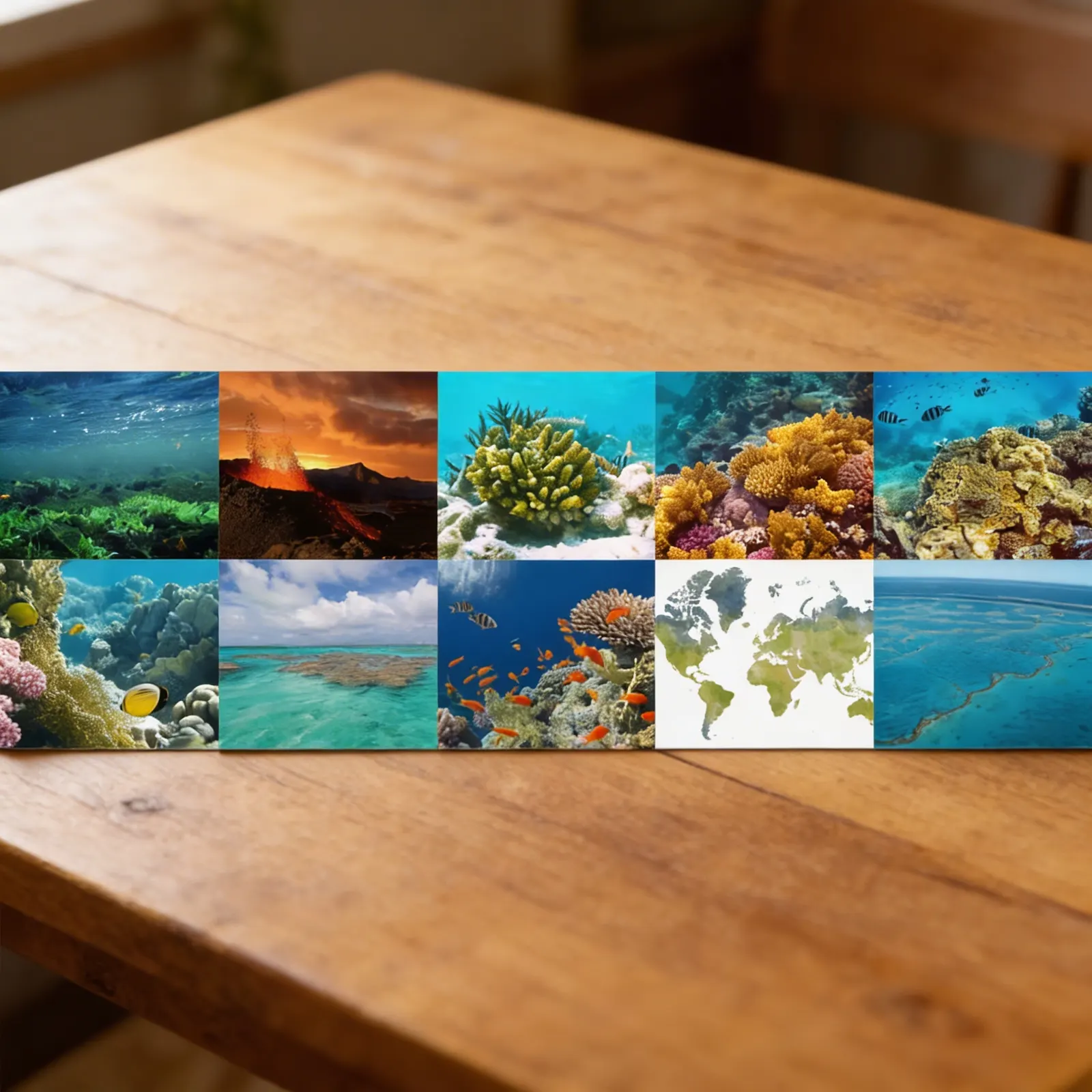
The Little Coral makes tangible the concepts behind the fascinating underwater world through a collection of stunning photographic cards featuring coral reefs, marine ecosystems, and volcanic landscapes. This educational material connects geography, geology, and marine biology, helping children understand how coral reefs form around volcanic islands and their vital role in ocean ecosystems. A good match for nature studies, geography lessons, and environmental awareness in the Montessori classroom.
Geographic Understanding
Children learn to locate coral reefs on world maps and understand their distribution in warm ocean waters.
Scientific Observation
Detailed photographs encourage careful observation of marine life, coral formations, and ecosystem relationships.
Environmental Awareness
Introduces concepts of habitat, biodiversity, and the importance of coral reef conservation.
Vocabulary Development
Expands scientific vocabulary related to marine biology, geology, and geography through visual learning.
How to present it
Arrange The Little Coral cards on a mat or table in clear lighting. Have a globe or world map nearby to show coral reef locations. Prepare a magnifying glass for detailed observation.
- 1Begin with volcanic island cards, discussing how underwater volcanoes create foundations for coral growth
- 2Introduce coral formation cards, explaining how tiny polyps build massive reef structures over thousands of years
- 3Match marine life cards to their coral reef habitats, discussing symbiotic relationships
- 4Create a three-part lesson: naming coral types, identifying reef zones, and discussing conservation
3 tips for parents
- Watch nature documentaries about coral reefs together, pausing to identify formations seen in The Little Coral cards
- During bath time, discuss how coral polyps filter water and why clean oceans matter
- If visiting an aquarium, bring knowledge from The Little Coral cards to identify real coral species

If you are not sure it suits your child, we answer in person.
Norbert Kovalčín, founder of Faborino · write to him
There is no review here yet. We will ask you for one after you buy. Write the first review
What's in the Box
- Photo Cards: 8 laminated cards featuring coral reefs and marine environments
- World Map Card: Shows global coral reef locations
- Volcanic Formation Cards: Illustrating how coral atolls form
Size and material
| Packaging | 15 × 14 × 1 cm |
| Material | Polymer |
| Recommended Age | 6-12 years |
Care
Wipe with slightly damp cloth, dry immediately
Frequently Asked Questions
What topics does The Little Coral educational material cover?
The Little Coral features photographic cards exploring coral reefs, marine ecosystems, and volcanic landscapes. It integrates geography, geology, and marine biology concepts, teaching children about coral reef formation around volcanic islands and their importance to ocean ecosystems.
How many cards are included in The Little Coral set?
The product description doesn't specify the exact number of cards. This collection includes multiple photographic cards featuring various aspects of coral reefs, marine life, and volcanic landscapes suitable for ages 3-6.
What Montessori curriculum areas does this material support?
The Little Coral supports multiple Montessori areas including Cultural Studies (geography and science), Language (vocabulary development), and Cosmic Education (understanding Earth's systems). It's particularly valuable for nature studies and environmental awareness lessons.
Are the cards durable for classroom use by young children?
While specific material details aren't provided, educational cards for ages 3-6 are typically designed for durability. We recommend contacting us for information about card thickness, coating, and care instructions to ensure longevity in classroom use.
How can teachers incorporate The Little Coral into daily lessons?
Teachers can use these cards for three-part matching activities, classification exercises, vocabulary lessons, and discussion prompts about ocean conservation. They're perfect for creating themed units on oceans, volcanoes, or ecosystems, and can inspire art projects and research activities.
Product safety
Manufacturer: Nienhuis Montessori, Anders Celsiusstraat 15, 7442 PB Nijverdal, Netherlands
The Little Coral