
Thermic Bottles (Nienhuis)
The first photo is the maker's own. The other shots are illustrative.
Inv. no. NIE-001800
- Maker
- Nienhuis Montessori, since 1929
- Approval
- AMI
- Bottles
- Polished chrome metal
- Lids
- Brass with secure threading
- EAN
- 8719924000332
Final price incl. VAT. Free delivery.
Advice, warranty and returns are handled by us.
Why it costs €292.90
Behind the price of the original are things you can check yourself.
AMI approval
The material is approved by the Association Montessori Internationale (AMI). Nienhuis has made Montessori materials since 1929.
A verifiable original
The EAN 8719924000332 is on the box. It is the maker's number, not ours.
Thermic Bottles (Nienhuis) in a child's hands
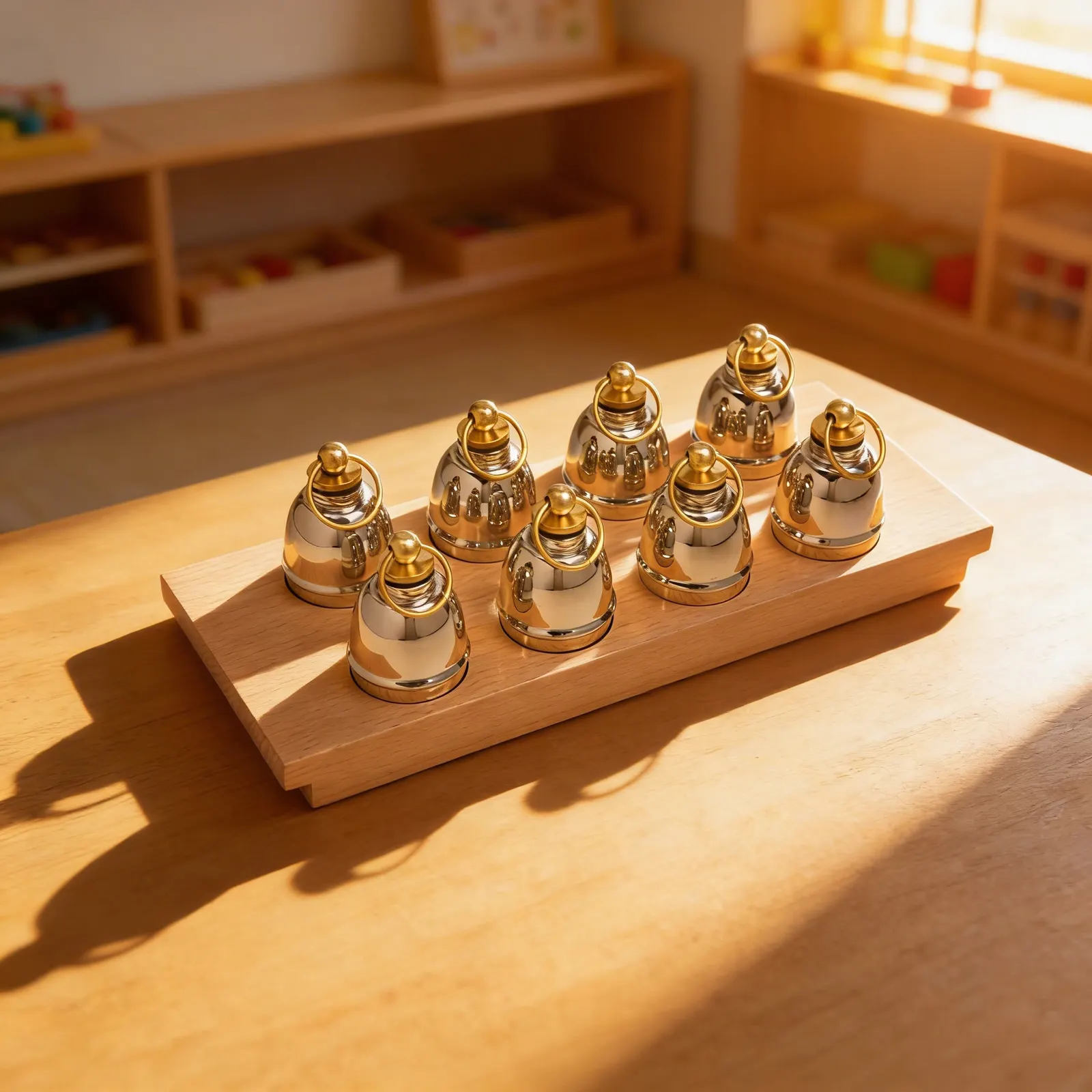
Eight metal bottles that look identical and differ only in what they hold, so the thermic sense has nothing else to go on. The bottles are chrome plated copper, chosen because copper conducts: the hand registers the difference quickly and clearly instead of waiting through an insulating wall. A child pairs them by temperature, then grades them from coolest to warmest, and the fact that they look the same is the design, not an oversight. Screw tops and a wooden tray, for ages 3 to 6.
Thermal Perception
Develops refined awareness of temperature differences through direct sensory experience with warm and cool surfaces.
Concentration Skills
Matching and grading activities require sustained focus and careful comparison of subtle temperature variations.
Scientific Thinking
Introduces concepts of heat transfer and temperature gradation through hands-on exploration.
Memory Development
Exercises sensory memory as children recall and match temperatures between paired bottles.
How to present it
Fill four bottles with cold water (add ice cubes briefly, then remove) and four with warm water (not exceeding 40°C/104°F). Tighten brass lids securely. Mix bottles randomly on the tray.
- 1Invite the child to carry the tray with both hands to a table
- 2Remove one bottle, wrap both hands around the metal cylinder, and hold for 3-5 seconds
- 3Place the bottle to the left of the tray and select another bottle to compare
- 4Continue testing bottles until finding a matching temperature pair
- 5Once all pairs are matched, invite the child to verify by retesting each pair
3 tips for parents
- Practice temperature awareness at home by having your child test bath water or describe food temperatures
- Create simple matching games with identical containers filled with different temperature water
- Avoid correcting temperature judgments, let your child self-discover through repeated testing

If you are not sure it suits your child, we answer in person.
Norbert Kovalčín, founder of Faborino · write to him
There is no review here yet. We will ask you for one after you buy. Write the first review
What's in the Box
- Chrome thermic bottles: 8 pieces
- Brass screw-top lids: 8 pieces
- Wooden presentation tray: With compartments
Size and material
| Packaging | 23 × 14 × 12 cm |
| Bottles | Polished chrome metal |
| Lids | Brass with secure threading |
| Tray | Natural wood |
| Recommended Age | 3-6 years |
Care
Wipe bottles with soft cloth; dry thoroughly after water use
Frequently Asked Questions
How do I prepare the Thermic Bottles for use?
Fill pairs of bottles with water at different temperatures ranging from cold to warm (never hot enough to burn). Ensure matching pairs have identical temperatures. The metal construction maintains temperature differences for extended periods during lessons.
What activities can children do with the Thermic Bottles?
Children match bottles of the same temperature, grade them from coldest to warmest, play memory games with temperature recall, and develop vocabulary like cold, cool, lukewarm, and warm. Advanced work includes blindfolded matching to isolate the thermal sense.
Why are Thermic Bottles so expensive?
the price reflects precision manufacturing with polished metal cylinders that maintain temperature effectively, brass screw-top lids that seal properly, and a handcrafted wooden tray. This professional-grade material is built to withstand decades of classroom use.
What age is appropriate for introducing Thermic Bottles?
Typically introduced around age 3.5-4, after children have worked with other sensorial materials. The child should demonstrate careful handling of materials and understand matching concepts. Most children work with this material through age 6.
Can I make DIY thermic bottles at home?
While possible using small metal containers, authentic Thermic Bottles provide consistent thermal retention, identical bottle weights, and proper isolation of temperature sensation. The investment ensures accurate sensory experiences crucial for developing thermal discrimination.
Product safety
Manufacturer: Nienhuis Montessori, Anders Celsiusstraat 15, 7442 PB Nijverdal, Netherlands
Thermic Bottles (Nienhuis)