
Botany Cards Set 3: Advanced Plant Studies & Classification
Made by Nienhuis Montessori · shipped by Heutink International (Netherlands) About the maker
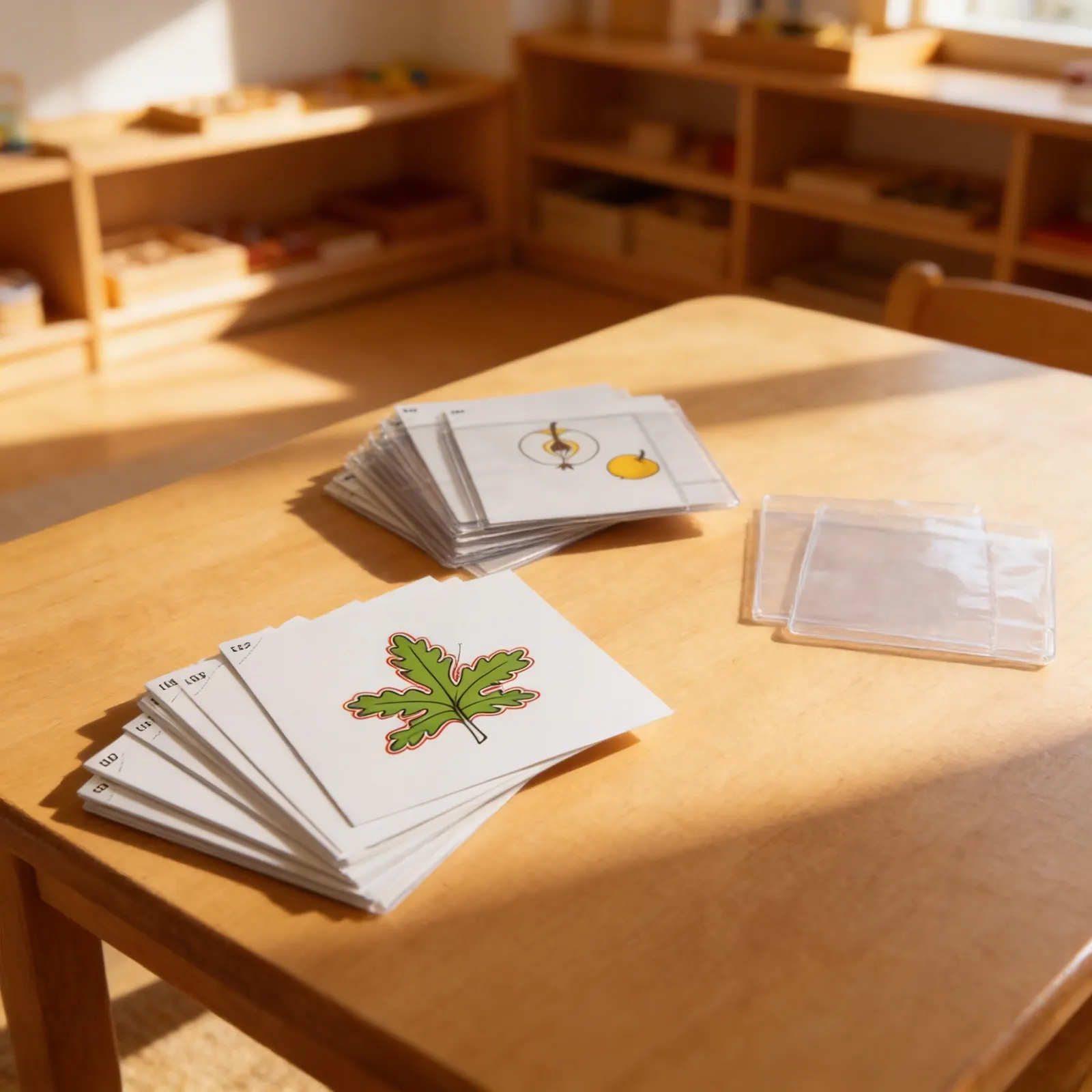
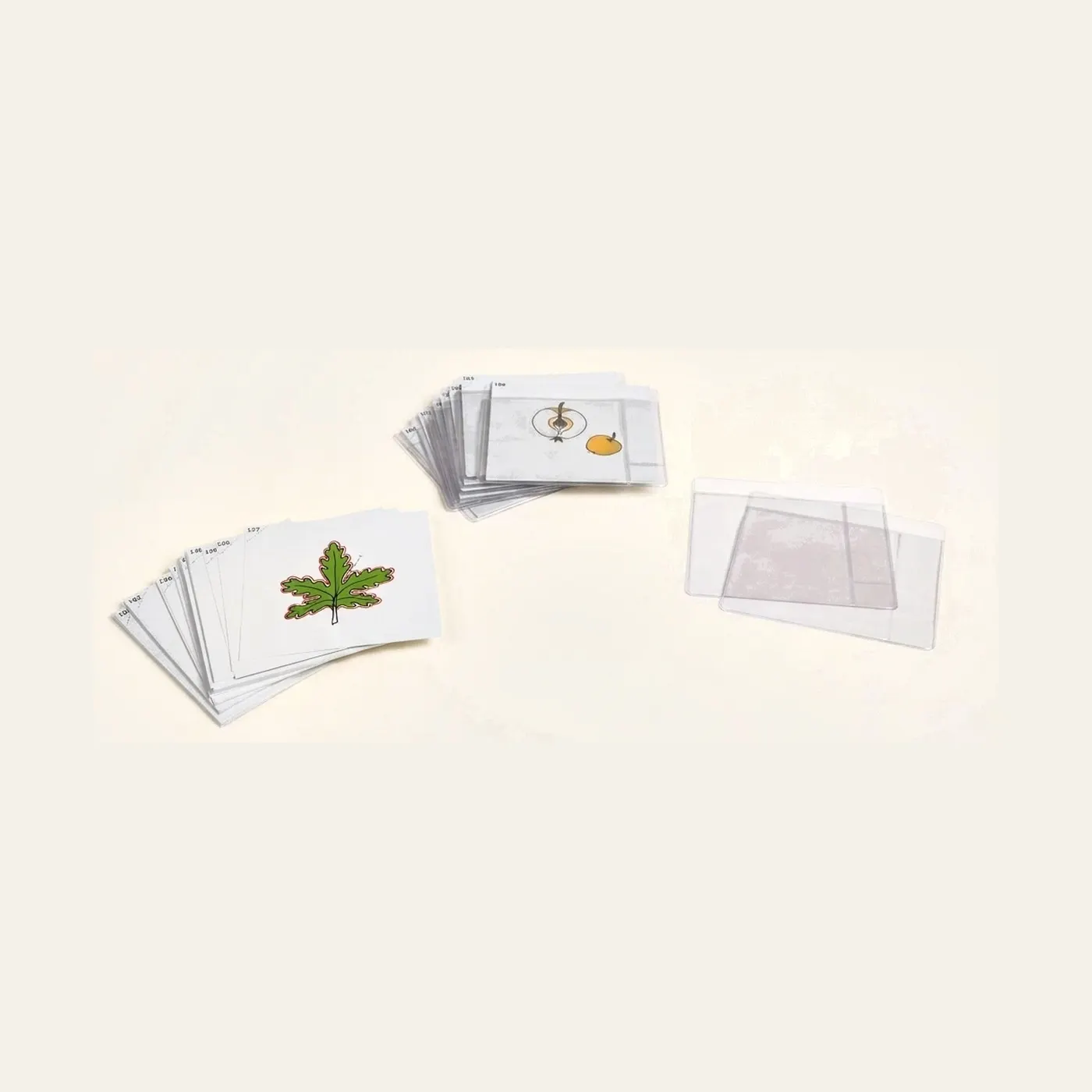
The third set of botany cards, for identifying and classifying stems, leaves, flowers, fruits and seeds. This is where botany stops being about whole plants and starts being about parts: a child who can already name a leaf learns that leaves have kinds, and that the kind is readable from the shape of the edge or the pattern of the veins. Sorting cards into those groups is the same work a botanist does, at the scale a six year old can hold. Premium cardstock, for ages 3 to 6.
“Free the child's potential, and you will transform him into the world.”
The Third Set of Botany Cards embodies Maria Montessori's vision of cosmic education by connecting children to the natural world through precise, scientific observation.
- Develops botanical vocabulary and scientific terminology
- Enhances visual discrimination and matching skills
- Builds classification and categorization abilities
- Strengthens concentration and sustained attention
Read More
This material satisfies the child's innate desire to classify and understand their environment, supporting the sensitive period for language and order that peaks during the first plane of development. The three-part card system honors the child's concrete thinking while building abstract reasoning skills through matching and classification activities. By presenting botanical knowledge with scientific accuracy and beautiful illustrations, this material nurtures the child's natural reverence for life while developing concentration, independence, and systematic thinking. The self-correcting nature of the cards allows children to work autonomously, building confidence and intrinsic motivation. This progressive approach to botany study perfectly aligns with Montessori's principle of following the child's interests while providing structured, sequential learning that respects their developmental capabilities and natural curiosity about the living world.
How to present it
Follow the Montessori method of presentation for optimal child development.
Present the material on a neutral mat in a quiet area with good lighting. Begin with one category of cards, ensuring control cards are separate from picture and label cards.
- 1
Show the child how to match picture cards to control cards, naming each botanical feature clearly
Use precise three-period lesson technique: 'This is...', 'Show me...', 'What is this?' - 2
Demonstrate matching labels to the corresponding picture cards once visual matching is mastered
Allow the child to trace letters with their finger to reinforce reading skills - 3
Guide the child in creating complete sets with control card, picture card, and label together
Encourage self-checking by returning to the control cards for verification - 4
Introduce comparison activities between different plant parts or life cycle stages
Ask open-ended questions like 'What do you notice?' rather than testing knowledge
Every Child Is a Little Creator

Heritage
Since 1929

In classrooms
Around the world

European brands
Nienhuis, GAM, Educo

AMI approved
To the association standard
Botany Cards Set 3: Advanced Plant Studies & Classification
