A November afternoon. It is dark by half past four and the playground is soaked. In the living room sits a seventeen month old who has just discovered the back of the sofa. They pull themselves up, swing a leg over the edge and look at you. You lift them down, and a minute later they are up there again. Next come the dining chair, the toy basket and an open drawer used as a step.
They are not being naughty. They are doing what nearly every child does at this age: climbing. When there is nowhere to climb outside, they look for height at home. So the question is not how to stop the climbing, but where at home they are allowed to climb without you standing beside them with a hand under their bottom. In our article on the learning tower we wrote that a tower is not a climbing frame. A Pikler triangle is exactly where climbing belongs.
Who was Emmi Pikler
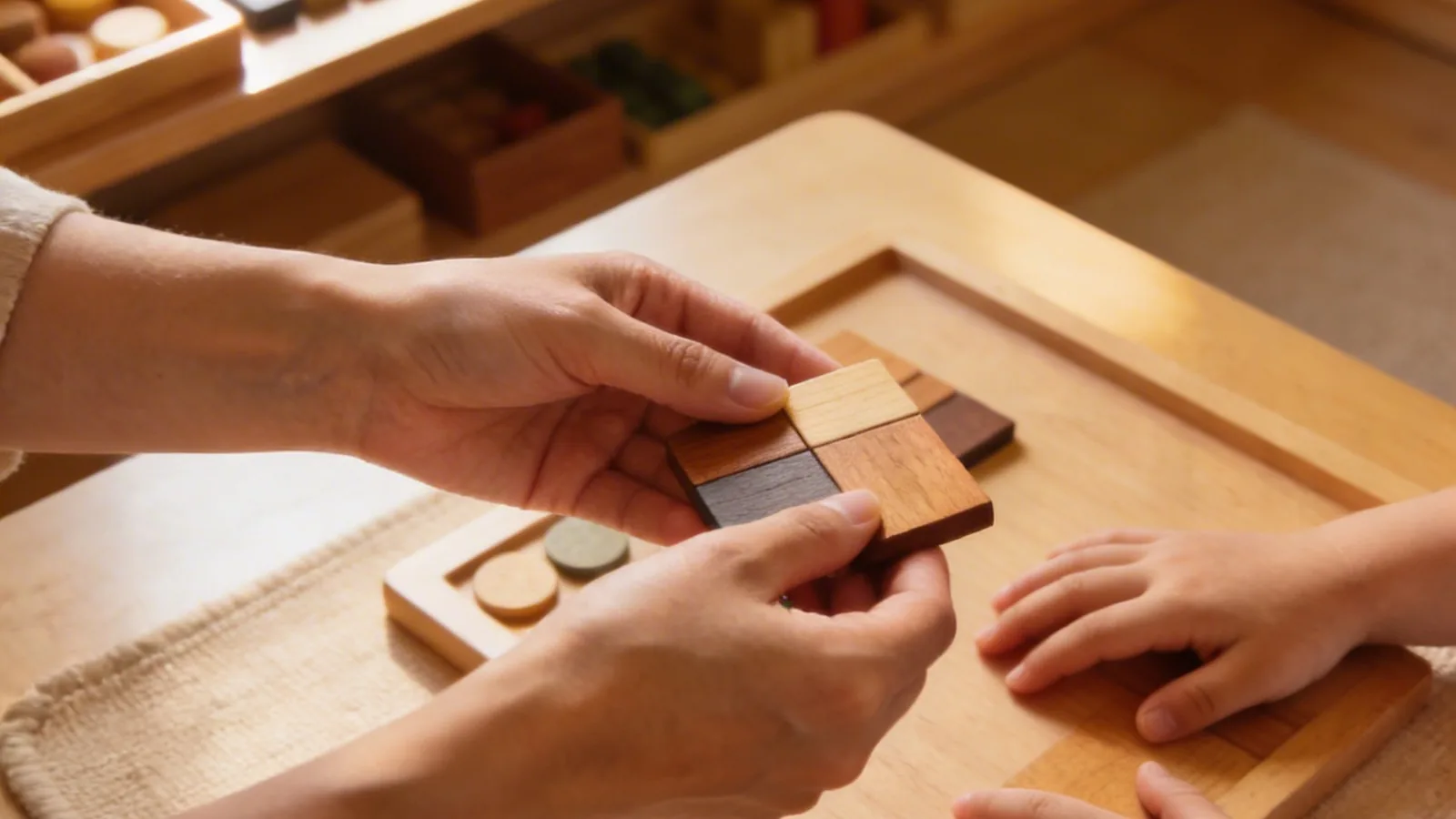
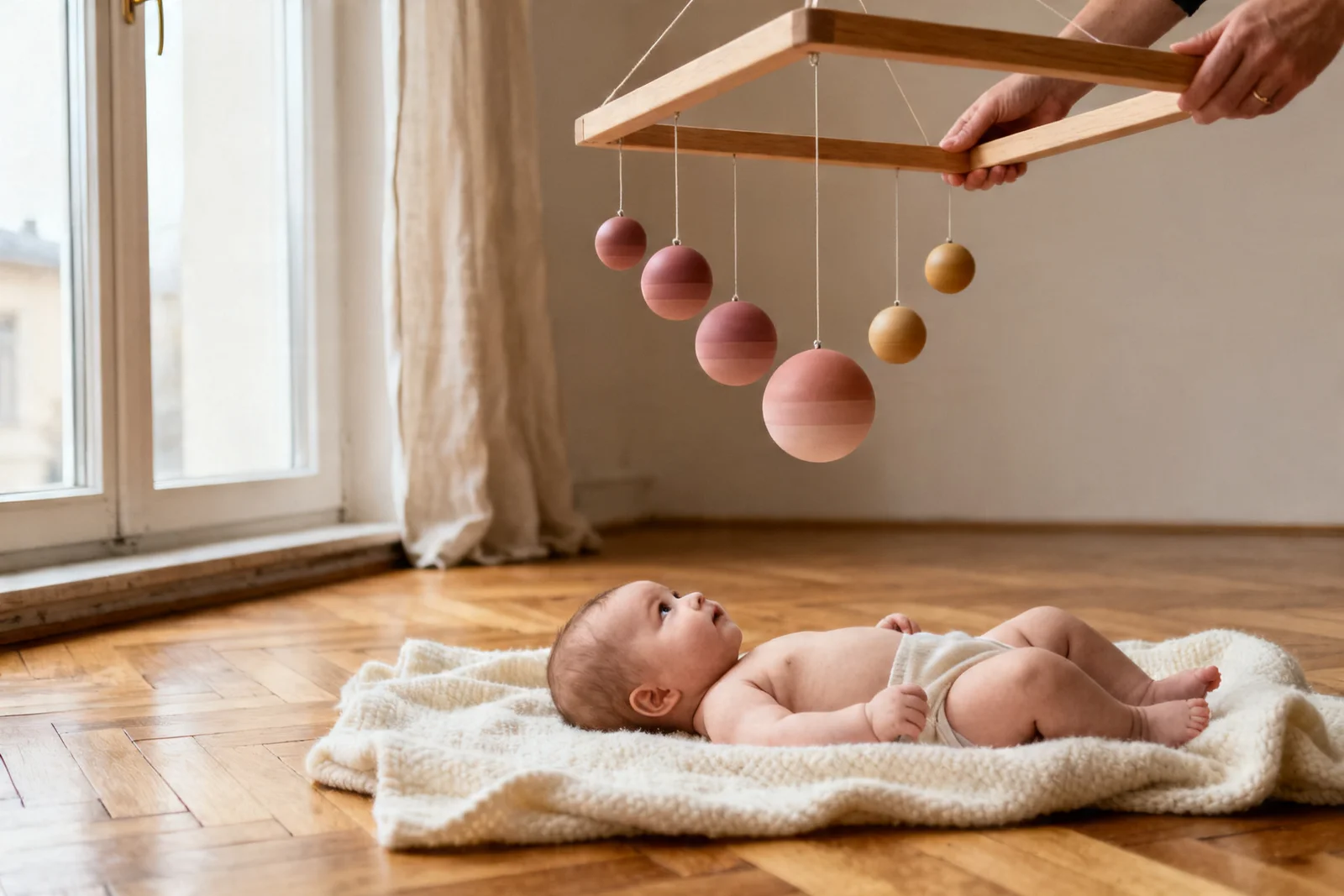
Emmi Pikler finished her medical studies in Vienna in the 1920s and from 1932 worked as a paediatrician in Budapest. She gave parents advice that went against the usual practice of the time: not to turn a baby from back to tummy until they turned over themselves, not to sit them up until they could sit up on their own, and not to hold them standing by the hands until they could stand up by themselves. Each milestone of movement was to be reached on the child's own initiative and through their own effort. She also left out equipment that keeps a baby passive, such as baby seats and walkers.
In 1946 she set up a home in Budapest for babies left without parents after the war, in an abandoned house on Lóczy Lajos Street. The house took its name, Lóczy, from the street, and since 1986 it has been called the Pikler Institute. That is how Anna Tardos, her daughter, who later ran the institute, describes it in a paper for the World Association for Infant Mental Health.
„Give me time.“
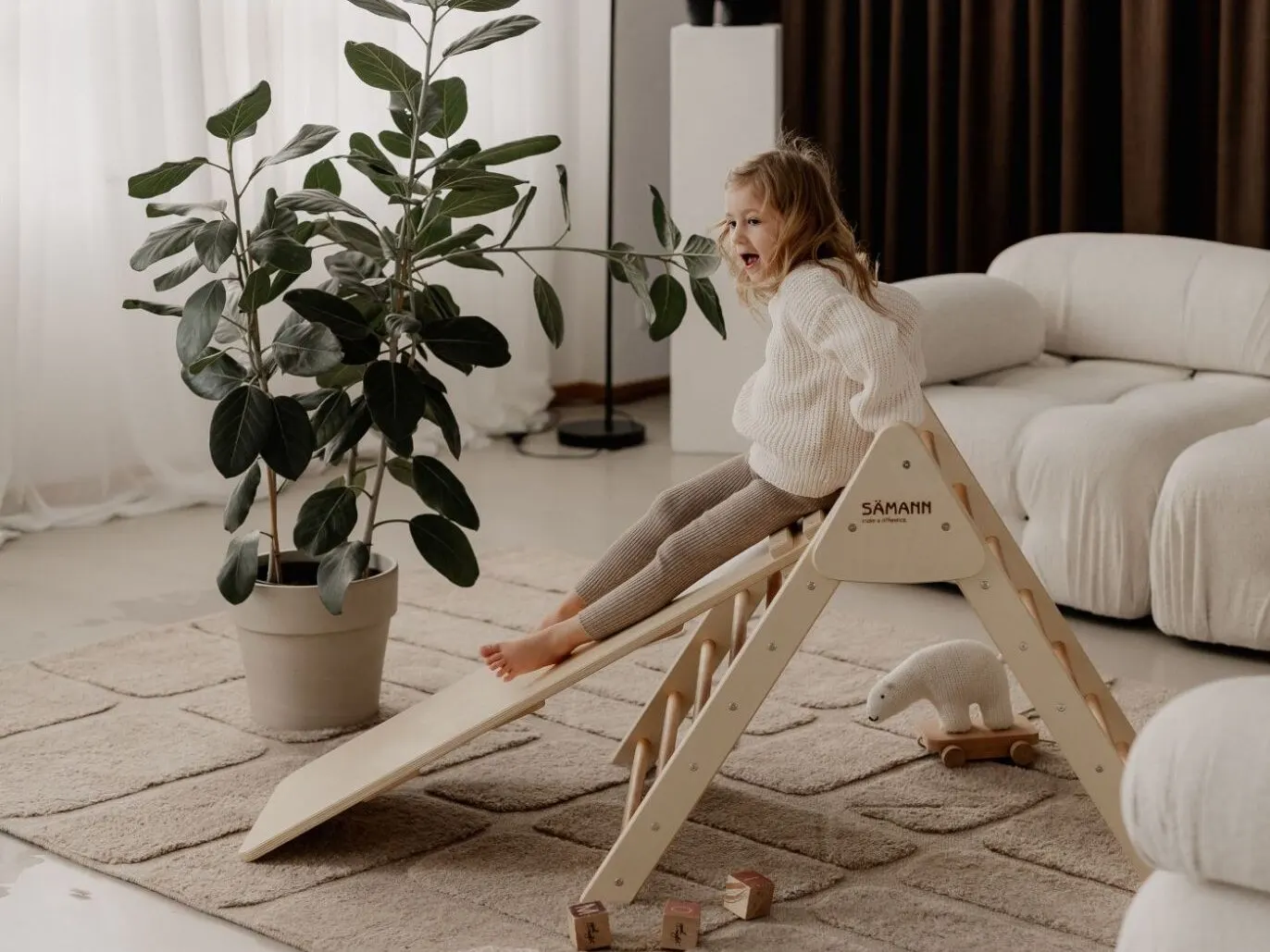
The wooden triangle that bears her name today is a piece of equipment in the spirit of this approach. Two ladders leaning against each other like a roof, which a child climbs as high as they get on their own and comes down from the way they can on their own. Nothing lifts them, nothing holds them. Where they put a hand and where a foot is their decision.
When to start: from 12 months, and only once they pull themselves up
The makers of the triangles we stock give an age from 12 months, always with adult supervision. That is the lower limit, and not one to go under. A first birthday on its own does not mean a child is ready, though. If they are to reach every movement on their own, the second condition is what they are already doing: pulling themselves up to stand at the sofa, trying to climb a step or a low stool and getting down again. When they do, the triangle gives them a place where they may. When they do not yet, the triangle can wait.
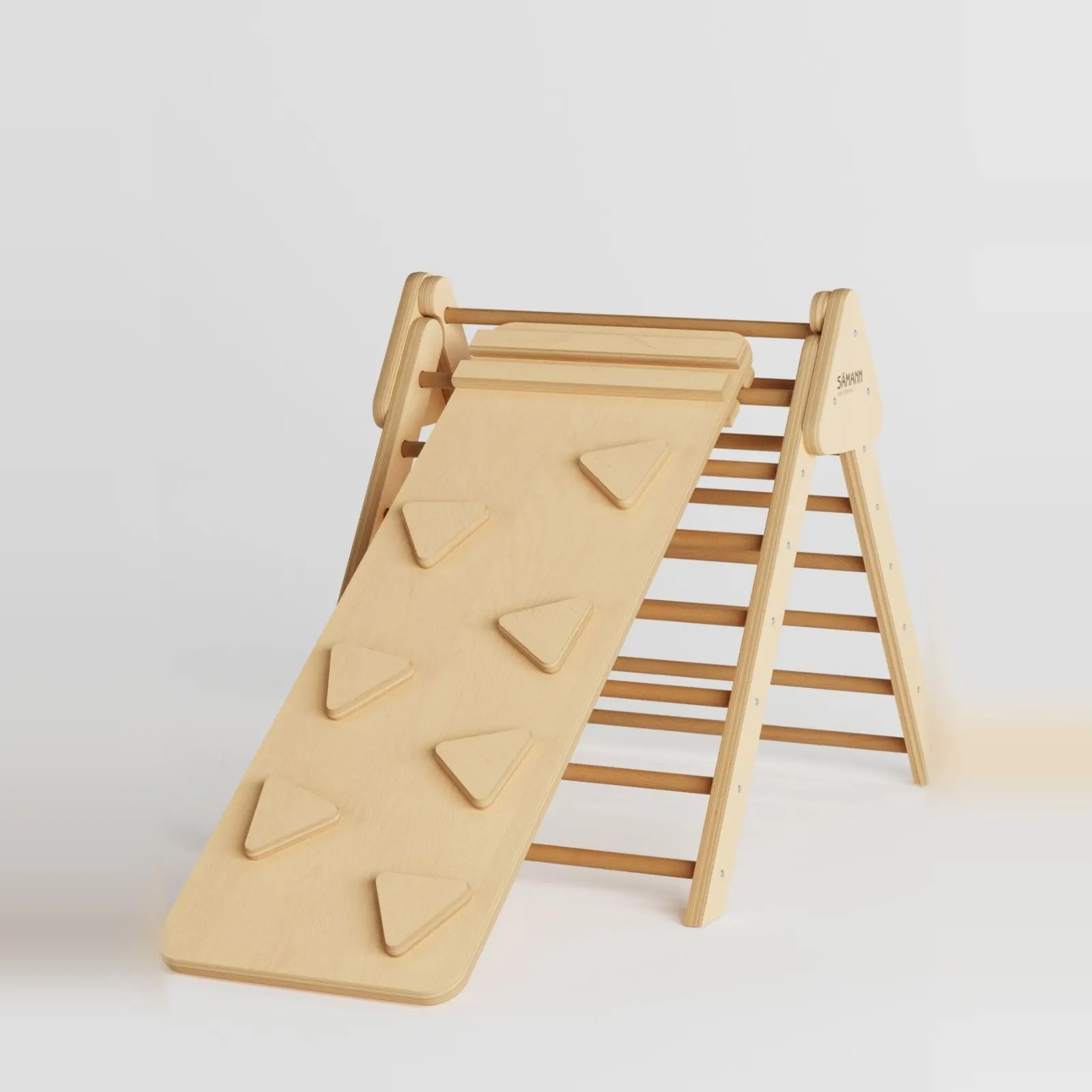
This triangle from the German maker Sämann measures 73 × 93 × 74 centimetres unfolded and comes with a board 110 centimetres long. You can hook the board onto any rung: low as a gentle slide, higher as a steeper climbing wall. After play the triangle folds away, which in a flat without a nursery often decides whether it fits in at all.
The hardest rule: do not lift them up
The biggest temptation with a triangle is not about safety but about upbringing. The child stands beside it, stretches out their arms, and you put them on the second rung so they can see what it is like up there. But from a height someone else put them at, they often cannot get down. They do not know where to put a foot, because they did not put it there themselves. Emmi Pikler's advice on sitting and standing applies here too: the child is where they got to by their own strength.
The adult's part is less visible than you might expect. Sit nearby, watch, do not comment on every step and do not say “careful” at every rung. When the child hesitates, waiting is usually enough. They find their own way, or step down a rung and try another one. Help should come last, not first.
What to look at when choosing
In photos most triangles look alike. The differences show at home: when it has to be unfolded before every play session, when the child is standing on the highest rung they can manage, and when it needs to go somewhere in the evening. When choosing, it helps to look at five things and, for each, to read what the maker says on the product page and in the instructions.
For the VARIO system we stock, the maker states a load capacity of 100 kilograms for the large triangle (part A) and the CE and EN 71-1, 2, 3 standards for every part. These are the maker's figures, and you will find them on the product pages.
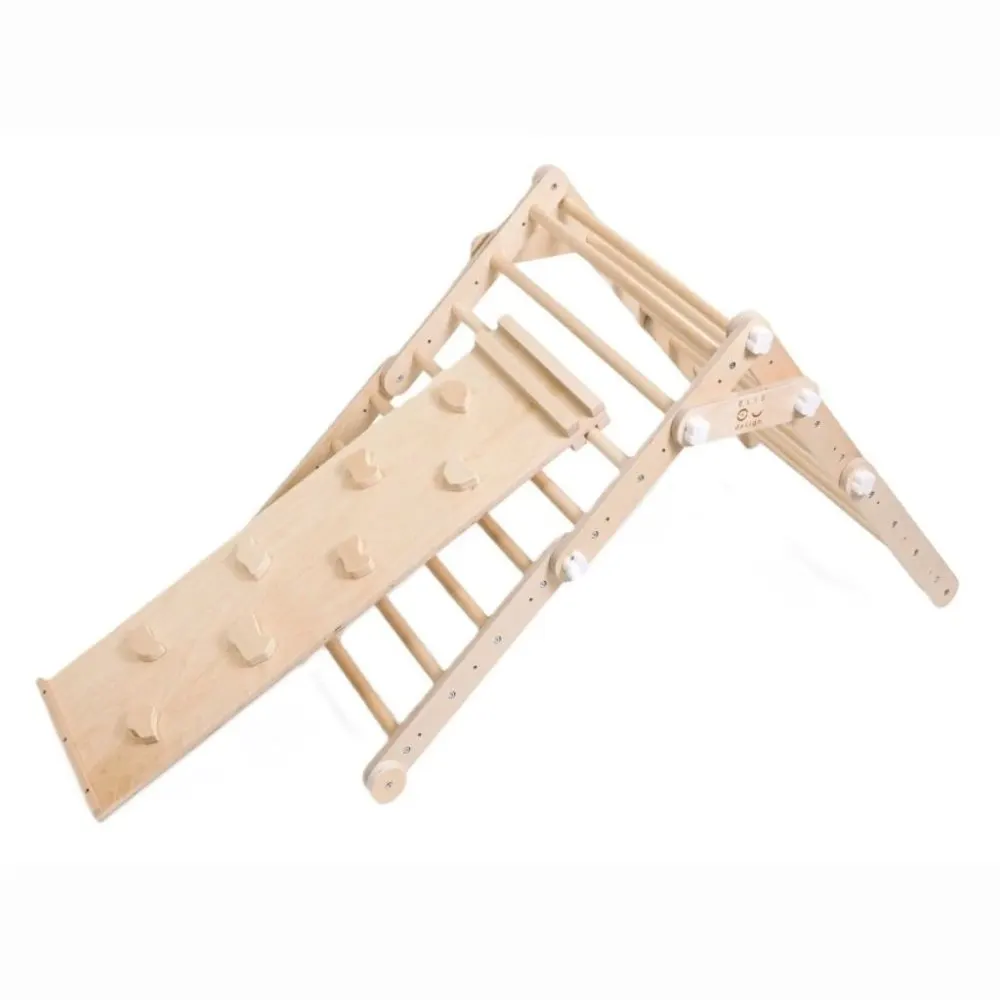
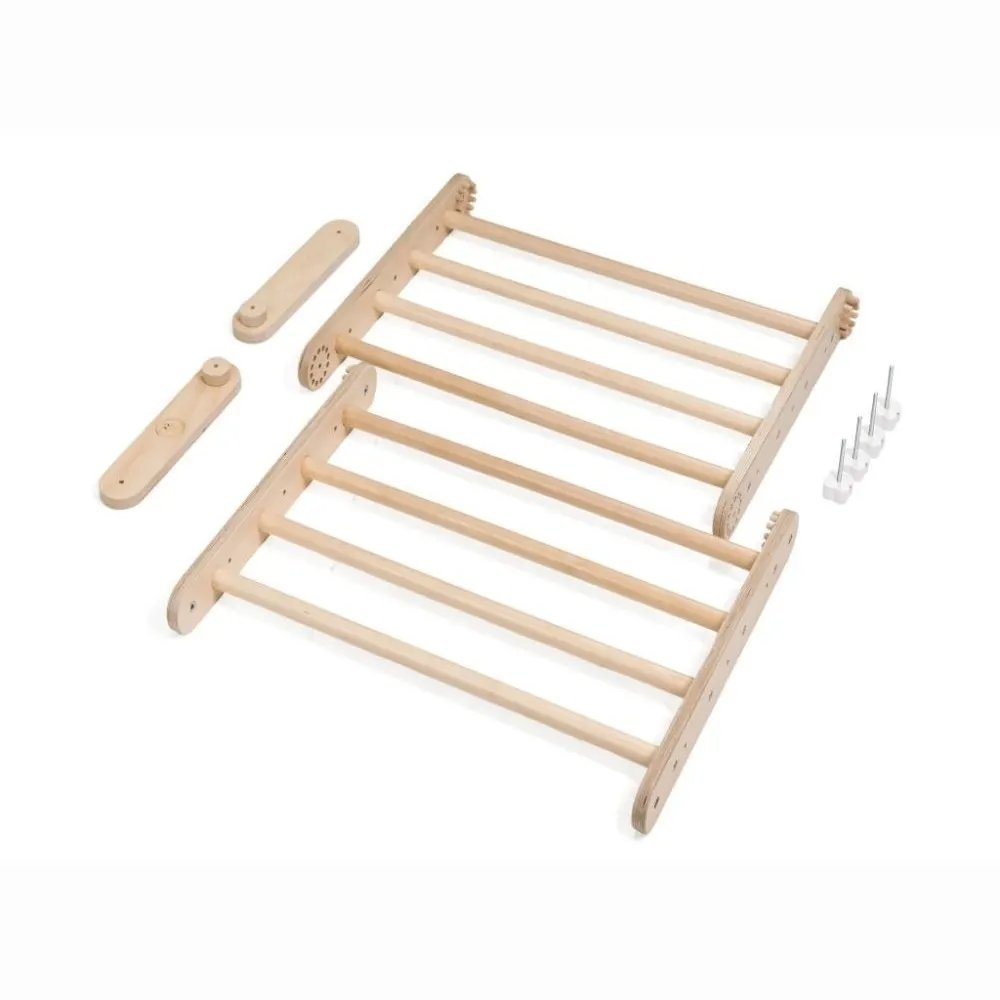
The VARIO system comes in parts. The large triangle with its double-sided board stands on its own, and its shape can be changed with screws. The small triangle is, according to the maker, for children who are just discovering climbing. With the wall-mounted bars and pull-up bar both can be fixed to the wall, and not without them. Wall plugs and fixings are not included, because they depend on the wall, and the maker recommends asking a professional about them. You will find every triangle, tower and climbing board in the Learning Towers, Pikler & Climbing category.
Safety: follow the maker's instructions
With a triangle the rule is the same as with a tower: follow the maker's instructions. Sämann lists these points, and they are worth taking literally: an adult assembles it, before use you check that the triangle is fully unfolded and locked, only one child is on it at a time, and it stands indoors on a firm surface, away from stairs and windows. For the VARIO system the maker states that it is for indoor use only and always under adult supervision.
The adult supervision the makers require always applies. In Emmi Pikler's sense, though, it does not mean a hand under the child: the adult is there, sees them and lets them climb.
When it is dark at five
In winter, movement moves indoors and the triangle becomes its centre. The board turns it into a slide, which the child first slides down carefully and a few weeks later goes down again and again. Underneath, the triangle becomes a den to crawl into and out of. And sometimes the child simply sits on the second rung and looks at the room from a height they climbed to on their own. None of this needs to be shown. They will find the games themselves if you give them time.
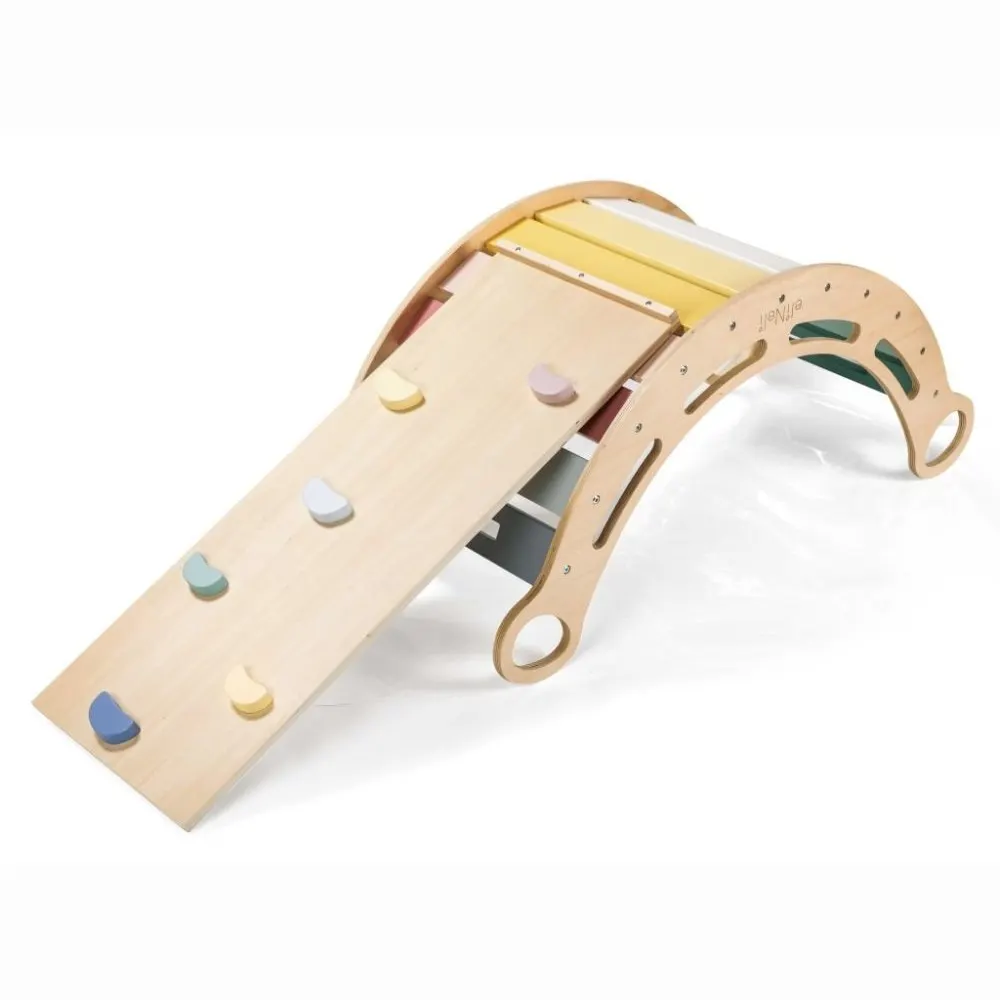
If there is room for one more piece, a rocker offers a different kind of movement. The child rocks on it, climbs over it, hides in it or turns it into a bridge. For this rocker the maker states a load capacity of 110 kilograms, and the set includes a double-sided board and a child's chair. The maker gives it from 1 year, only with adult supervision.
A few weeks later you will notice a change. The back of the sofa stops being interesting. The child climbs to the top of the triangle, sits there for a while and looks at you. They are not waiting to be lifted down. They are waiting to see whether you noticed how far they got. Then they climb down on their own, rung by rung, the way they went up. That moment is why the triangle stands in the living room.
Faborino Journal
We will send you the next article by email
First four short letters for your child’s age, then new articles from the Journal once a month.
We will send you the Faborino Journal from STENVARD s. r. o.: after you confirm, four short letters with tips for your child’s age, then once a month new articles and a selection of materials. You can unsubscribe at any time with one click in every email. More in our privacy policy.