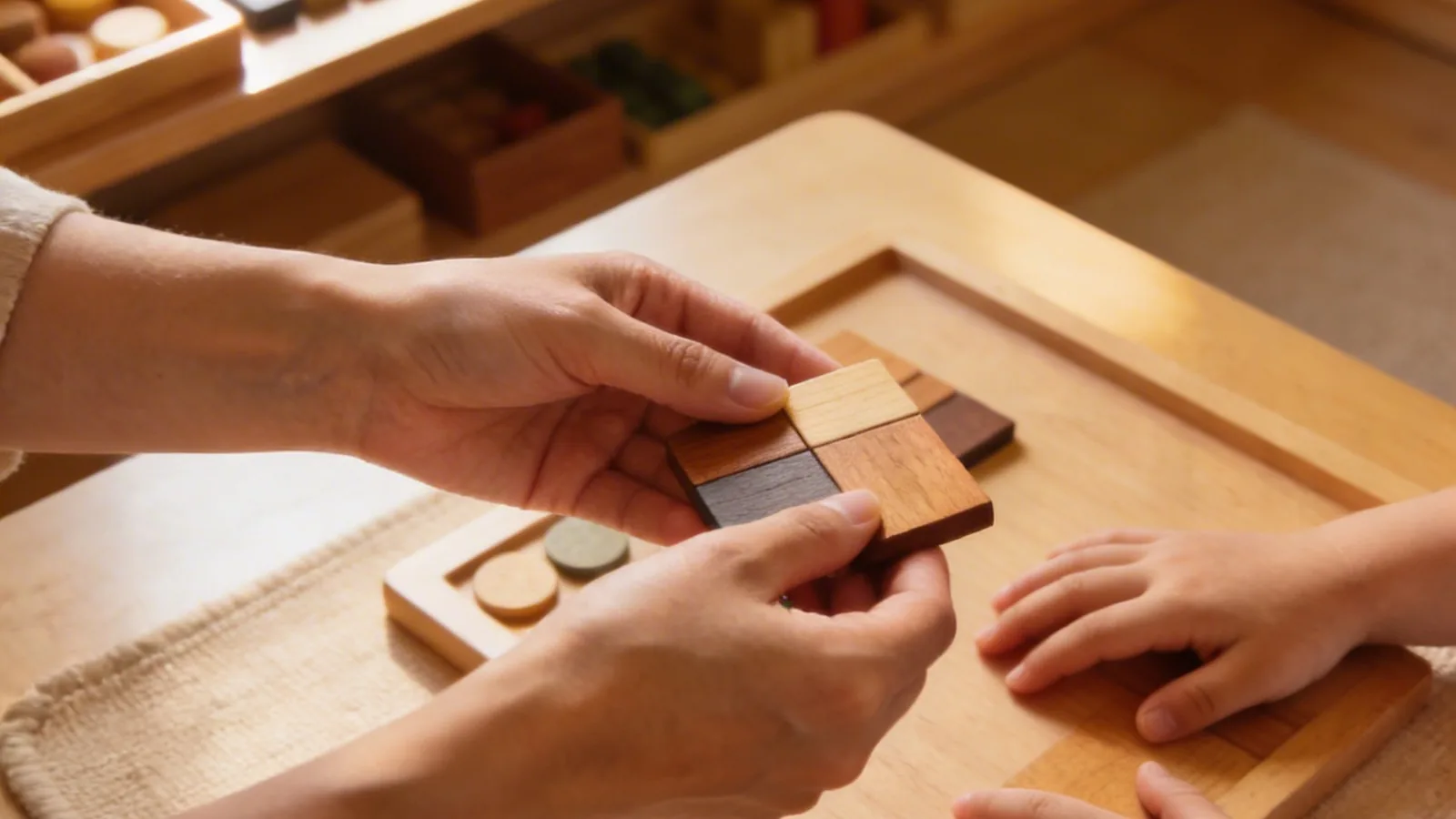

The first weekend of December. Rolled-out gingerbread dough is lying on the worktop, the oven is warming up, and by your knee stands a two year old, tugging at your trouser leg and repeating a single word: me. From their height the worktop is just an edge above their head. They can see the underside of it, the drawer handles and our elbows. What is happening up there they can only guess from the smell.
So we fetch a chair from the dining room. The child climbs up, kneels, then stands, the chair shifts a few centimetres, and we have one hand in the dough and the other on their back. After five minutes we give up and hand them a lump of dough on the floor. Not because they did not want to help. Because in the whole kitchen there is nowhere they could help from.
A kitchen is built for adults
Kitchen makers give about 92 centimetres as the most common worktop height. Two year olds, according to the World Health Organization growth standards, mostly measure around 86 to 88 centimetres. For the child, the edge of the worktop is above eye level, and everything that happens in the kitchen happens out of sight.
A learning tower closes exactly that gap. It is a sturdy platform with a guard rail all round that lifts the child to the worktop, so they stand at the height of our hands and have something to hold on to. It is not a toy and not a climbing frame. It is a piece of furniture that makes the kitchen a place for them too.
Maria Montessori called a place like this a prepared environment: a space arranged so the child can do things alone, without an adult having to lift, steady and serve them all the time. In a kitchen, the smallest change that makes this possible is height. We described the same principle in a hallway in September mornings are not won at twenty to eight.
„Needless help is an actual hindrance to the development of natural forces.“
When to start: once they stand alone, not on their first birthday
Makers usually give an age of one year and up for learning towers. More important than the date of birth, though, is one visible milestone: the child has to stand alone, steadily and without holding on. Sämann says so plainly for the Steppy tower: from about twelve months, once the child stands independently. While they are still cruising along the furniture and sitting down with a bump, the tower can wait.
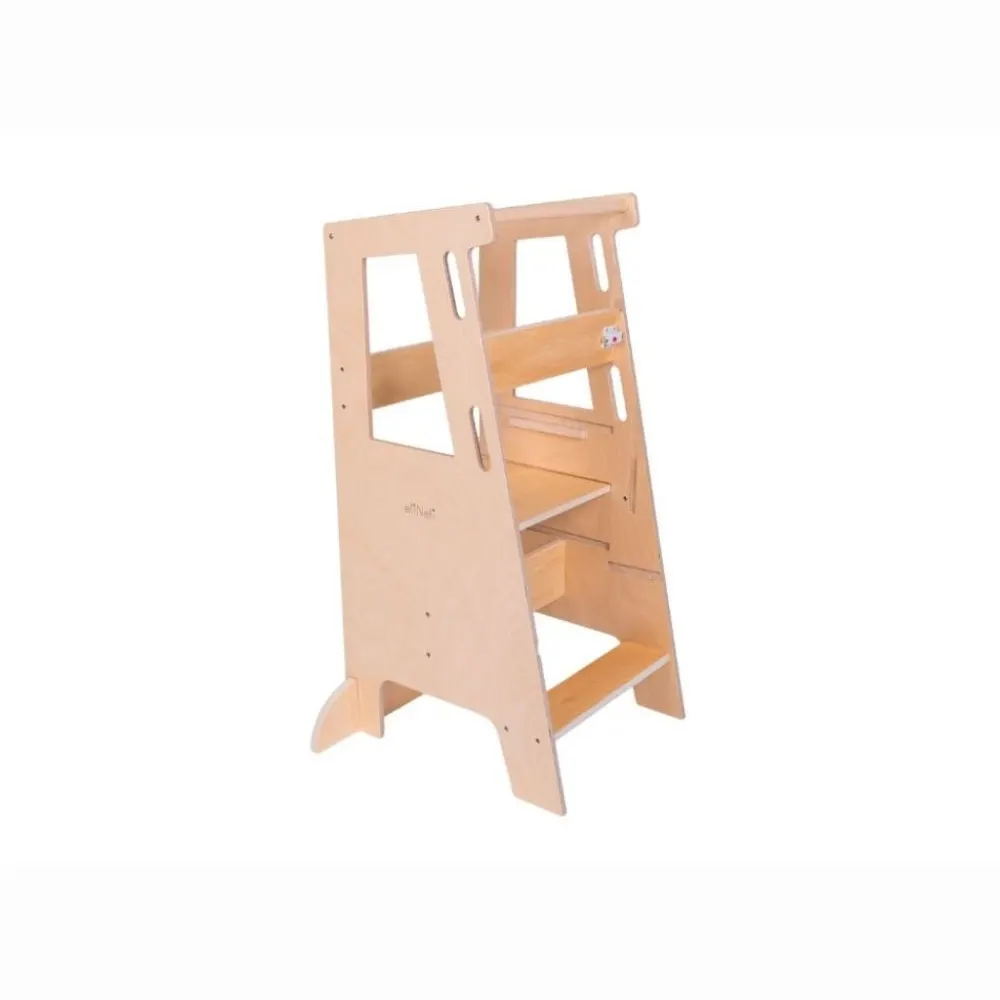
Growing towers have a platform an adult can move to several heights. On this eliNeli tower there are three levels, according to the maker: 30, 40 and 50 centimetres off the floor. A smaller child stands higher, a bigger one lower, and the worktop stays at the same height relative to their hands. The maker gives it for ages one to about six.
You will know when the tower has done its job without looking at a calendar. Even on the lowest level the child stoops to reach the worktop and climbs in more out of habit than need. Then it has served its purpose and can move on to a younger brother or sister.
What to look at when choosing
In photographs most towers look alike. The differences only show once a child is standing in one, turning towards a voice and reaching for a bowl that is a little further away than it should be. When choosing, it helps to look at five things and, for each, to read what the maker states on the product page and in the instructions.
For the towers we stock, the makers state load capacities from 50 to 90 kilograms. For the folding 2-in-1 eliNeli tower the maker gives a TÜV Rheinland test, and for the growing PRO 5-in-1 the EN 71 standards. These are the makers' own figures, and you will find them on each product's page.
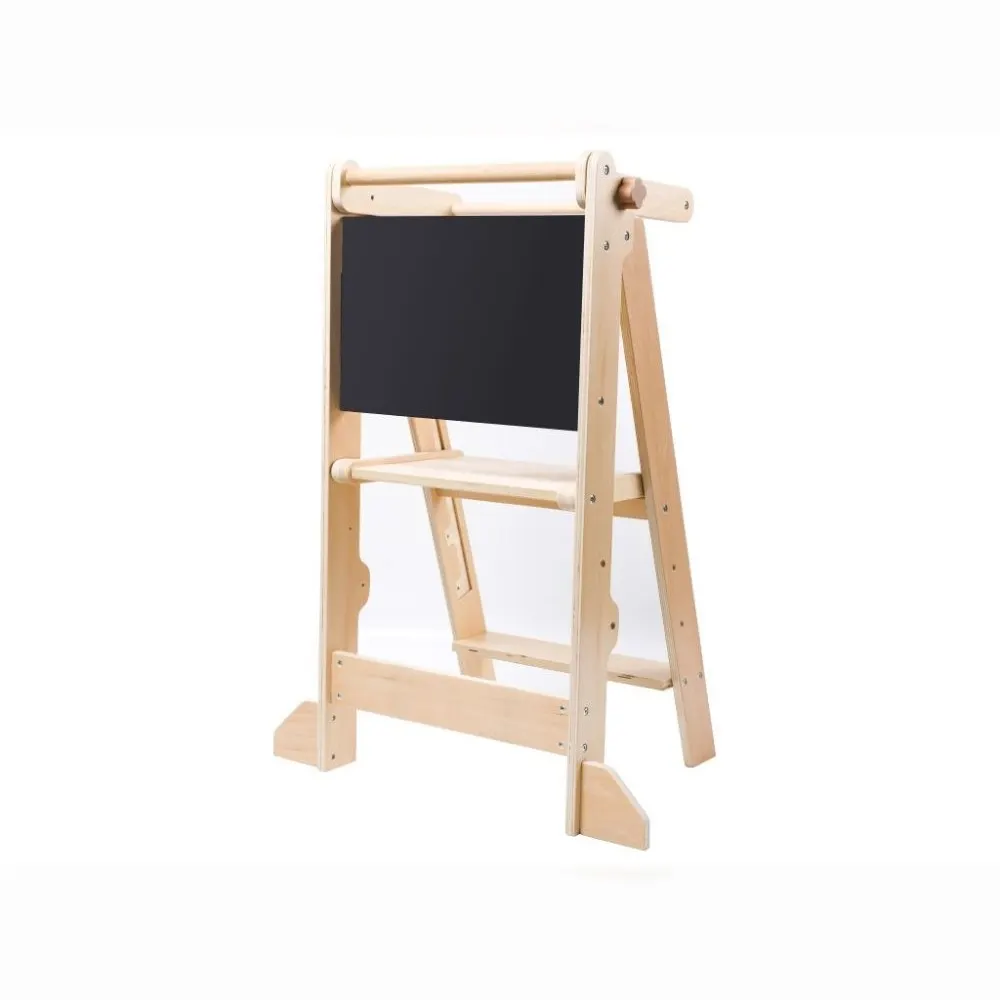
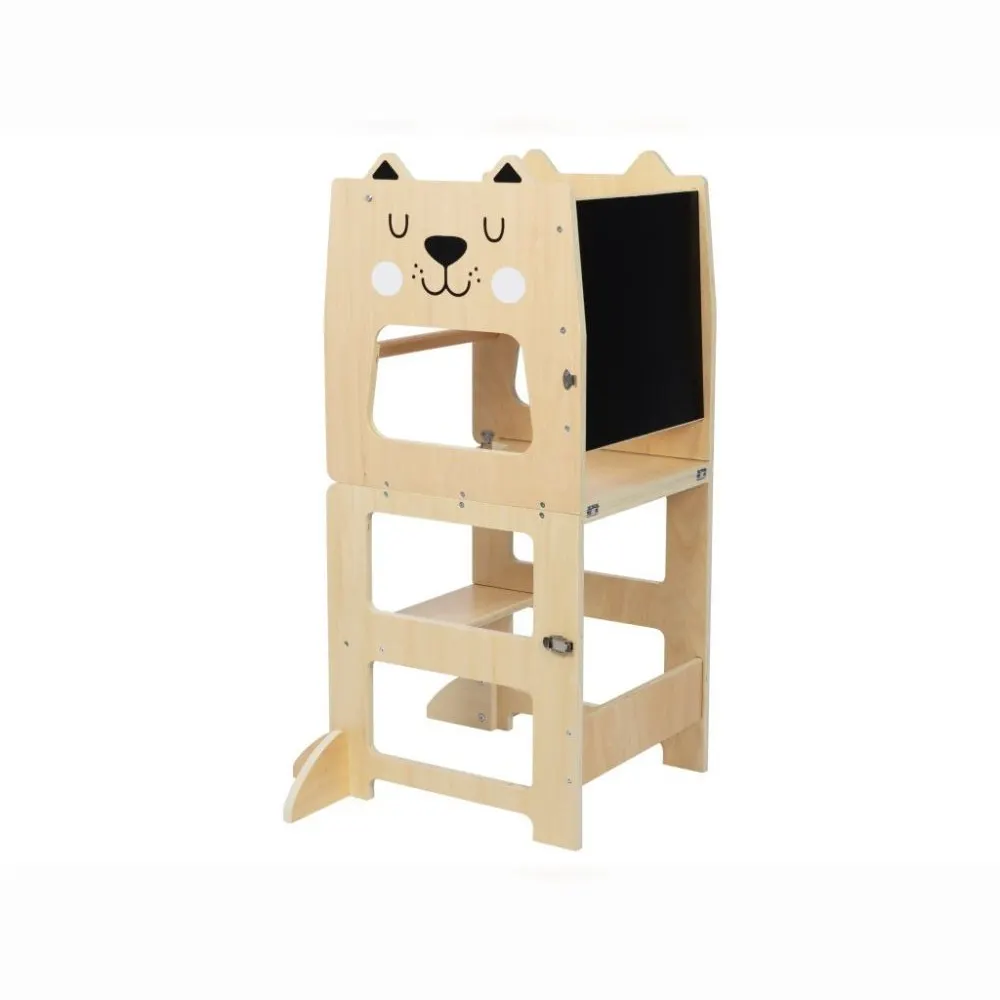
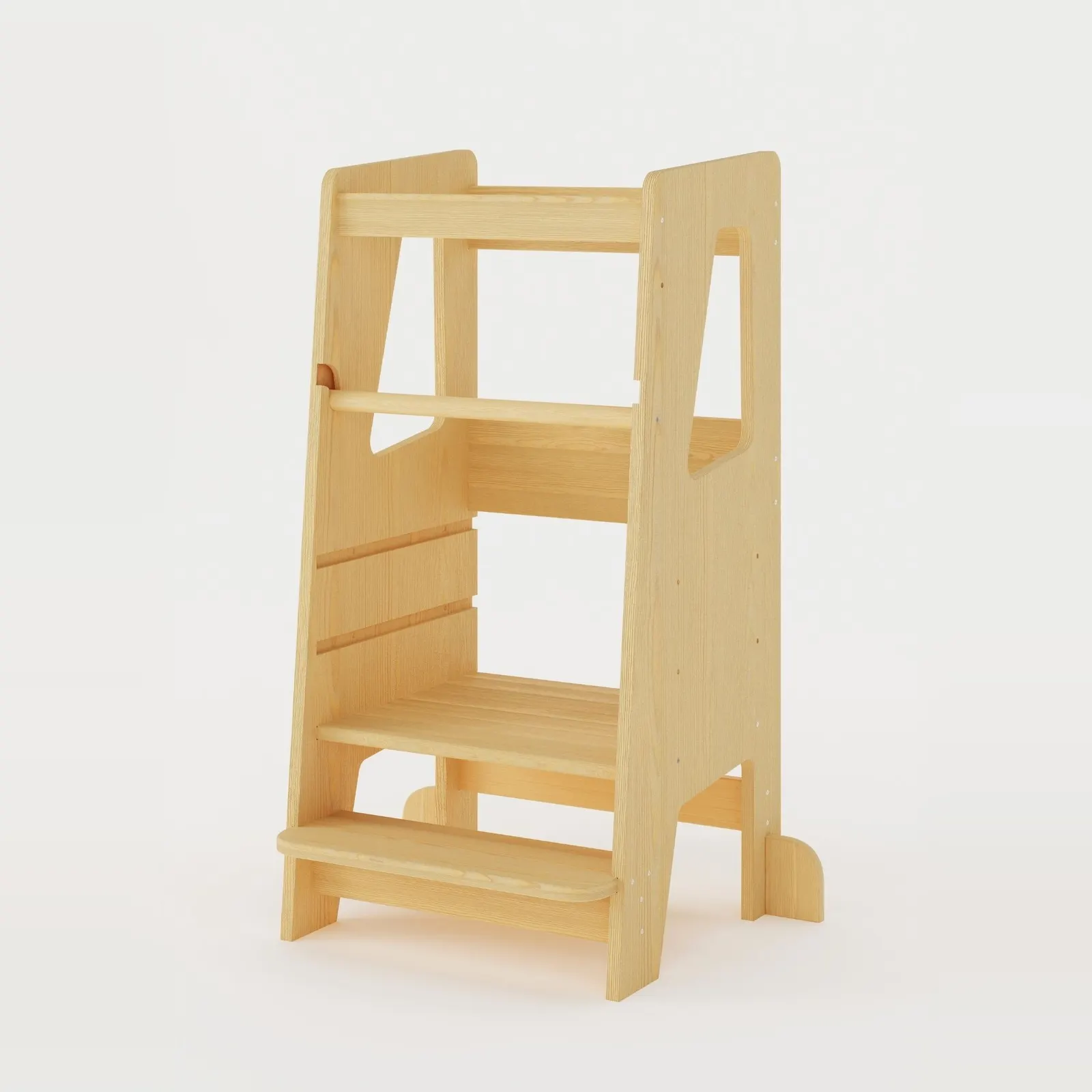
The folding tower goes against the wall once the cooking is done. The Levíček tower from eliNeli also turns into a small table and chair and has a chalkboard, so it earns its place even when nobody is cooking. Steppy from the German maker Sämann has a platform at three heights, 28, 38 and 47 centimetres, and, according to the maker, anti-tip feet and a bar at the back that keeps the child in the tower. None of them is best at everything. You choose by your kitchen and by how much room it has. All the towers and Pikler triangles are under Learning Towers, Pikler & Climbing.
A tower is not a climbing frame
With a learning tower one simple rule applies: follow the maker's instructions. The makers list similar points and they are worth taking literally: only one child in the tower at a time, the tower stands on a firm, level floor away from stairs, open windows and hot surfaces, an adult assembles it and changes the height, and the child is never in it unsupervised.
Just as important is teaching the child to climb in and out. Slowly, several times over, facing the tower. For the first few days, keep a hand close by while they do it. Once they can manage alone, the tower stops being an adventure and becomes a place you go to work.
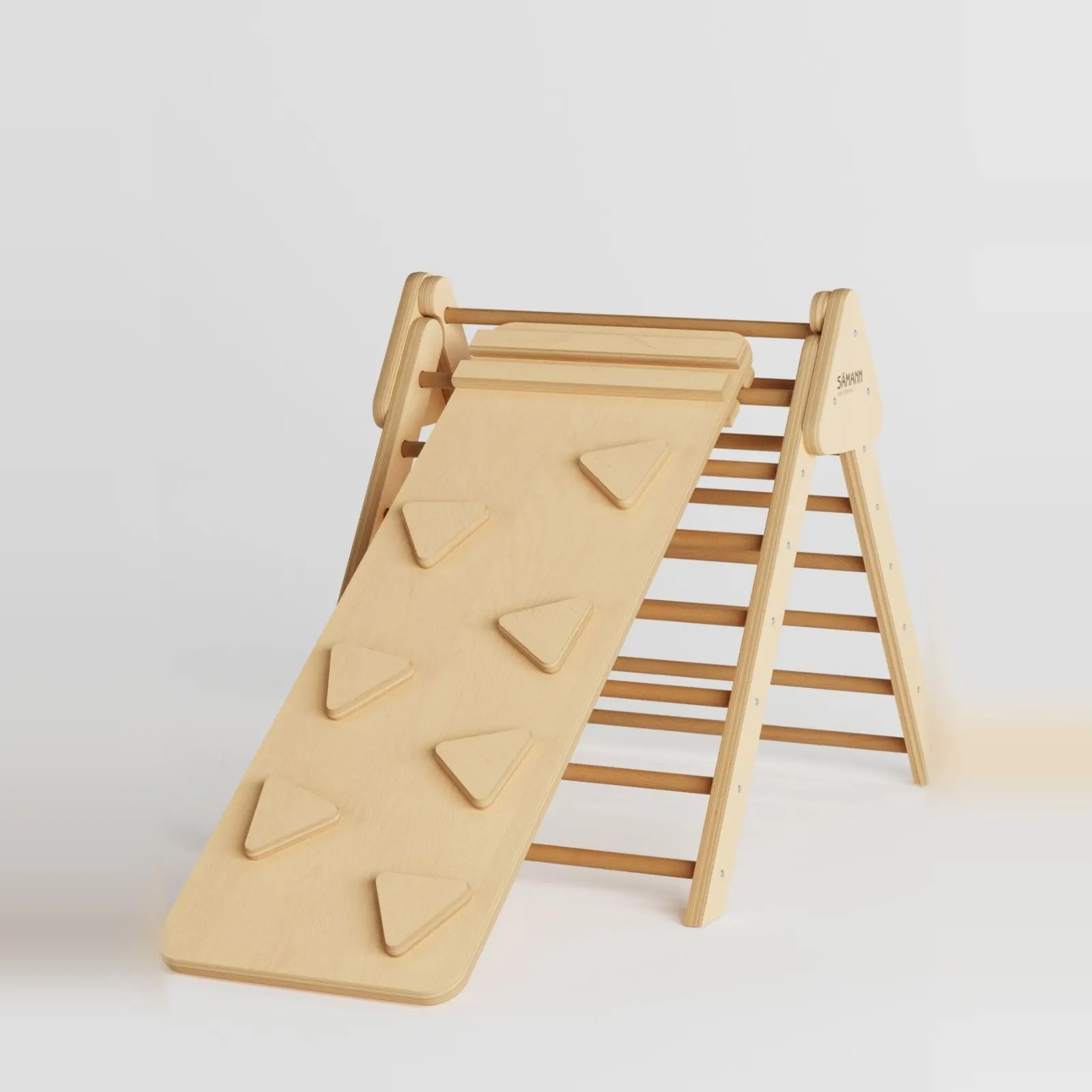
The urge to climb does not go away. One and two year olds climb everything they find, and if they have nowhere they are allowed to, they climb the tower, the chairs and us. A Pikler triangle is exactly such a place: a ladder on which the child decides where a hand goes and where a foot, and how to get back down.
What to do once they stand at the worktop
The first job in the tower does not need to be big. The child washes an apple under the running tap, spreads butter on bread, stirs batter with a wooden spoon the size of their hand or tips flour from one bowl into another. Jobs with a clear beginning and end work best, where the child can see the result: the apple is clean, the bread buttered, the batter mixed.
And in December, gingerbread. Rolling out is a whole afternoon's work for a two year old: the rolling pin slips, the dough sticks, the flour gets everywhere. Cutting out is even better, because every biscuit is a finished result. The tools should be real, only smaller: a rolling pin their hands can hold, a brush for the egg wash and a scraper to lift the dough off the worktop.
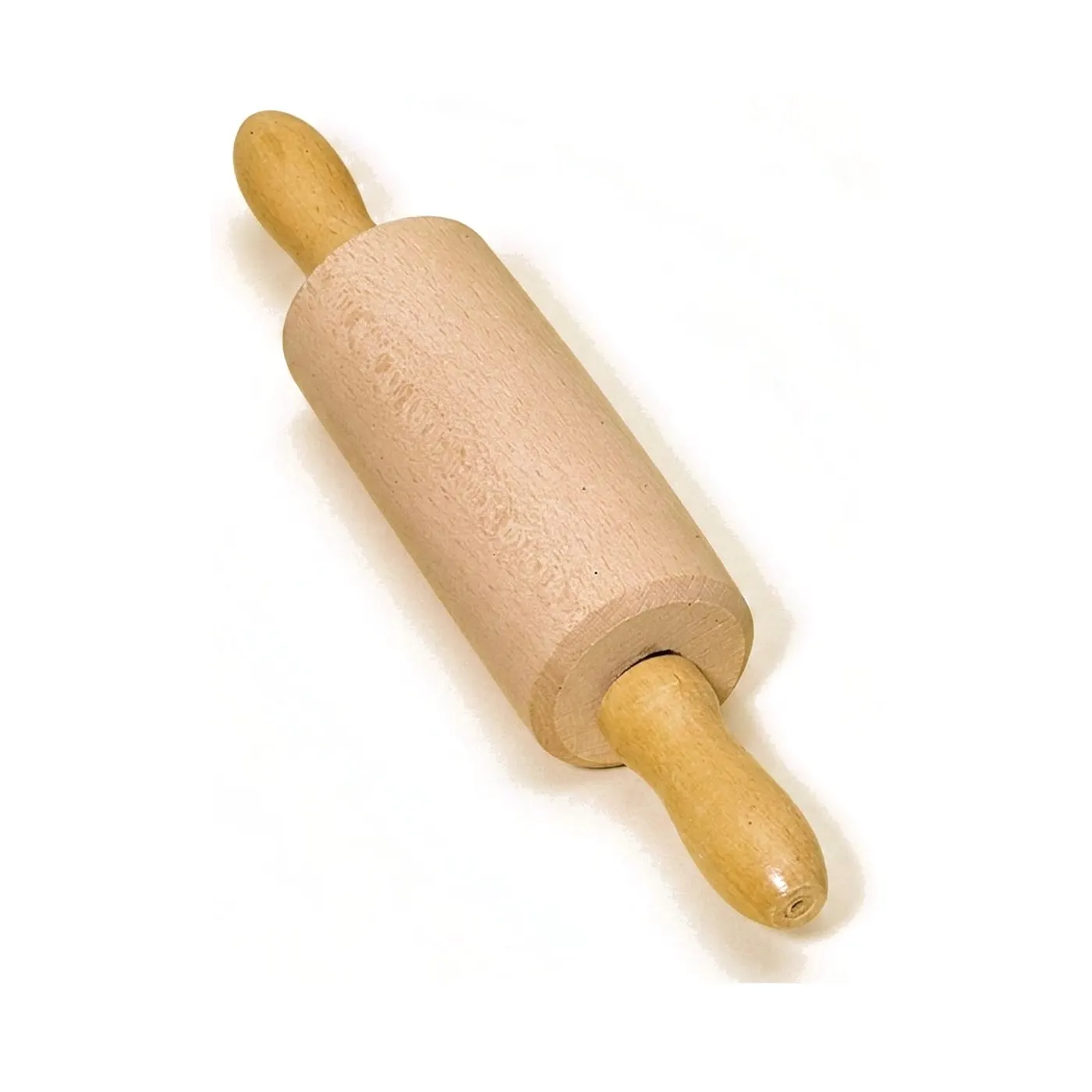
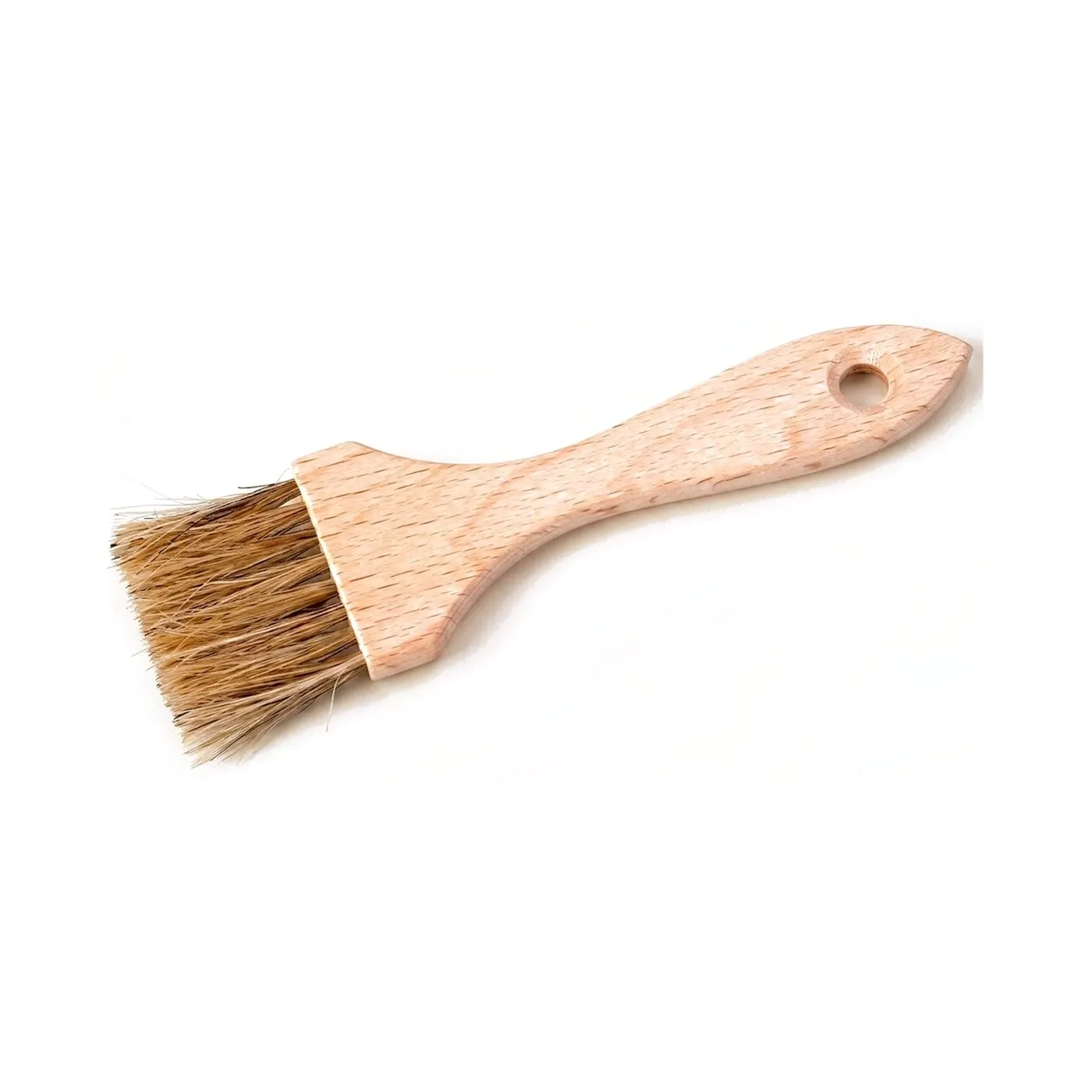
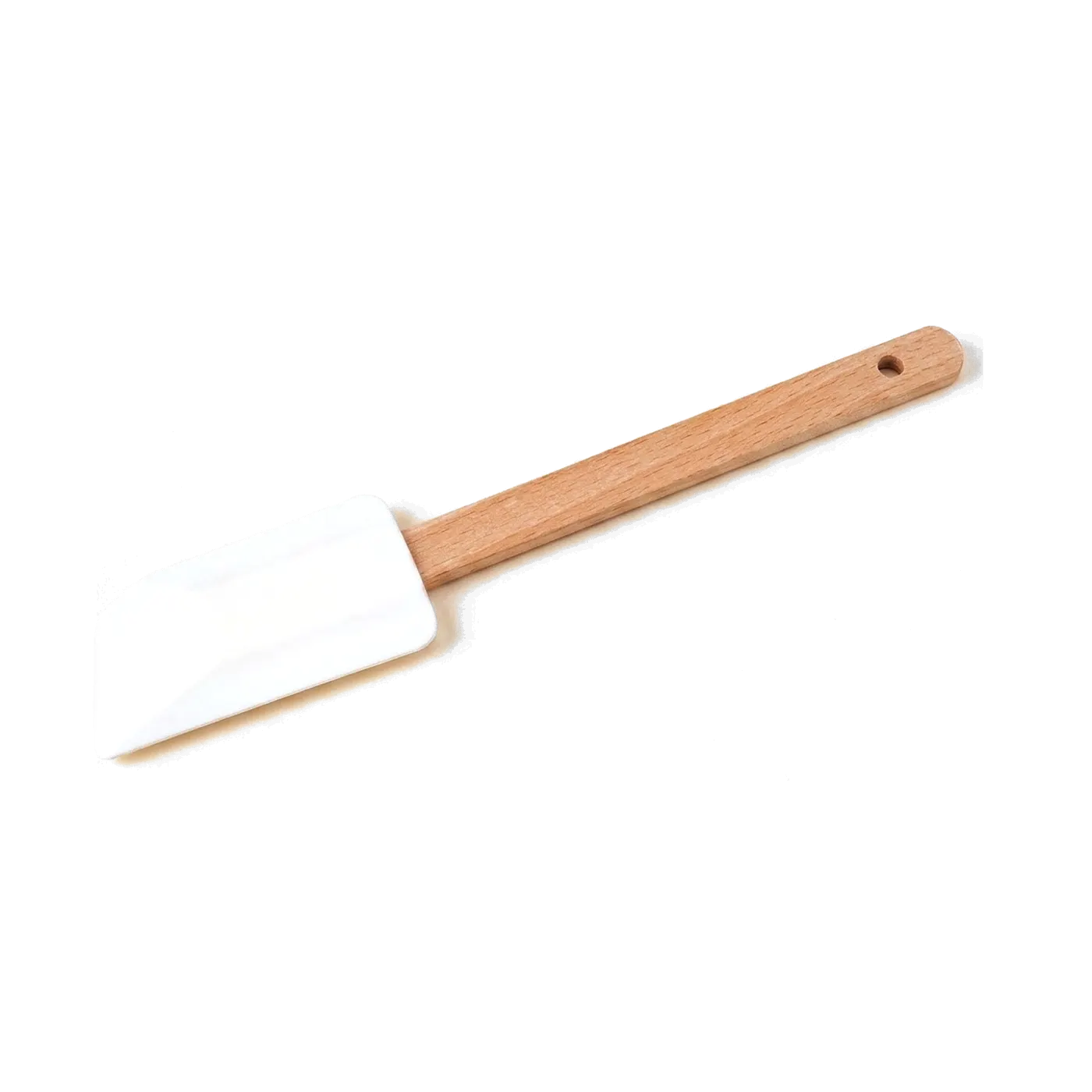
A wooden spoon, a whisk, a pastry brush and a scraper in a child's size come together in the Food Preparation Starter set. With every new job the same applies as with a button on a coat: stand beside the child rather than opposite them, go slowly and say nothing while you show. Then hand them the tool and let them get on with it. The biscuit will be crooked. But it will be theirs.
A few weeks later you will notice a change. The child comes into the kitchen while you are still getting the bowls out, climbs into the tower and waits. Not for you to hand them something, but for whatever is going to be done. The biscuit they cut out will be crooked and thicker on one side. They will put it on the baking tray themselves. That moment is why the tower stands at the worktop.
Faborino Journal
We will send you the next article by email
Once a month, new articles from the Journal and a selection of materials to go with them.
Once a month we send you the Faborino Journal: new articles and a selection of materials. You confirm by email and can unsubscribe with one click. More in our privacy policy.