
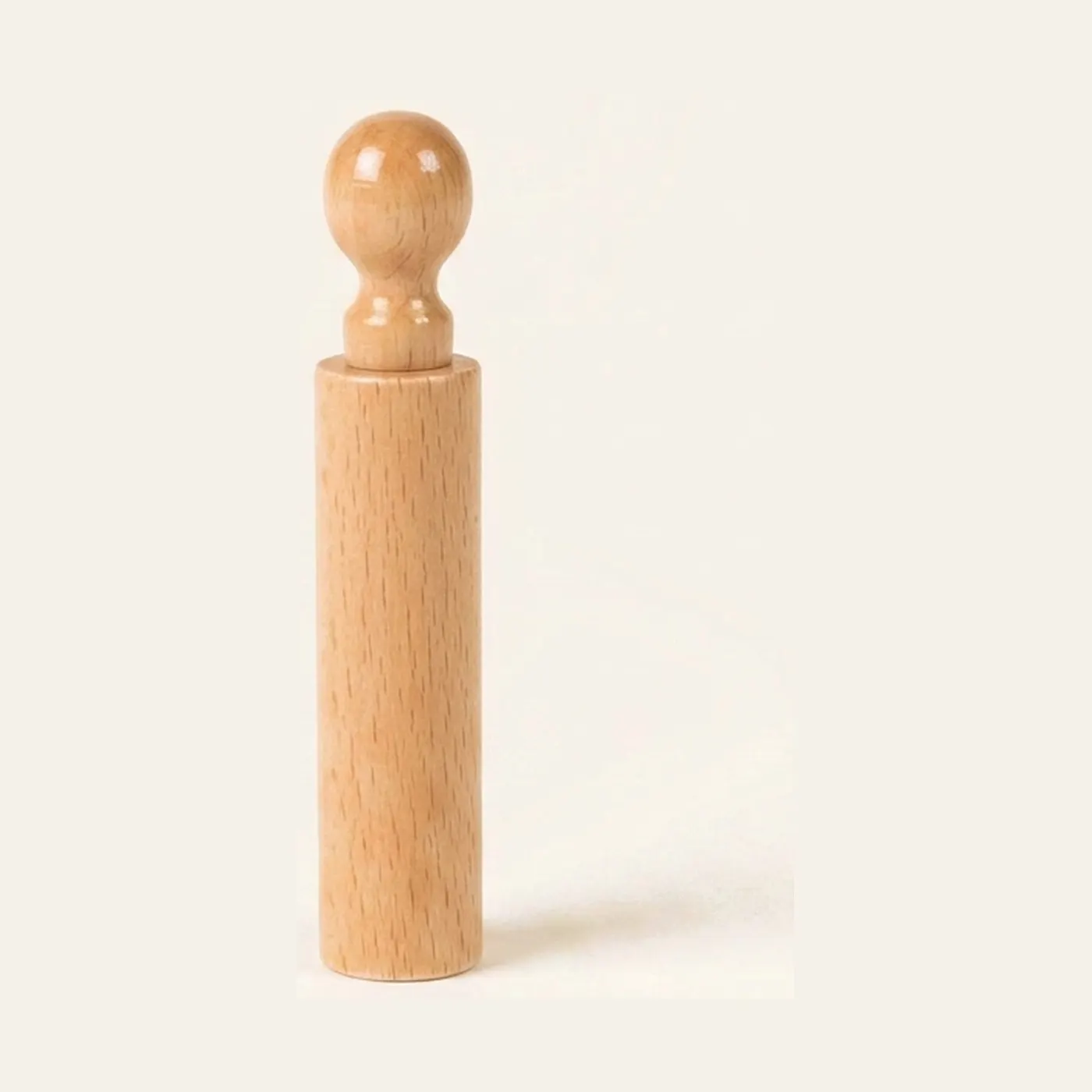
2nd Cylinder Of Block No. 2
Made by Nienhuis Montessori · shipped by Heutink International (Netherlands) About the maker
The second cylinder of block number two, a single replacement piece. It comes from the narrow end of that block, where the steps between neighbours are only a few millimetres of diameter and every cylinder stands the same height. Two cylinders from this end look identical on a shelf and behave differently in a socket, which is precisely the discrimination the block trains. Check the position as well as the block. The complete block is a separate item.
“Free the child's potential, and you will transform him into the world.”
The 2nd Cylinder of Block No.
- Visual discrimination of dimensional differences
- Refinement of pincer grasp and hand control
- Development of order and sequence understanding
- Enhancement of concentration through repetitive handling
Read More
2 introduces children to dimensional variations through a single wooden peg figure that isolates one changing attribute. This natural wooden cylinder's smooth, polished surface invites repeated handling, allowing the child to internalize subtle differences in dimension through tactile and visual exploration. Unlike complex toys, this simple wooden form eliminates distractions, focusing attention purely on size relationships. The cylinder's precise craftsmanship in natural wood provides consistent sensory feedback as children grasp, compare, and arrange multiple pieces. Through manipulating these wooden pegs, children build the perceptual discrimination essential for later mathematical understanding. The cylinder's neutral appearance encourages classification based on inherent properties rather than superficial features, developing the child's ability to perceive essential characteristics.
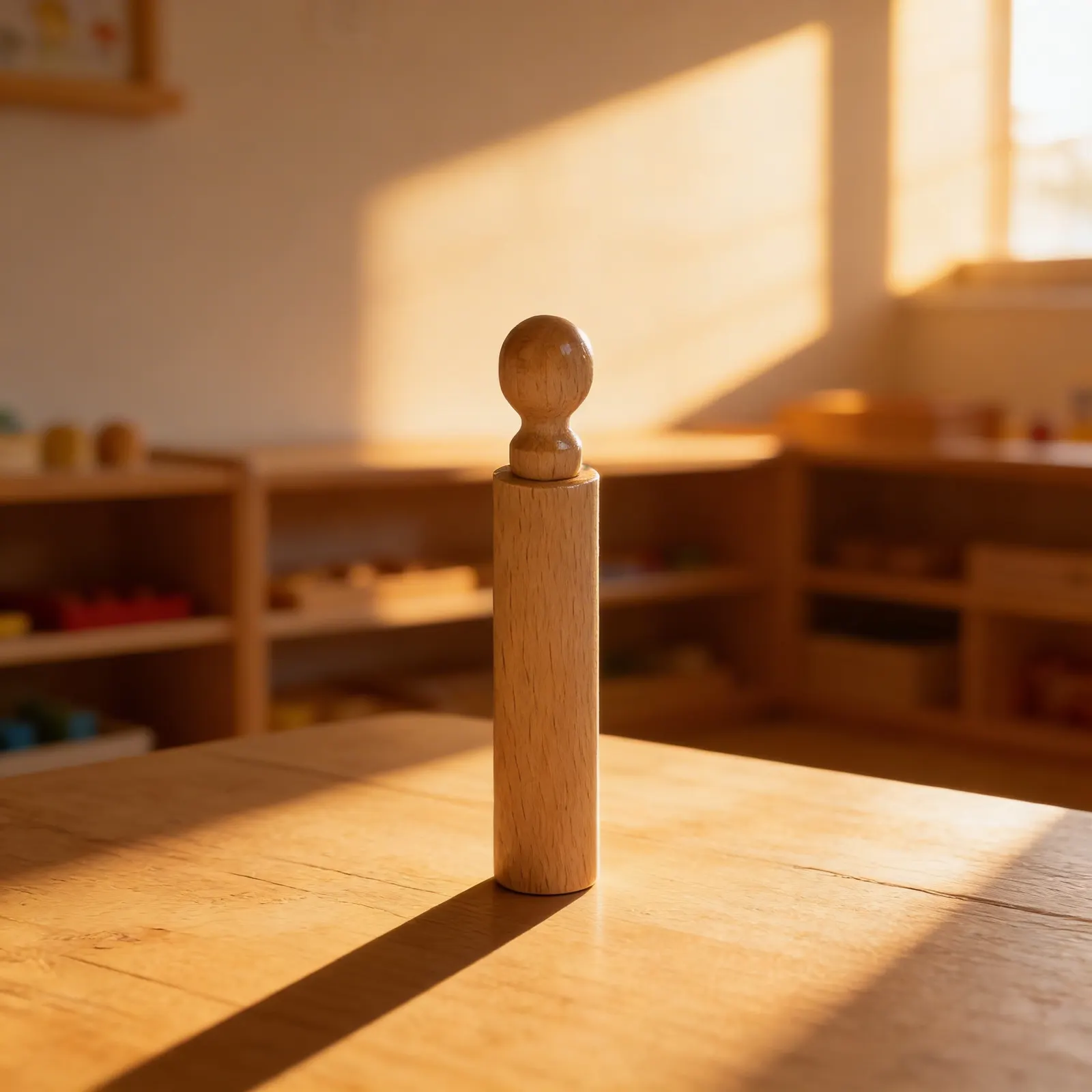
How to present it
Follow the Montessori method of presentation for optimal child development.
Place the cylinder on a tray at the child's work table. If using multiple cylinders from the set, arrange them randomly on the tray.
- 1
Demonstrate holding the cylinder with thumb and two fingers at its base
Model slow, deliberate movements to emphasize careful handling - 2
If multiple cylinders are available, mix them and invite the child to arrange by size
Start with just 3-4 cylinders before introducing the complete set - 3
Show how to trace around the cylinder's circumference with fingertips
This tactile exploration reinforces visual discrimination - 4
Demonstrate creating patterns or lines with multiple cylinders
Allow creative arrangements while maintaining focus on dimensional awareness
Every Child Is a Little Creator

Heritage
Since 1929

In classrooms
Around the world

European brands
Nienhuis, GAM, Educo
2nd Cylinder Of Block No. 2
