
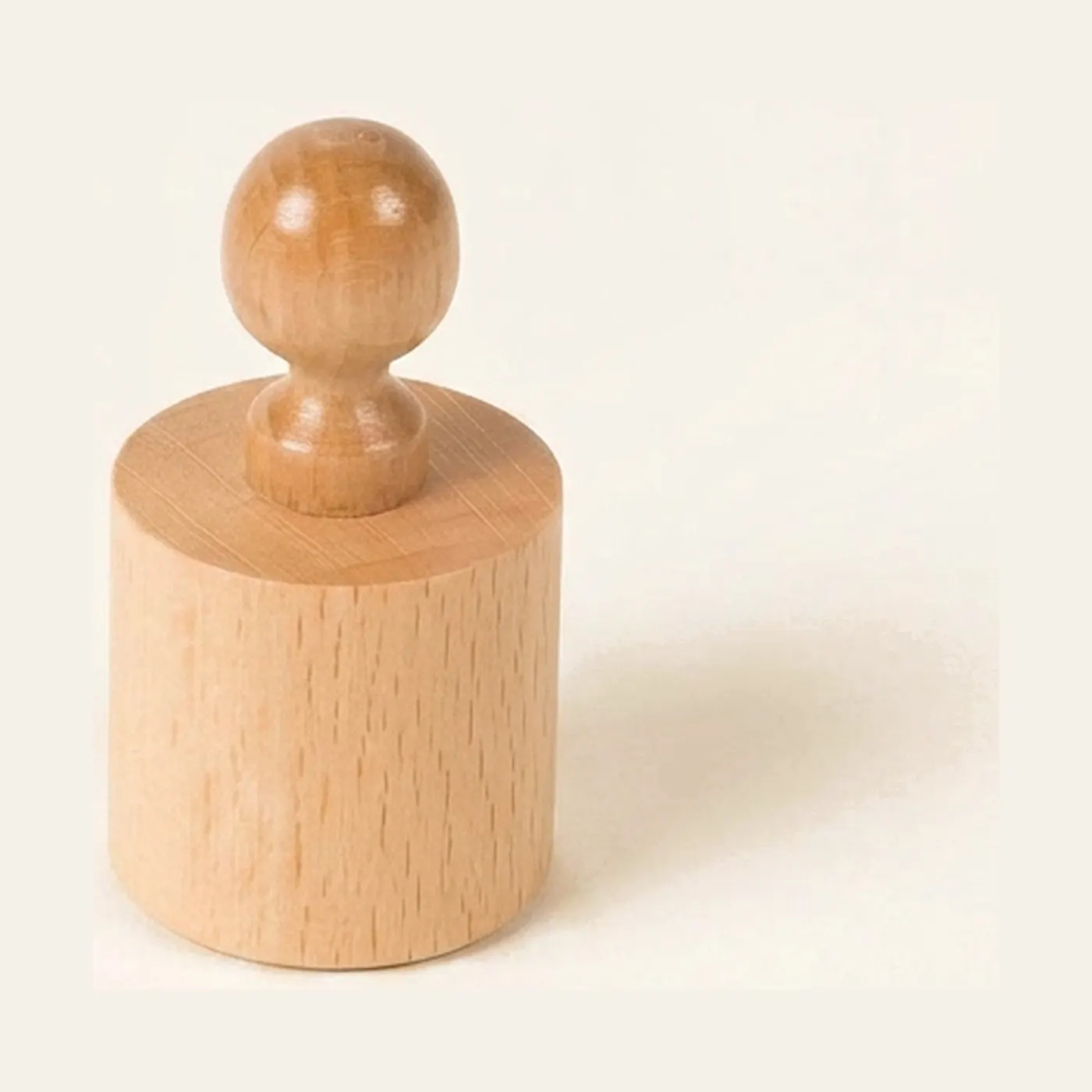
4th Cylinder Of Block No. 4
Made by Nienhuis Montessori · shipped by Heutink International (Netherlands) About the maker
The fourth cylinder of block number four, a single replacement piece. In this block a cylinder is judged by how far it stands out of the wood, so a cylinder from the middle of the row is the one a child gets wrong twice before getting it right: it sits nearly flush in more than one socket, and only the finished row shows which was its own. Order by block number and position, since both matter here. The complete block is a separate item.
“The child is both a hope and a promise for mankind.”
The Fourth Cylinder Block No.
- Develops visual discrimination of subtle dimensional differences
- Refines pincer grasp through repeated handling of the spherical knob
- Builds concentration through focused manipulation of a single object
- Establishes muscle memory for precise hand movements
Read More
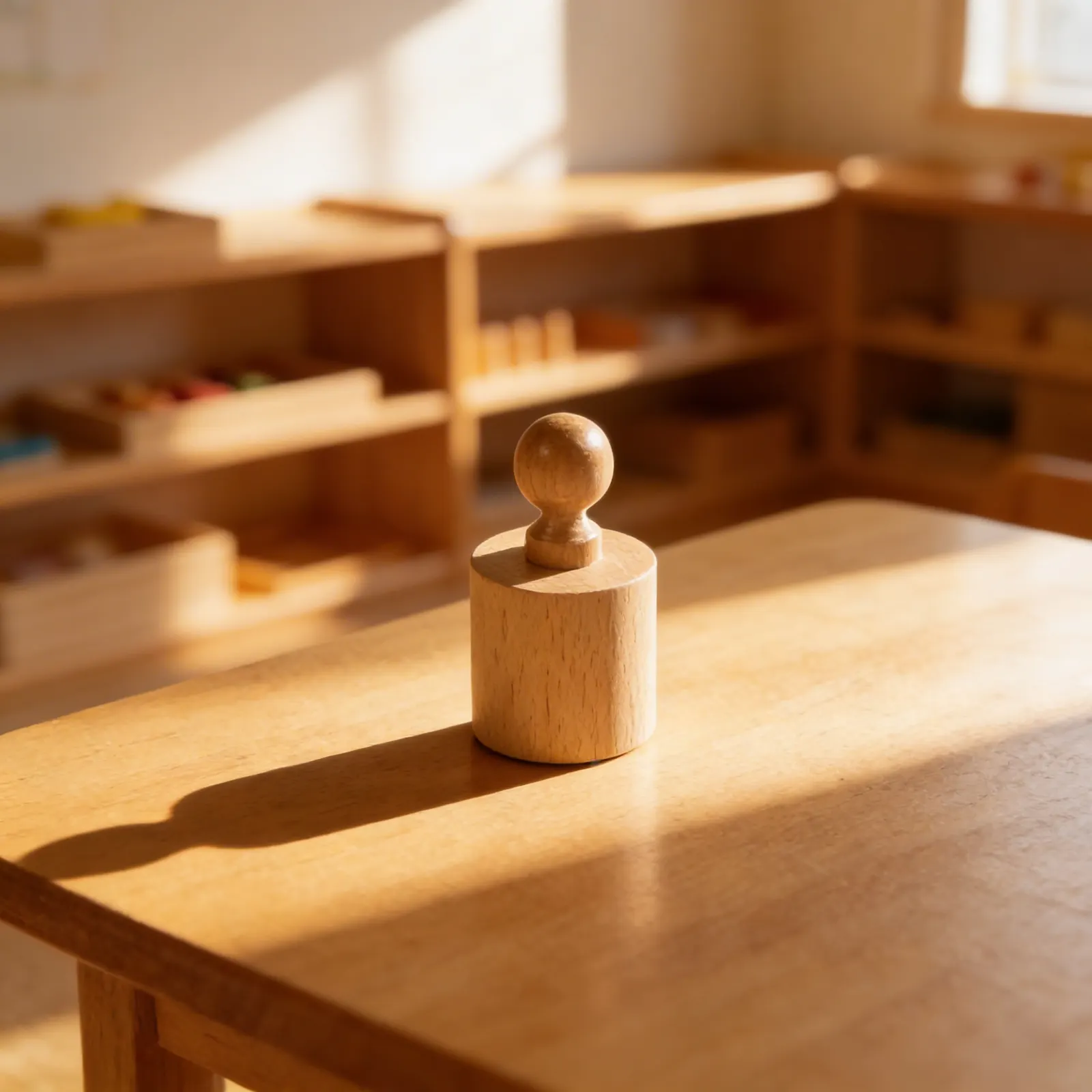
4 represents Maria Montessori's profound understanding of how children learn through repeated manipulation of precisely designed objects. This single wooden cylinder with its spherical knob handle isolates one specific dimensional relationship for the child to master through touch and sight. The cylinder's particular proportions, neither the thinnest nor thickest, neither shortest nor tallest, embodies Montessori's principle of offering materials that challenge perception without overwhelming it. By grasping the spherical knob and fitting this cylinder into its corresponding socket, children engage in what Montessori termed 'education of the senses', learning that occurs through direct physical interaction rather than verbal instruction. The Fourth Cylinder Block No. 4 serves as both a complete exercise in itself and as preparation for understanding mathematical relationships, as its specific dimensions relate proportionally to the other cylinders in the complete set.
How to present it
Follow the Montessori method of presentation for optimal child development.
Place the cylinder on a tray at the child's work table. Ensure the corresponding cylinder block base (if available) is positioned within easy reach.
- 1
Demonstrate grasping the spherical knob using thumb and two fingers
Move slowly and deliberately to emphasize the precision required - 2
Lift the cylinder vertically, pause, then lower it back down
The pause allows the child to observe the cylinder's dimensions - 3
If using with a base, show how to test different holes before finding the correct fit
Let the child discover the match through trial rather than pointing it out - 4
Invite the child to repeat the exercise multiple times
Children often repeat 20-30 times when truly engaged
Every Child Is a Little Creator

Heritage
Since 1929

In classrooms
Around the world

European brands
Nienhuis, GAM, Educo
4th Cylinder Of Block No. 4
