
White KnobsFor Maps / Insets / Puzzles (1)
The first photo is the maker's own. The other shots are illustrative.
Inv. no. NIE-00370003
- Maker
- Nienhuis Montessori, since 1929
- Primary Material
- Plastic
- Attachment Type
- Závitový kolík
- EAN
- 8719924001957
Final price incl. VAT. Delivery €5.90, €147.10 to go for free delivery.
Advice, warranty and returns are handled by us.
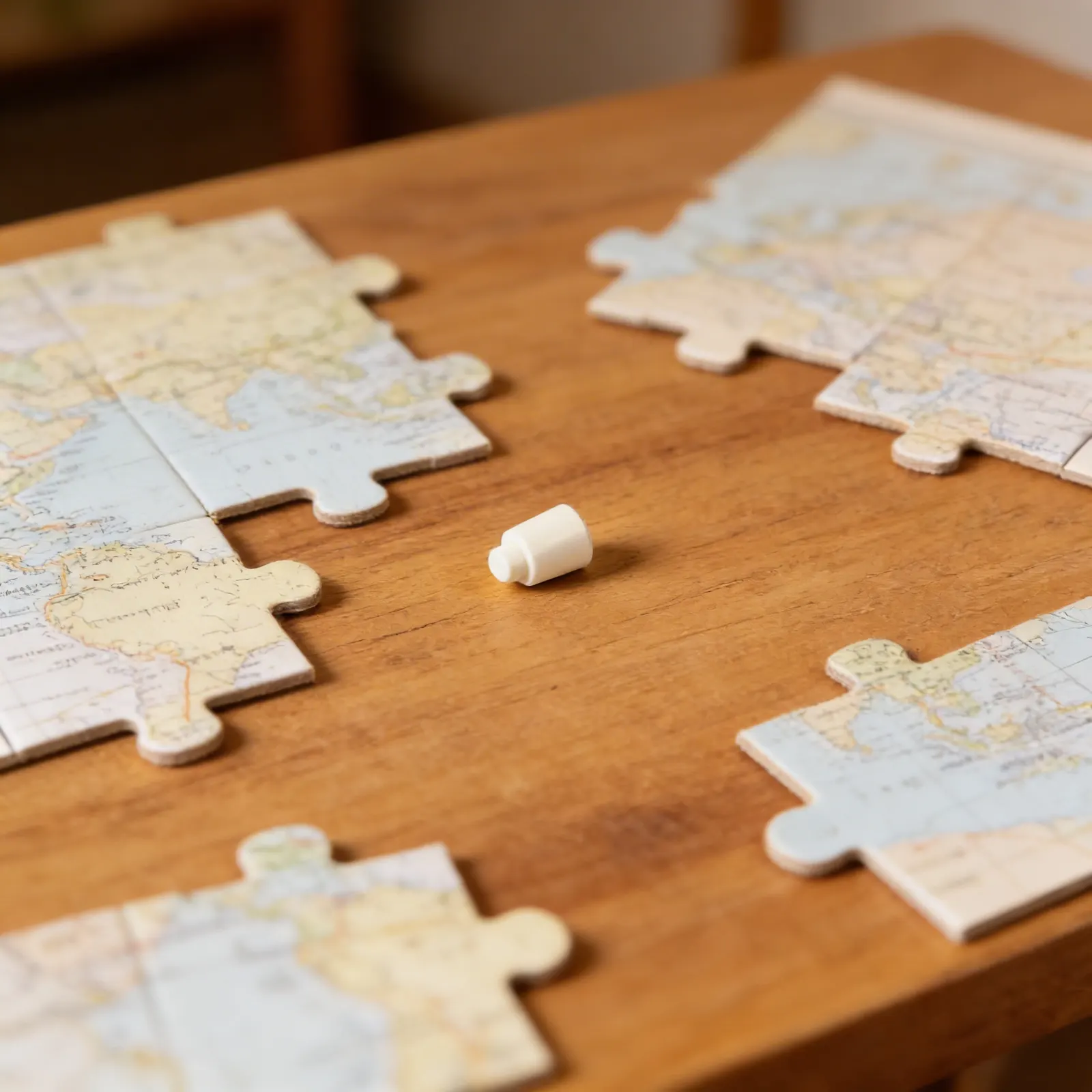
White Knobs in a child's hands
One white knob, the small handle used on puzzle maps, inset frames and puzzles. A knob is the part that decides whether a piece can be lifted at all, and losing one takes a country, a shape or a picture out of use while the rest of the material sits there working. It is also the part that comes loose rather than breaking, so it is often findable and worth replacing rather than replacing the whole piece. Sold singly.
Fine Motor Control
The cylindrical grip promotes proper pincer grasp development essential for writing preparation.
Practical Life Skills
Learning to attach and detach knobs builds independence and problem-solving abilities.
Geography Work Support
Enables continued use of puzzle maps and geography materials for spatial learning.
How to present it
Ensure the white knob is securely threaded into the puzzle piece or inset. Check that the knob turns smoothly and sits flush against the material surface.
- 1Demonstrate the three-finger grip around the knob's cylindrical surface
- 2Lift the puzzle piece vertically using only the knob
- 3Guide the piece to its corresponding space in the frame
- 4Lower the piece gently into position using the knob for control
3 tips for parents
- Practice the pincer grasp at home using small household objects with similar knobs
- Create simple puzzles with knobs attached to practice the lifting motion
- Notice how your child's grip strength improves over weeks of use

If you are not sure it suits your child, we answer in person.
Norbert Kovalčín, founder of Faborino · write to him
There is no review here yet. We will ask you for one after you buy. Write the first review
What's in the Box
- White knob: Single replacement knob with threaded post
Size and material
| Packaging | 6 × 9 × 1 cm |
| Primary Material | Plastic |
| Attachment Type | Závitový kolík |
| Recommended Age | 3-6 years |
Care
Wipe with damp cloth and mild soap
Frequently Asked Questions
What size are these white knobs and will they fit my existing Montessori puzzle maps?
These knobs feature a standard Montessori size with a smooth cylindrical design and universal threaded post that fits most traditional Montessori geography puzzle maps, cabinet insets, and similar materials. The threading is designed to be compatible with common Montessori manufacturers.
How do I install these replacement knobs on my geography materials?
Simply unscrew the old or damaged knob by turning it counter-clockwise, then thread the new white knob into the existing hole by turning clockwise until secure. The threaded post design allows for easy installation without tools, making it simple to refresh worn materials.
Why are white knobs specifically used for Montessori geography materials?
White knobs are traditionally used in Montessori geography materials to maintain visual consistency and avoid distraction from the learning content. The neutral white color doesn't compete with the colorful puzzle pieces or maps, allowing children to focus on geographical features and shapes.
Are these knobs safe for young children ages 3-6?
Yes, these knobs are specifically designed for children ages 3-6 with smooth edges and an appropriate size for developing pincer grasp. The cylindrical shape provides optimal finger positioning for small hands, supporting fine motor development while ensuring safe handling.
How many knobs come in this package?
This listing is for one (1) individual white replacement knob. This allows you to purchase exactly the number needed to replace missing or worn knobs on your geography materials without buying excess inventory.
Product safety
Manufacturer: Nienhuis Montessori, Anders Celsiusstraat 15, 7442 PB Nijverdal, Netherlands
White Knobs