You Don't Need to Be a Teacher to Build a Montessori Home
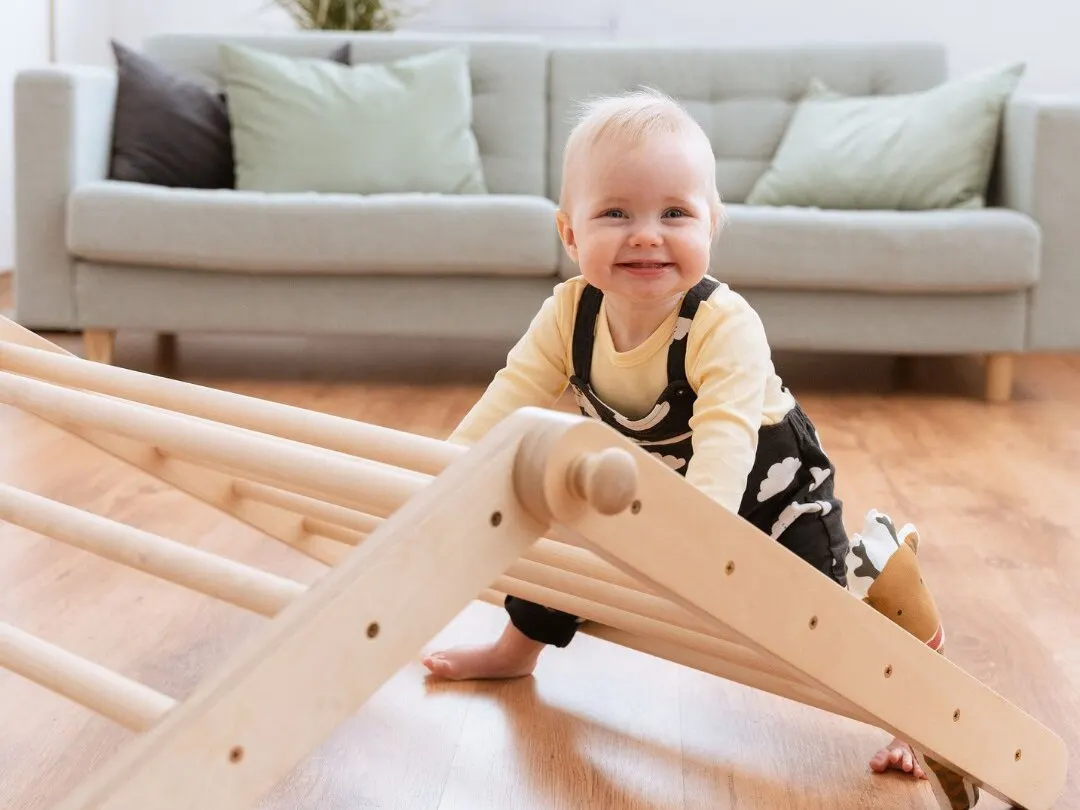
Walk into a Montessori-inspired home on Instagram and it's easy to feel discouraged. The wooden shelves stretch the length of a sun-drenched playroom. There's a floor bed under a vintage canopy. The kitchen has a tiny pour-over coffee station next to the child's flour scoop. It looks like a magazine, and it costs like a magazine. Most real families don't live like that, and the good news is, you don't need to.
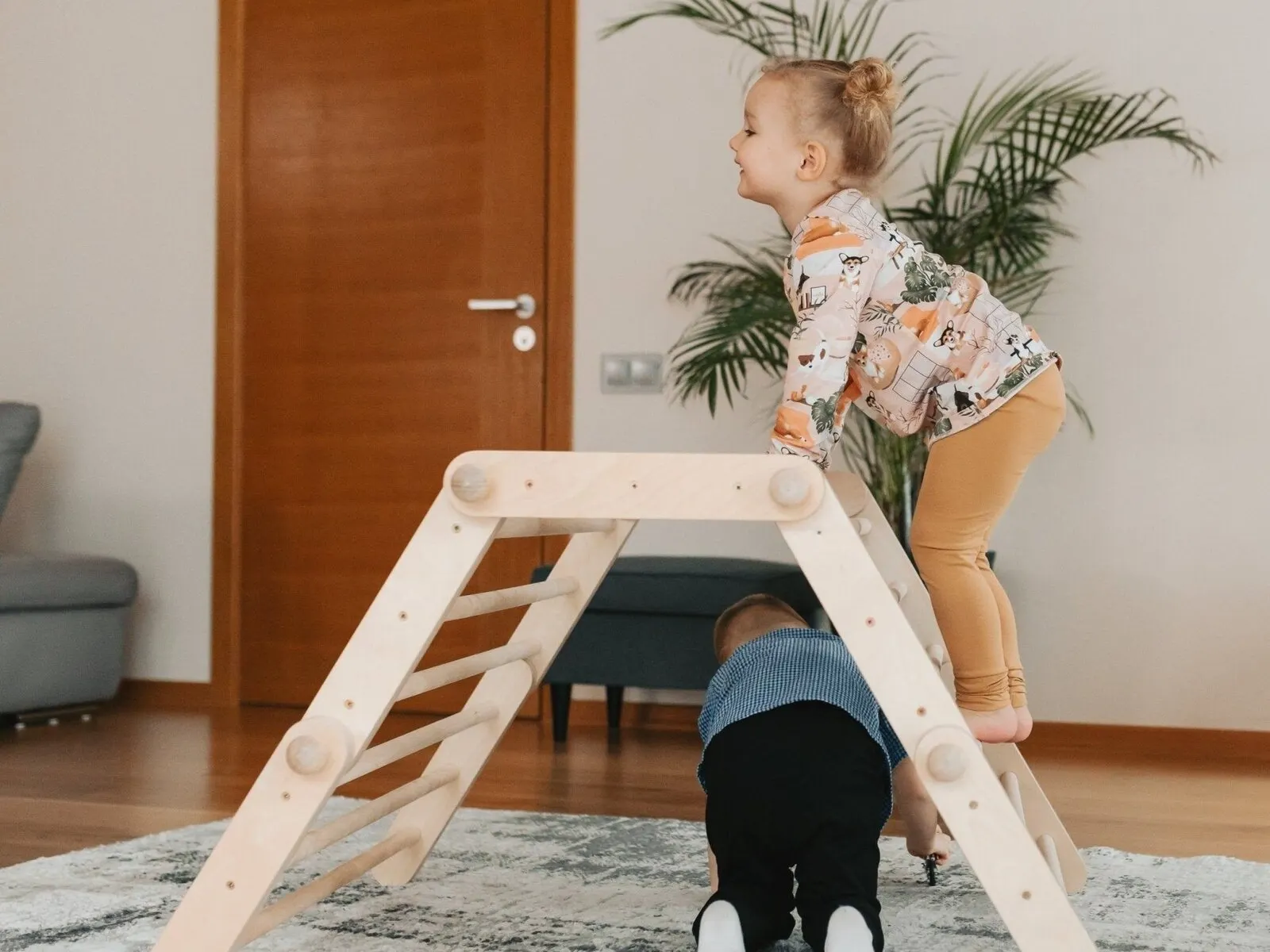
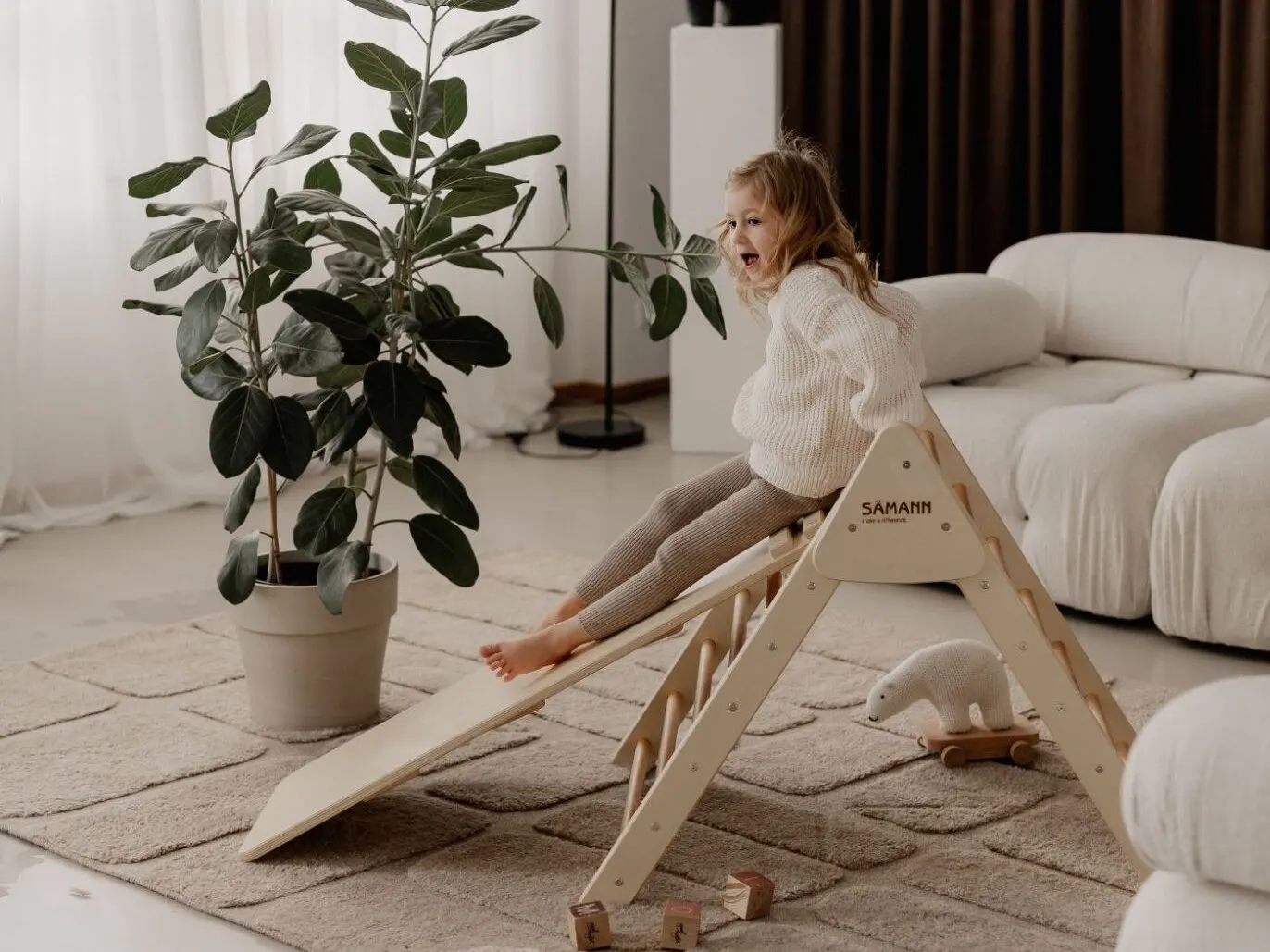
Maria Montessori didn't design Pinterest boards. She designed what she called the prepared environment: a space that quietly invites a child to act independently, to choose their own work, and to learn from real things. The principles behind that environment fit just as well into a small flat as into a 200m² country house. What matters isn't the square metres or the budget: it's whether your child can see, reach, choose, and put back what's in front of them.
Your role in this environment is not to teach. It's to observe. To set up something thoughtful, then step back and watch what your child gravitates toward, what they ignore, what they're ready for next. This guide walks you through the principles, the spaces, and the materials, so you can start with what you have, and grow from there.
The Five Principles of a Prepared Environment
Before you buy anything, understand the five qualities that turn an ordinary room into a Montessori one. They cost nothing to apply.
Order. Every object has a place, and every place has one object. A child who knows where the watering can lives can use it independently and put it back. Disorder isn't just visual clutter: it's a barrier to autonomy. When in doubt, halve what's on the shelf.
Beauty. Real materials, natural finishes, soft light. A small ceramic bowl beats a plastic one not because it's prettier, but because it teaches care. Wooden trays, glass jars, woven baskets, fresh flowers in a tiny vase. These signal to a child that this space is taken seriously, and so are they.
Accessibility. A child cannot use what they cannot reach. Lower the hooks. Put cups on the bottom shelf. Add a step stool by the sink. Hang a mirror at their eye level. The single biggest shift in most homes is moving things down by 60 to 80 centimetres, the natural reach zone for a toddler.
Reality. Real glass that can break. Real metal that's heavy. Real water that spills. Montessori environments take a calculated risk: when children handle real things, they learn real care. The first time a glass slips, it's a lesson. The plastic alternative teaches that nothing matters.
Nature. A houseplant the child waters. Wood instead of plastic. A window left uncovered for natural light. A basket of pinecones from a walk. The natural world is the original Montessori material. Bring as much of it indoors as you can.
The Montessori Shelf: Your Most Important Piece of Furniture
If you do one thing, do this: replace a toy bin with a low, open shelf. The shelf is the heart of a Montessori environment, and the rules for setting it up are simple but firm.
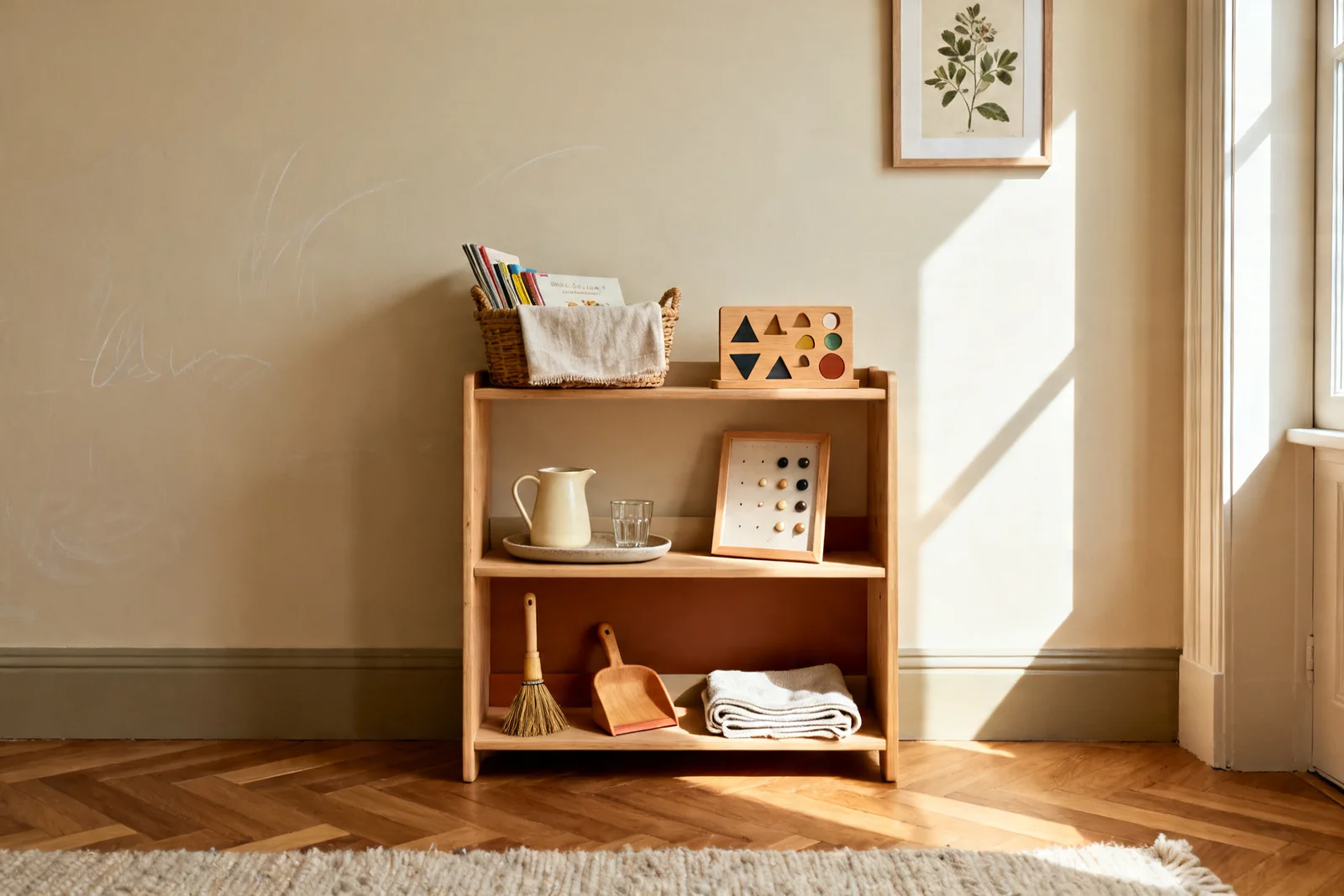
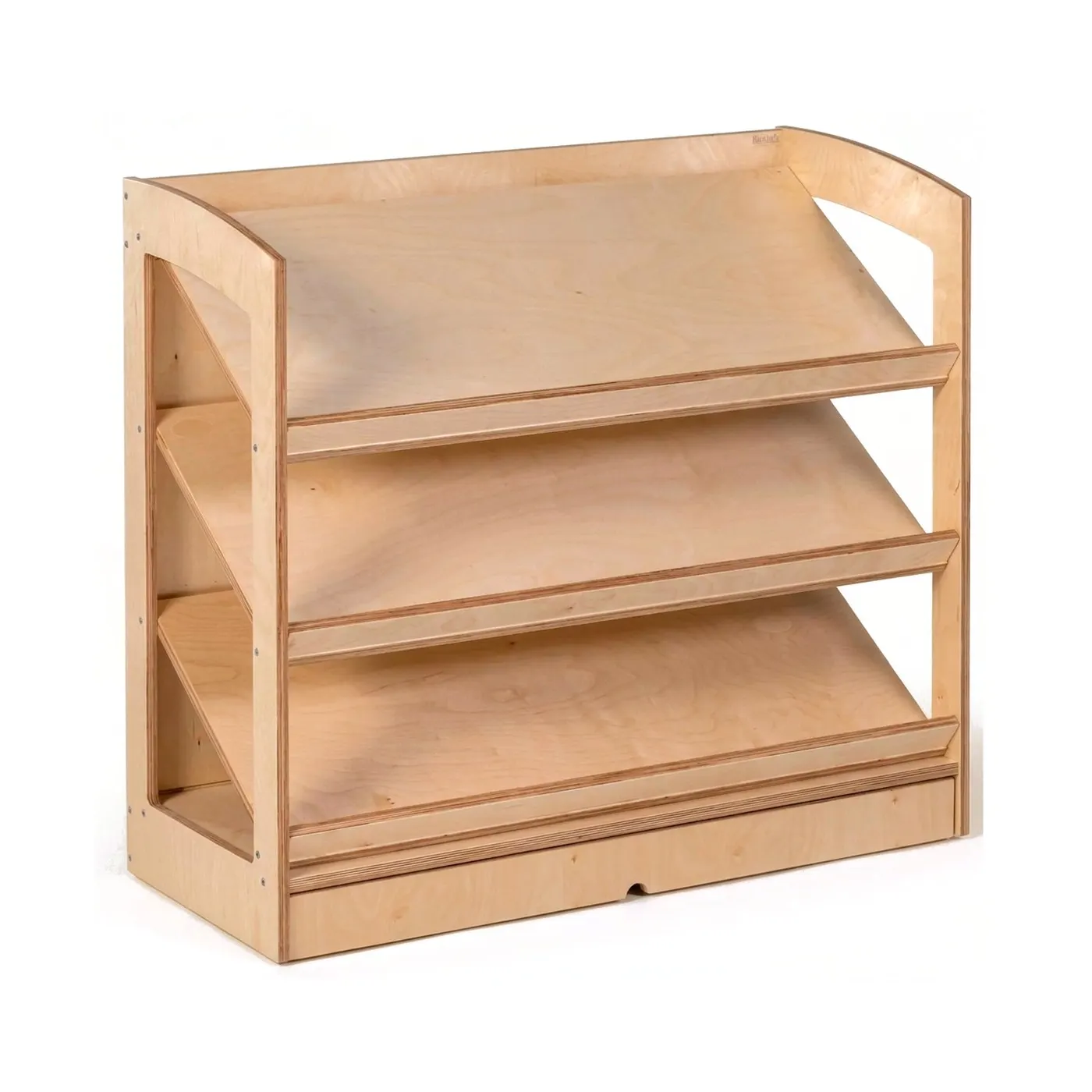
Low. Low enough for your child to see over it. Your child must be able to see and reach every item without help.
Open. No doors, no lids, no covered bins. The child should be able to take in the whole offering with one glance.
Limited. Six to eight items at a time, no more. A toy bin with thirty things isn't choice: it's overwhelm. A shelf with eight invites real selection.
Ordered. Materials arranged left-to-right and easy-to-difficult, just as we read. The simplest activity sits in the top-left corner; the most challenging in the bottom-right. Each item lives on its own tray or in its own basket, not piled together.
Rotated. Every two to three weeks, swap out a few items. Store the rest somewhere the child can't see them. When a material reappears a month later, it's almost a new toy. Rotation is what keeps a small collection feeling fresh.
Practical Life: The Real Curriculum at Home
If Montessori had to fit into one word, it would be independence. And the fastest path to independence isn't a wooden alphabet: it's letting your child do the actual work of daily life. This is called Practical Life, and it's one of the key Montessori areas, especially in the early years.
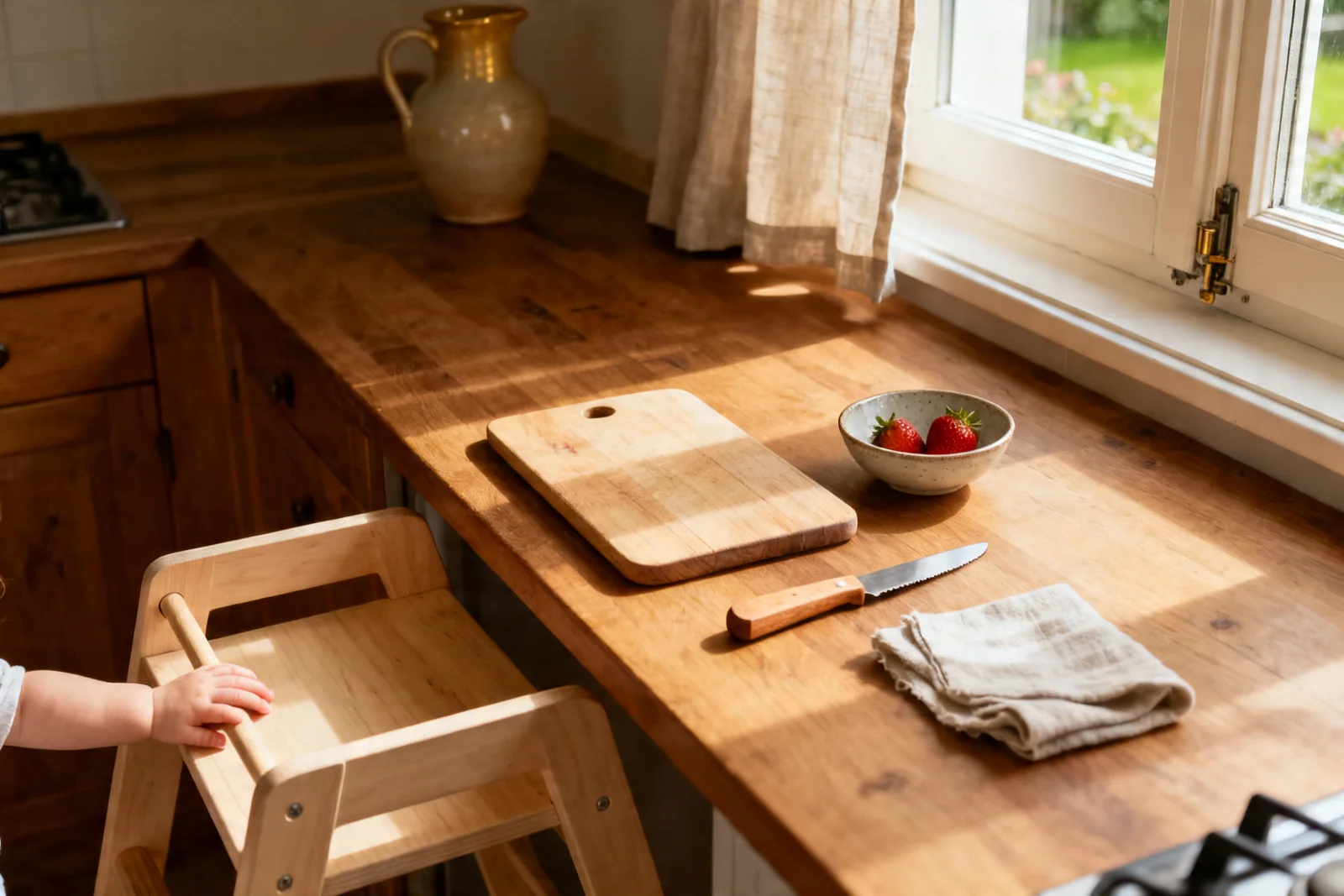
In the kitchen. Add a learning tower so your child can stand safely at the counter. Give them a small pitcher to pour their own water, a child-sized knife to slice a banana, a low drawer with their plates and cups. Set up a water station (a jug they can refill, a glass at their height) so they don't ask you for a drink ten times a day.
In the bathroom. A step stool by the sink. Their toothbrush in a small cup at their height. A low hook for the towel. A folded washcloth in a basket they can grab. Suddenly the morning routine becomes something they do, not something done to them.
In the bedroom. A floor bed (more on this below) instead of a cot with bars. A low wardrobe with two or three outfit choices, not twenty. A small basket for dirty clothes. A mirror at their height so they can see themselves dressing.
For care of the environment. A child-sized broom and dustpan that actually work. A small spray bottle with water for cleaning windows. A cloth for wiping spills. When the four-year-old knocks over a glass and reaches for the cloth without being asked, the system is working. Pair these with a Dressing Frame for buttoning practice and you have most of what a toddler needs for a year.
Setting Up Room by Room
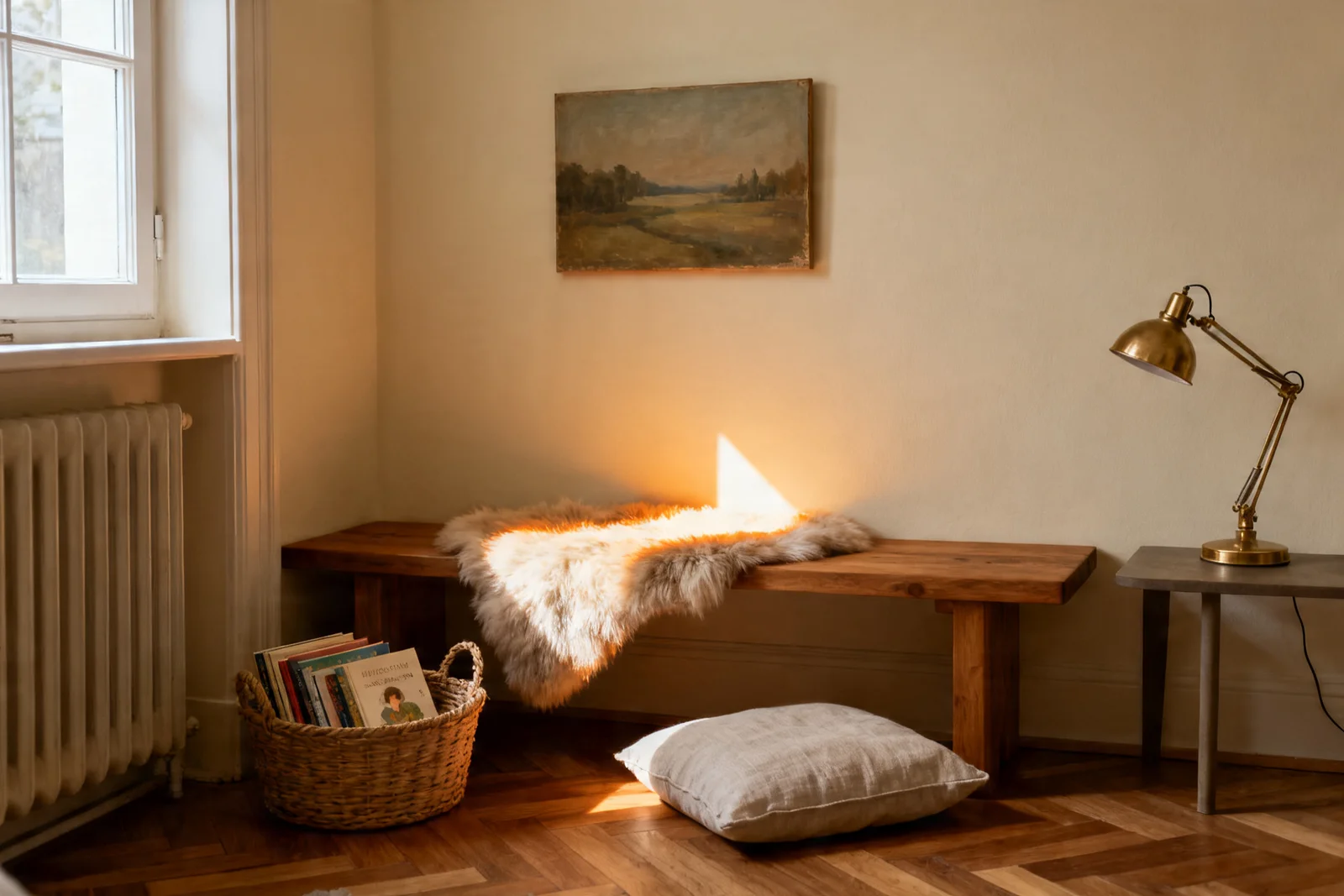
The bedroom. The Montessori bedroom is calm and low. A floor bed (a mattress directly on the floor or in a low frame) lets your child get up and explore on their own when they wake before you do. A reading corner with a small basket of three or four books, rotated weekly, is enough. A small art shelf with paper, pencils, and a single craft activity. No screens, no light-up toys, no overstimulation.
The kitchen. This is where independence is built fastest. The learning tower is a useful single purchase for many families. Add a low drawer with the child's plates, cups, cutlery, and a tray. A small pitcher in the fridge they can reach. A snack basket on the counter with two or three options. Around age three, a child can learn to pour their own water, prepare their own snack, and clear their own plate.
The bathroom. A self-care station: step stool, low mirror, toothbrush in reach, hairbrush in a basket, hand towel on a low hook. Keep one set of pyjamas in the bathroom so your child can dress themselves after the bath. Small details, huge difference.
The living room (or wherever you spend evenings). A child-sized table and chair near where the family gathers. A reading nook with a small bookshelf: front-facing, so covers are visible. A basket of art materials. A small workspace where the child can draw or do a puzzle while you read or work. The goal isn't a separate "playroom"; it's a family space where the child has a place that's theirs.
First Materials to Buy: Three Starter Packages
One of the biggest mistakes new Montessori parents make is buying everything at once. You don't need a full classroom; you need a few well-chosen pieces that match your child's age and stage. Here are three starter packages, scaled to real budgets.
The small starter (just enough to begin). Start with one or two Dressing Frames for buttoning, snapping, or zipping practice. Add a basic pouring set: two small pitchers and a tray. Round it out with a Practical Life basket: a small sponge, a cloth, a tiny spray bottle, a child-sized whisk, a small jar with a lid for spooning beans. Most of this you can pull from your own kitchen.
The medium starter (the foundation). Keep the items above and add the first Sensorial materials. The Sandpaper Letters introduce phonetic letter sounds through tactile tracing, the cornerstone of Montessori reading preparation. Add a Cylinder Block for visual discrimination of dimension. Together these give your child a true Montessori foundation: practical, sensorial, and language work, all from authentic materials.
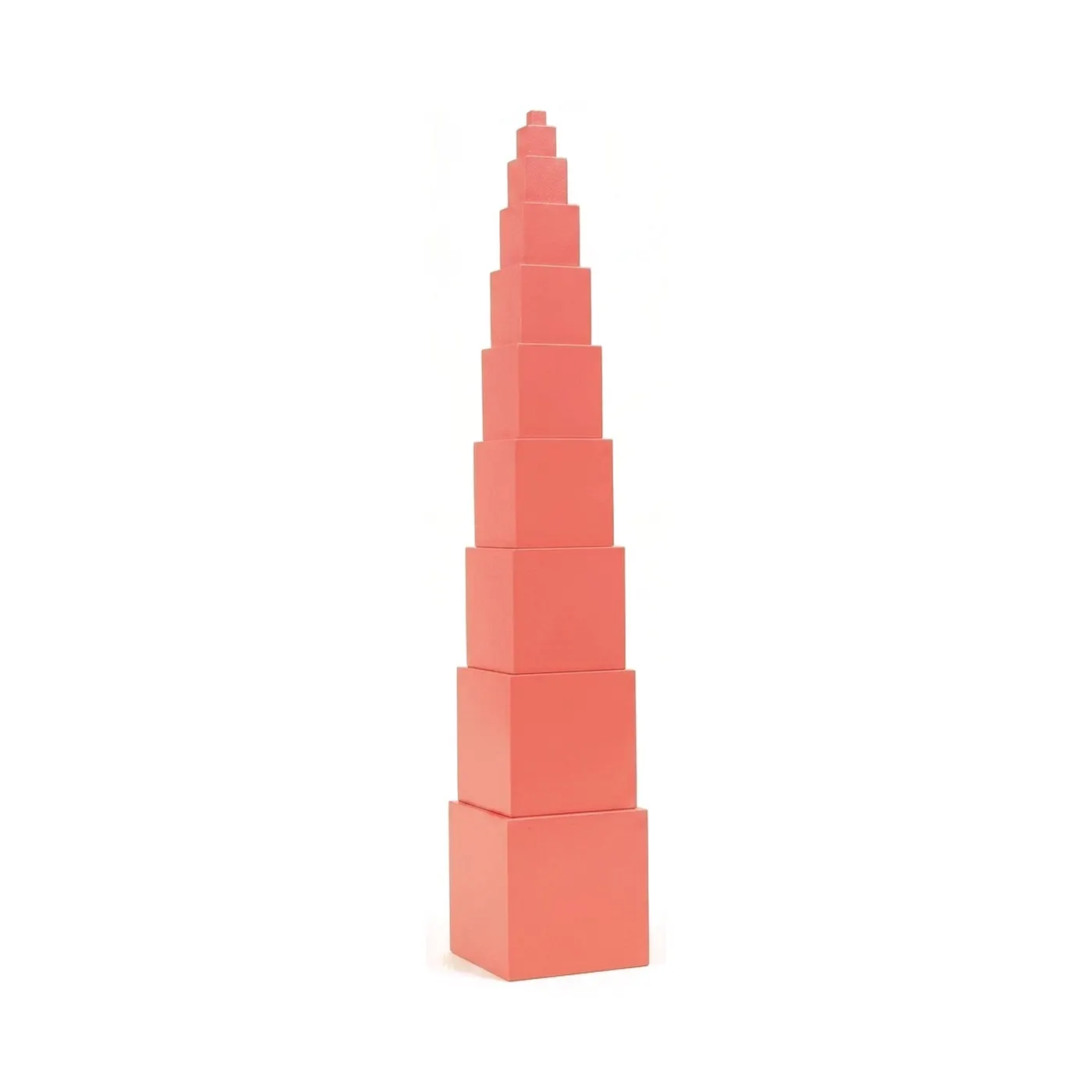
The large starter (the full prepared environment). Everything above plus the icons of the Montessori curriculum. Add the Pink Tower, ten precision cubes that build dimension awareness and become the symbol of a serious Montessori shelf (read more in our complete Pink Tower guide). Add the Brown Stair as its sensorial partner, the Number Rods to begin mathematics, and a Movable Alphabet for word building. At this point you have a genuine home prepared environment that can carry a child from age three to six.
Whichever tier you start with, resist the urge to scale up too fast. Add one new material every few months, observe how your child responds, and trust that depth, not variety, is what builds a Montessori child.
Material Rotation: The Skill Most Parents Skip
Rotation is the secret weapon of every Montessori home. Children don't get bored of a small, well-curated shelf the way they get bored of a toy bin. They go deeper. But to keep that depth alive, you need to rotate.
When to rotate. Every two to three weeks is a good rhythm. Watch for the signs: your child stops choosing a material, starts using it carelessly, or begins inventing wilder games with it (a sign they've mastered the original purpose). That material is "done", for now.
How to rotate. Take two or three items off the shelf and replace them with something that's been resting. Always keep one or two reliable favourites in place: children need anchors as much as novelty. Don't change everything at once; gradual swaps preserve the sense of order.
Where to store the rest. Out of sight. A closet, a cupboard, a high shelf: anywhere your child can't see them. Visible-but-unavailable materials create frustration; truly hidden ones feel new again when they return.
Common Mistakes Parents Make (And How to Avoid Them)
Too many materials. The single most common mistake. A shelf packed with twenty things isn't a Montessori shelf: it's a toy bin in disguise. Six to eight items is the rule. If everything is on offer, nothing is chosen.
Correcting the child verbally. "No, that's not where it goes." "Hold it like this." "You did it wrong." Authentic Montessori materials have control of error built in: the child sees their mistake without you saying a word. Trust the material. Step back. Let them figure it out, even if it takes longer than you'd like.
Mixing in light-up, electronic, or character toys. A single battery-powered toy on a Montessori shelf breaks the entire prepared environment. The flashing, beeping toy will always win. Keep electronic toys in a separate space (or, ideally, out of the home) so the prepared environment stays calm and the wooden materials stay interesting.
Buying everything at once. You see a beautiful Montessori starter set online and order the lot. Two weeks later you're overwhelmed, your child is overwhelmed, and half the materials sit unused. Buy slowly. Add one piece at a time. Observe what your child uses before adding more.
Forgetting that you are part of the environment. Your phone on the kitchen counter, your tone when something spills, the speed at which you move: your child absorbs it all. The most important Montessori material in your home is the adult.
Where to Start Today
You don't need to redesign your home this weekend. Pick one room. Lower one shelf. Buy one beautiful, real-wood material. Watch what happens. The Montessori home isn't a finished project: it's a slow conversation between you, your child, and the space you share.
When you're ready to add your first authentic materials, browse our Practical Life category, the perfect place to begin, or explore Shop by Age for starters chosen specifically for your child's developmental stage. For the bigger picture, our complete Montessori materials guide covers the five curriculum areas, and the Montessori toys by age guide walks you through what's right at every stage.
„The environment must be rich in motives which lend interest to activity and invite the child to conduct his own experiences.“
Faborino Journal
We will send you the next article by email
First four short letters for your child’s age, then new articles from the Journal once a month.
We will send you the Faborino Journal from STENVARD s. r. o.: after you confirm, four short letters with tips for your child’s age, then once a month new articles and a selection of materials. You can unsubscribe at any time with one click in every email. More in our privacy policy.