
Puzzle Map Stand: Dedicated Storage & Display for Geography Maps
Made by Nienhuis Montessori · shipped by Heutink International (Netherlands) About the maker
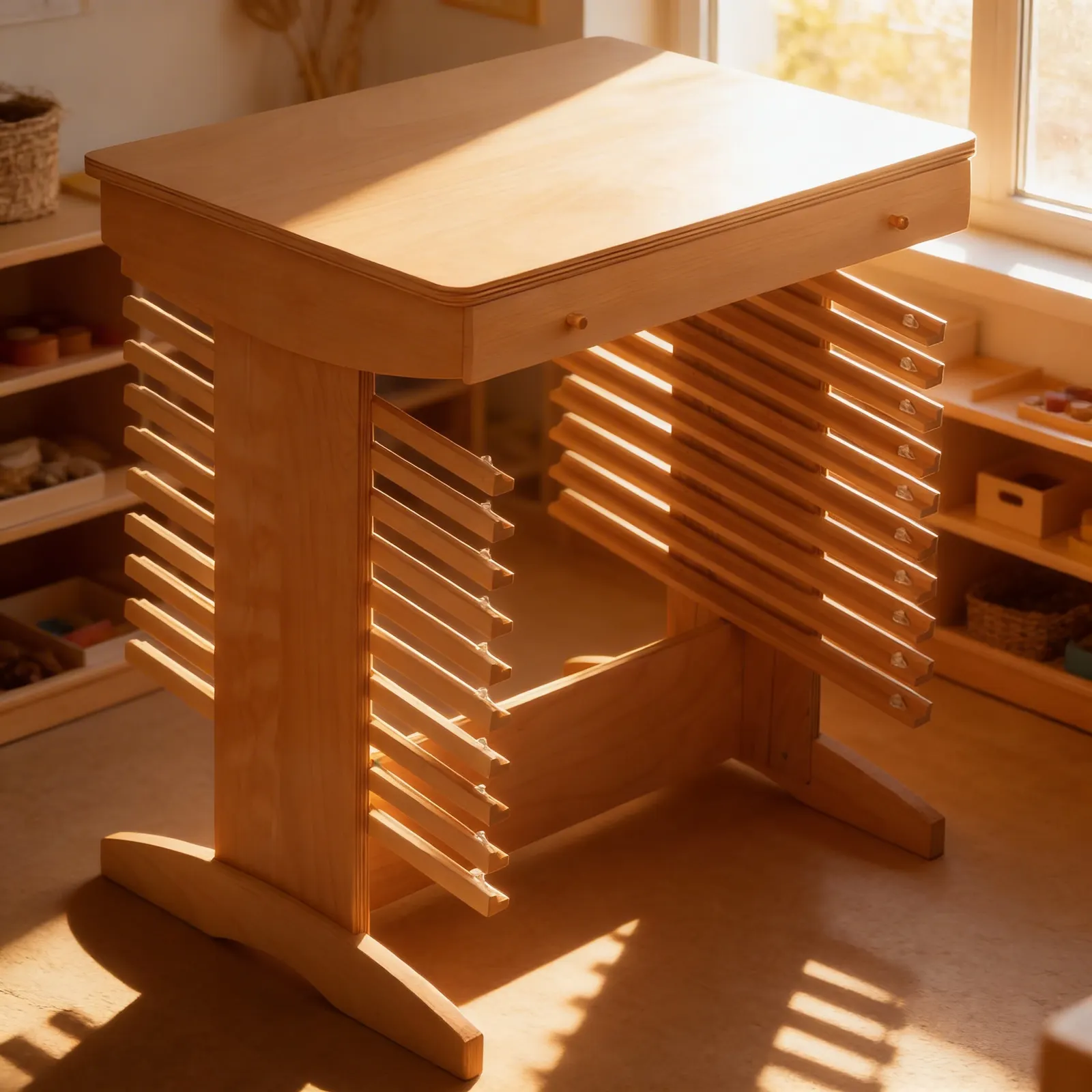
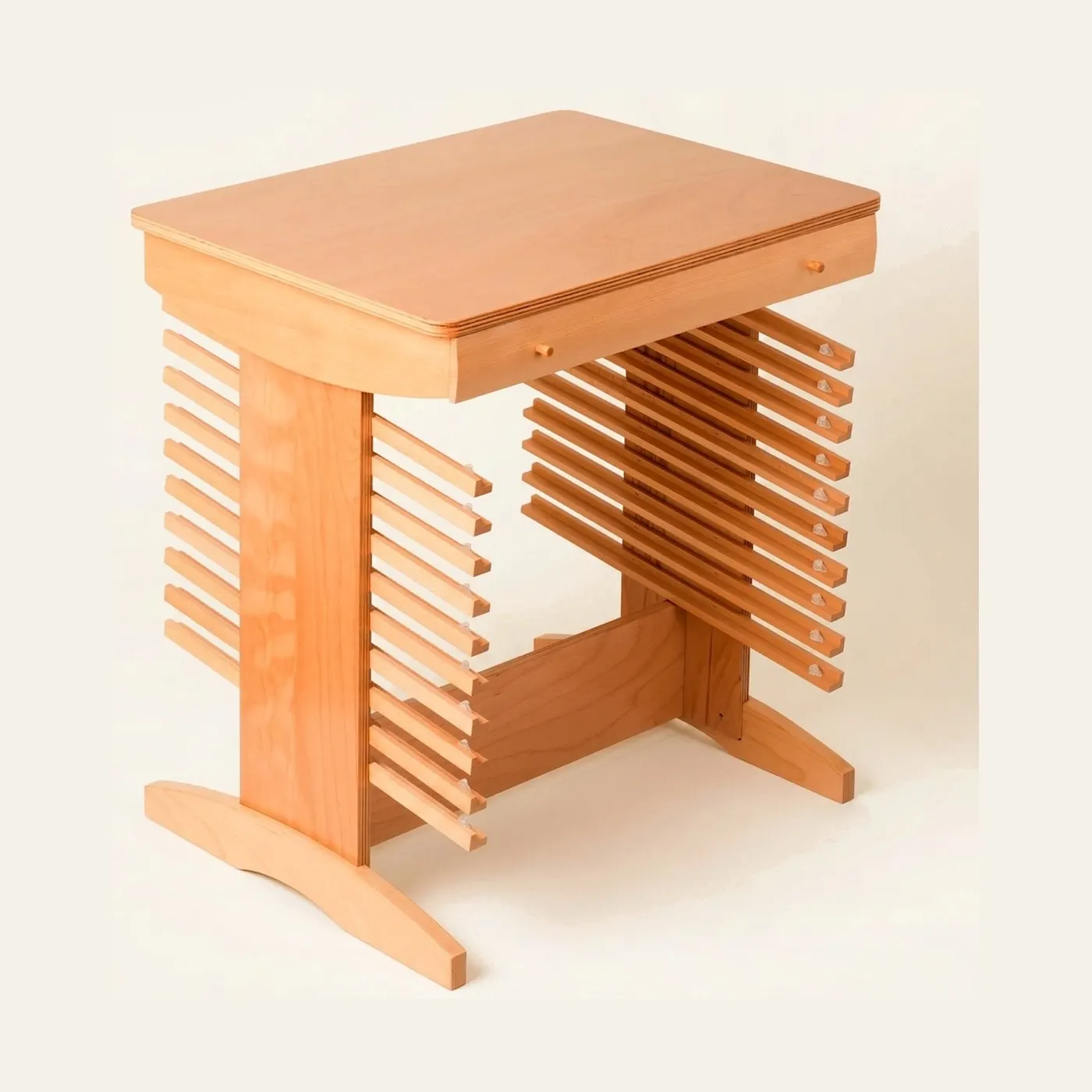
A beechwood stand that holds up to ten puzzle maps upright, with a drawer underneath for the labelled and unlabelled paper maps that go with them. Puzzle maps are heavy and awkward, and a child who has to ask an adult to lift one down will simply do something else instead, so the stand is what keeps the geography sequence in the child's own hands. Keeping the paper maps in the same place means the follow-up work is never a separate errand. Beechwood, 67.5 x 52 x 67 cm, for ages 3 to 6.
“The senses, being explorers of the world, open the way to knowledge.”
The Puzzle Map Stand exemplifies the Montessori principle of preparing the environment to support independent learning.
- Development of spatial awareness and geographic concepts
- Enhancement of fine motor skills through puzzle piece manipulation
- Cultivation of independence in material selection and care
- Building of organizational skills and classroom responsibility
Read More
By providing dedicated, organized storage for geography puzzle maps, this stand eliminates barriers between the child and their exploration of the world. The open, accessible design honors the child's need for order while promoting independence, children can select, work with, and return materials without adult assistance. The natural wood construction connects children to the natural world they're studying, while the ventilated design demonstrates care for materials, teaching respect for the learning environment. This stand transforms geography work from a teacher-directed activity into a child-initiated exploration, supporting the Montessori belief that children naturally seek to understand their place in the world when given the proper tools and environment.
How to present it
Follow the Montessori method of presentation for optimal child development.
Place the stand in the geography area with puzzle maps stored vertically in the slots, ensuring maps are visible and accessible to children.
- 1
Child selects a puzzle map from the stand independently
Allow children to browse and choose based on their interests rather than directing their selection - 2
Child carries the chosen map to their work space using proper carrying technique
Demonstrate carrying with both hands, holding the frame securely to protect the pieces - 3
Child completes the puzzle work at their own pace, exploring geographic features
Resist the urge to help immediately; allow children to problem-solve and self-correct - 4
Child returns the completed puzzle to its designated spot in the stand
Emphasize the importance of returning materials to maintain order for the next child
Every Child Is a Little Creator

Heritage
Since 1929

In classrooms
Around the world

European brands
Nienhuis, GAM, Educo

AMI approved
To the association standard
Puzzle Map Stand: Dedicated Storage & Display for Geography Maps
