In early December Gran rings: “What should we get him?” A few days later the godmother asks, then the uncle. On Christmas Eve there are eight parcels under the tree, and the one year old plays longest with the paper they came in. A week later, out of the whole pile, they use one thing, and often not the one you would have guessed.
This is not ingratitude. A small child cannot give their attention to ten new things at once. When there are many, each gets a moment before the child moves on. When there is one, they come back to it tomorrow and the day after, and each time they do something slightly different with it. So it pays to ask a different question: not what else to buy, but what they will still use every day in February.
How to choose: watch what your child is doing now
A better guide than the age on the box is what your child has been doing over the last few weeks. Climbing the sofa and the chairs? Dragging a chair to the worktop to see what you are cooking? Putting things into a box and taking them out again? A present that picks up on that movement gets used. A present that is a year ahead of it waits in the cupboard.
Treat the age a maker gives as a lower limit. You do not go below it, but reaching it does not mean a child is ready. For the larger presents below we say from when the maker recommends them. All of them are made of wood or plywood, and each one picks up on what a child does at that age.
At one: climbing, putting in, taking out
Around the first birthday a child tests what fits where. They drop a cube into a bowl, take it out and drop it in again. Threading a cube onto an upright dowel is harder, because the hole has to be exactly over the tip before the hand lets go. Until that happens, the cube just sits on top. When it does, the cube slides down, and the child pulls it off and starts again.
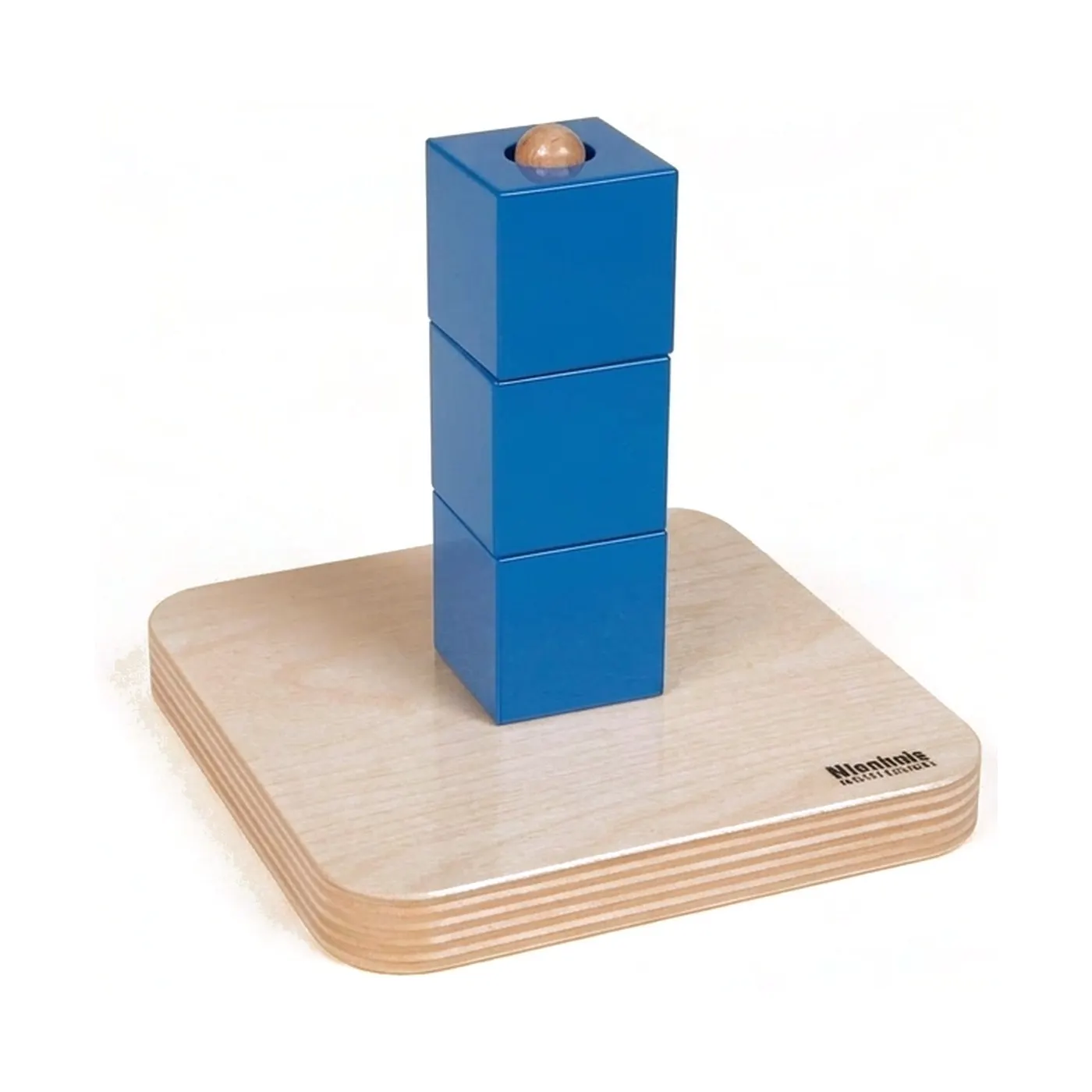
The dowel with three blue cubes comes from the Dutch maker Nienhuis, is made of wood, and the maker lists it for ages 0 to 3. It is a small present that also fits next to a bigger one.
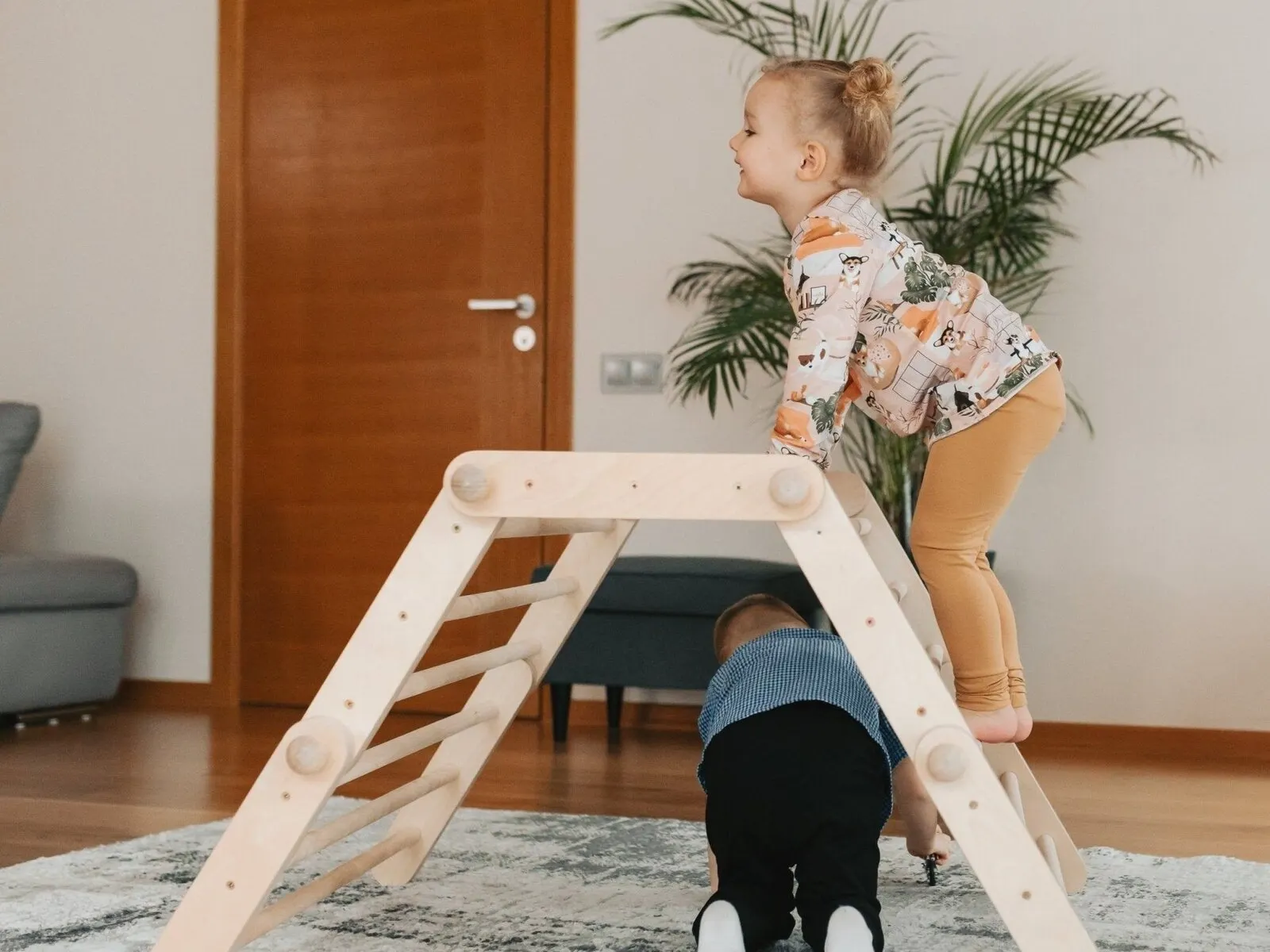
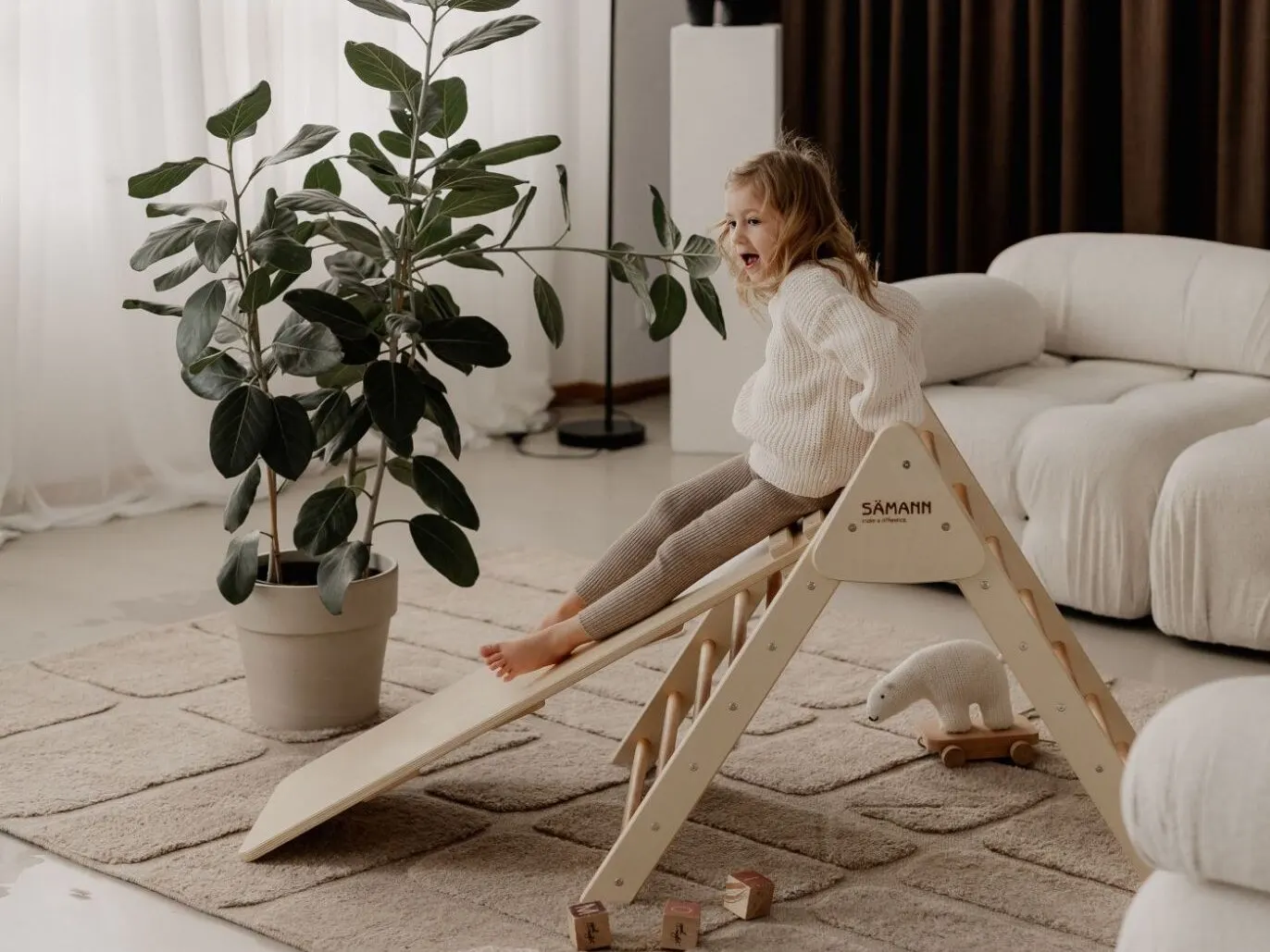
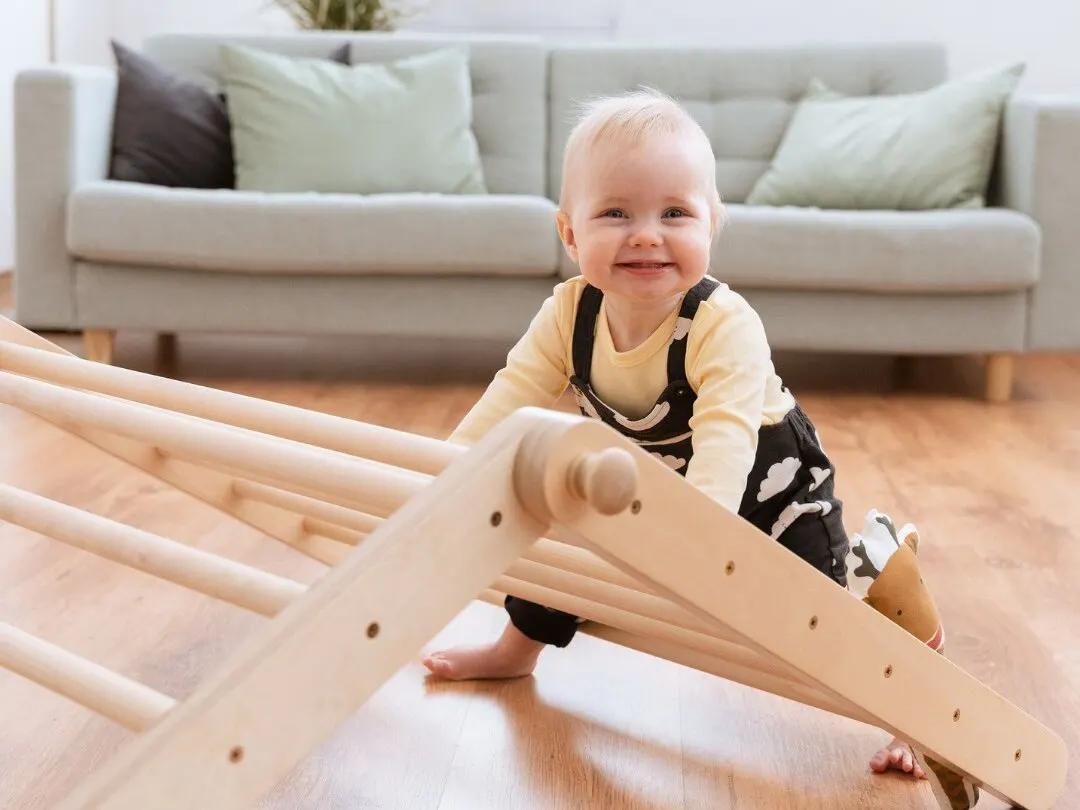
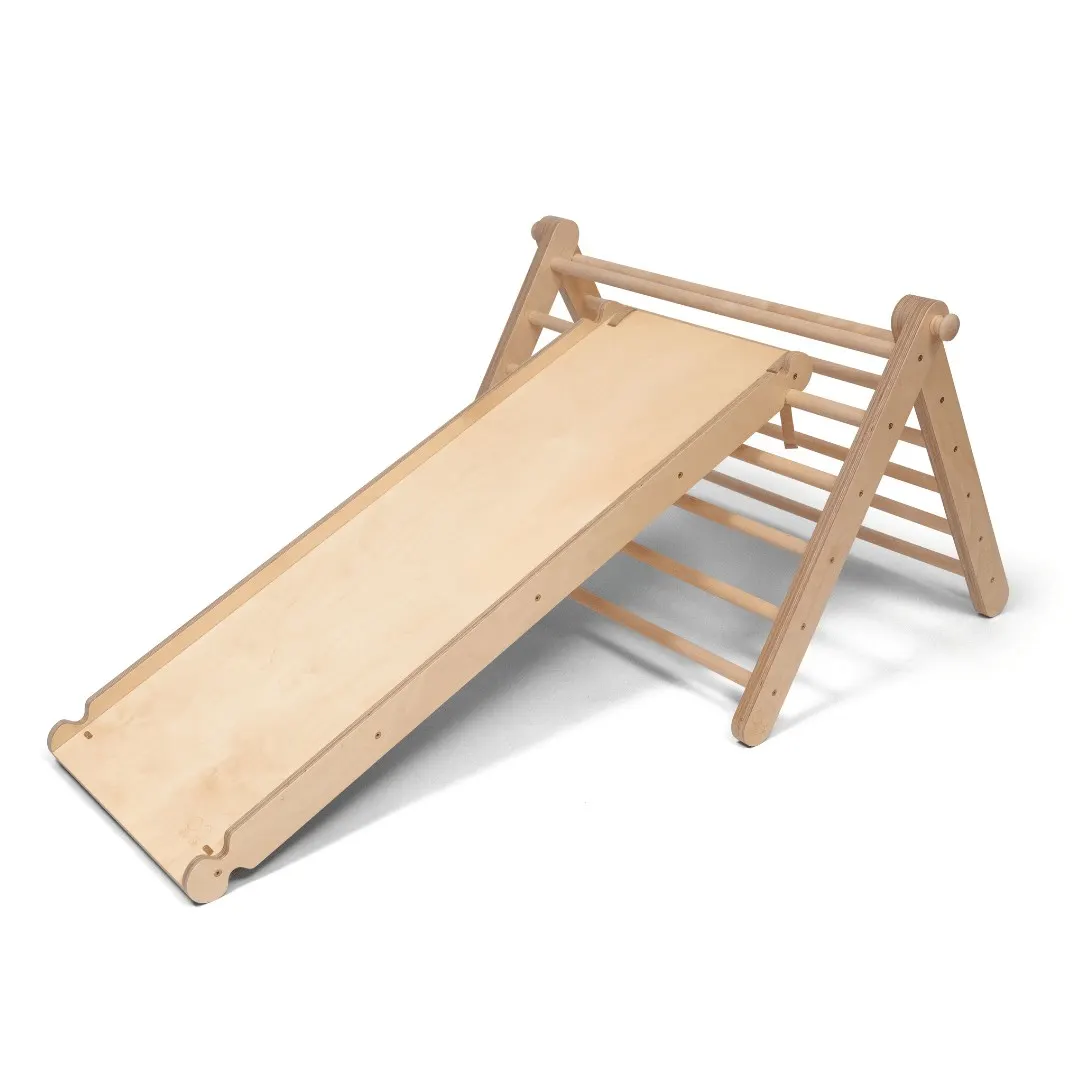
If the family agrees on one bigger present, for a child who climbs everything, that means a Pikler triangle. SIPITRI from the Latvian maker Ette Tete has two segments, the slope can be adjusted to the child's age and abilities, and it comes with a ramp that is a slide on one side and a climbing surface on the other. The maker gives it from 12 months. After play the segments come apart and the frame takes up less room. Why you should not lift your child to the top, and what to look for when choosing, is covered in our article on the Pikler triangle.
At two: doing what we do
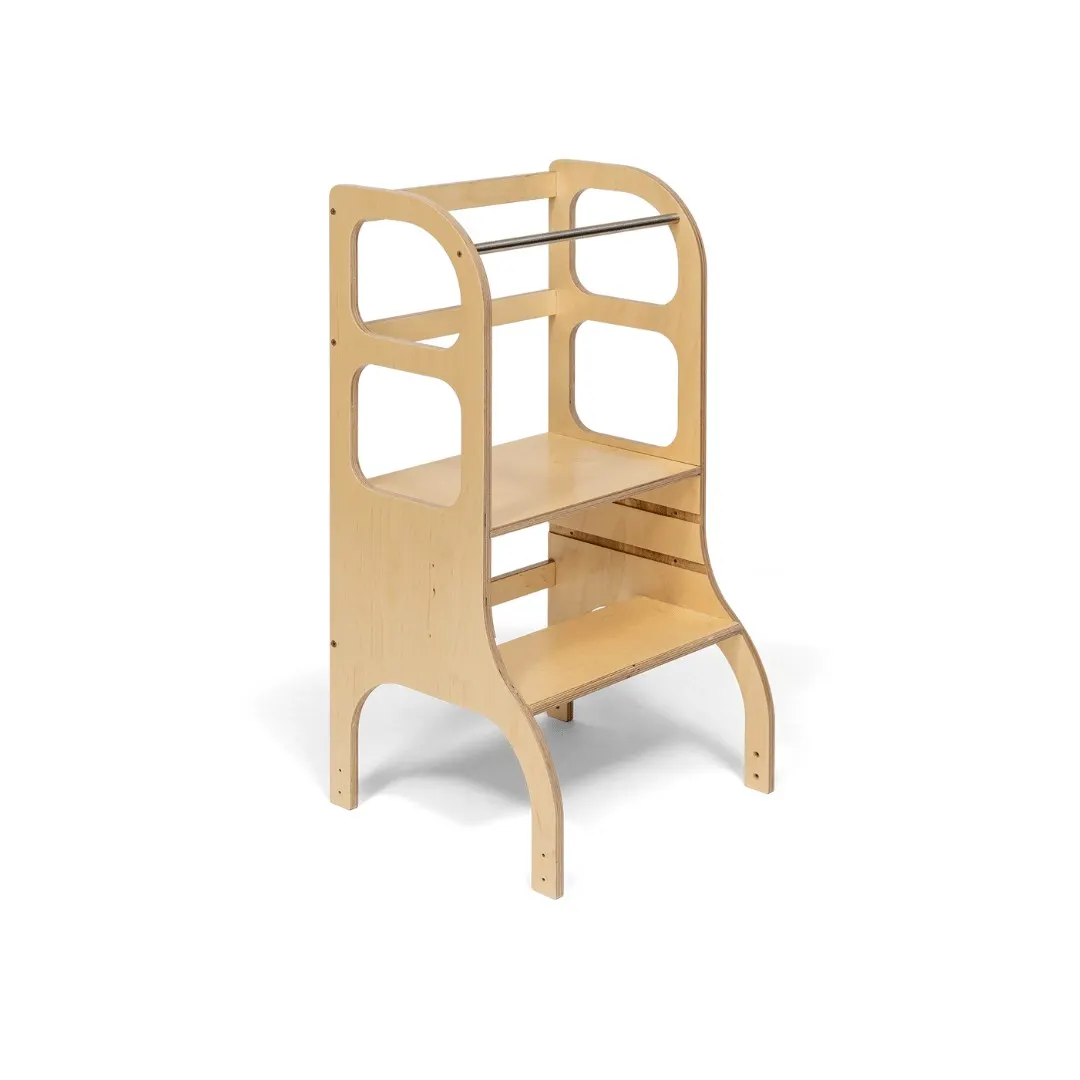
A two year old does not want pretend cooking, they want the real thing. They drag a chair to the worktop, reach for the wooden spoon and want to see into the pot. A learning tower gives them a place at worktop height with a rail all the way round, so they stand next to you and see what you are doing. We describe when to offer a tower, and what applies to it, in our article on the learning tower.
STEP UP from Ette Tete is 90 centimetres high, and the platform can be moved to three heights: 31, 38.5 and 46 centimetres. The maker gives it from 18 months and says a child can use it until about five or six.
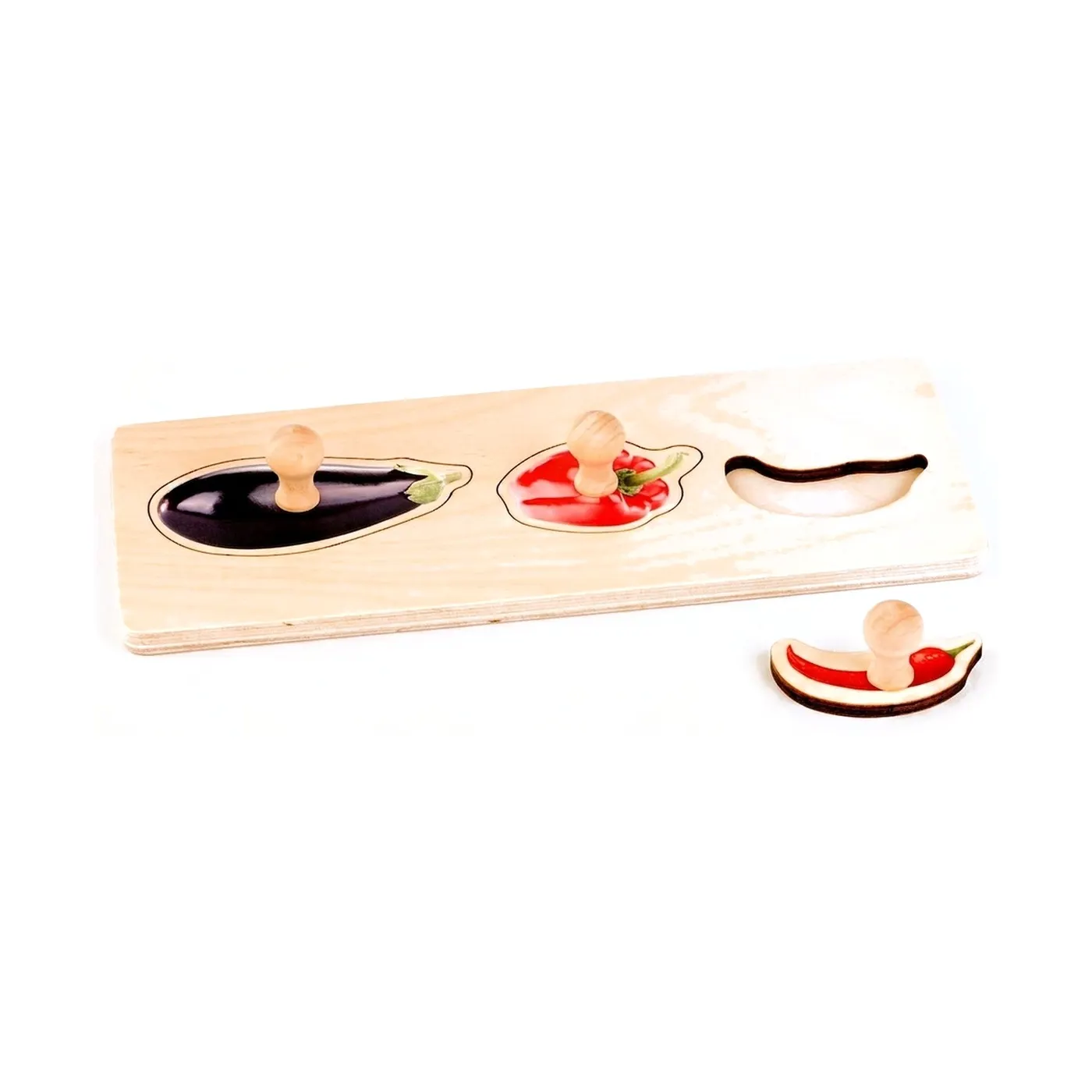
A smaller present for a two year old is the puzzle with three vegetables from Nienhuis. It has three birch plywood pieces with realistic pictures in the right proportions to one another, so while putting them in, the child compares which is bigger and which is smaller. It measures 294 × 120 millimetres, and the vegetables are something to talk about at lunch, too.
At three: a table of their own, a place of their own
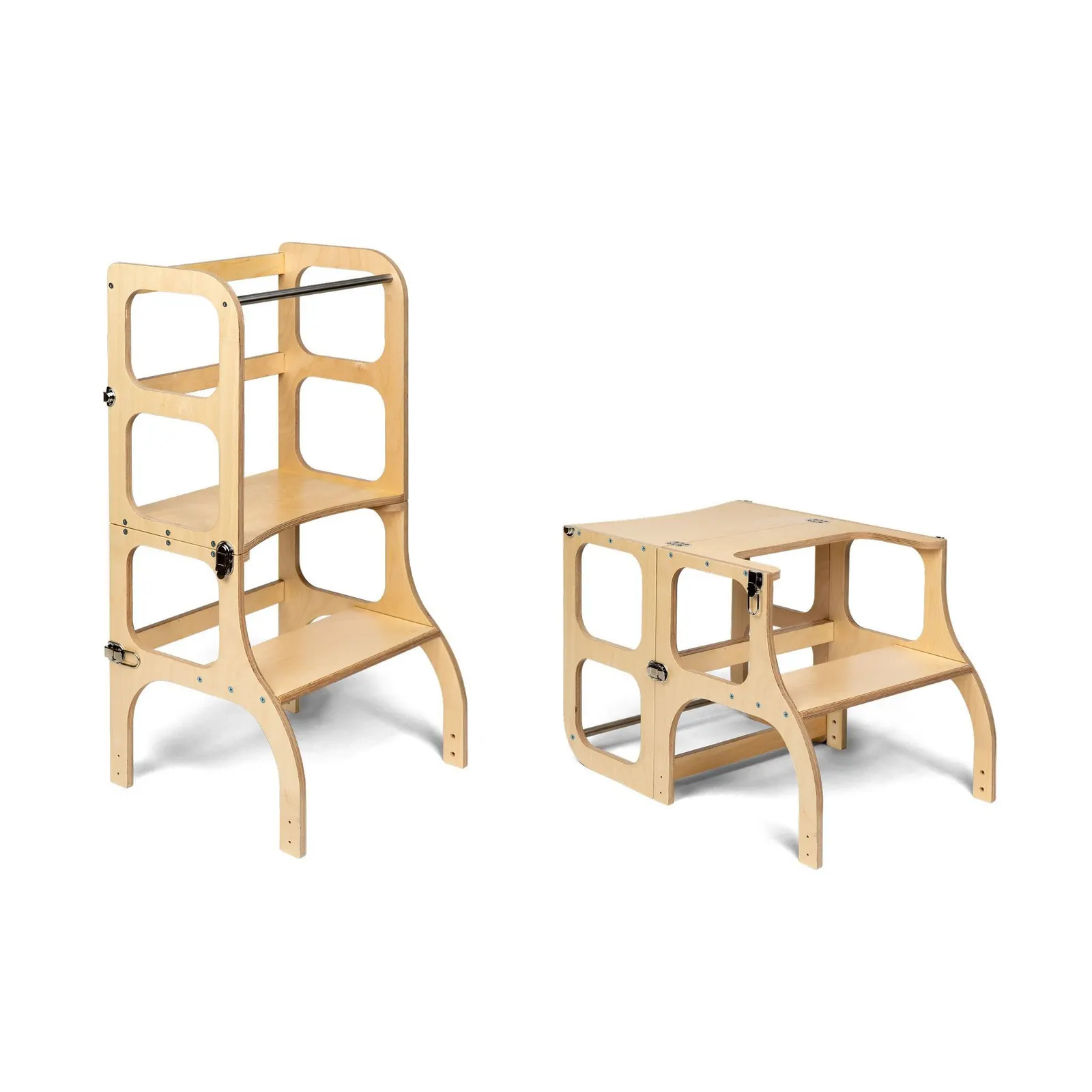
A three year old wants something of their own. A place to draw, to spread out a puzzle, where nobody pushes anything aside. STEP'n'SIT from Ette Tete is a learning tower and a table with a chair. In the kitchen it stands at the worktop, and after cooking it turns into a table of 40 × 43 centimetres. The tower platform is 46.5 centimetres above the floor. The maker gives it from 18 months, so one bought for a two year old still serves at three.
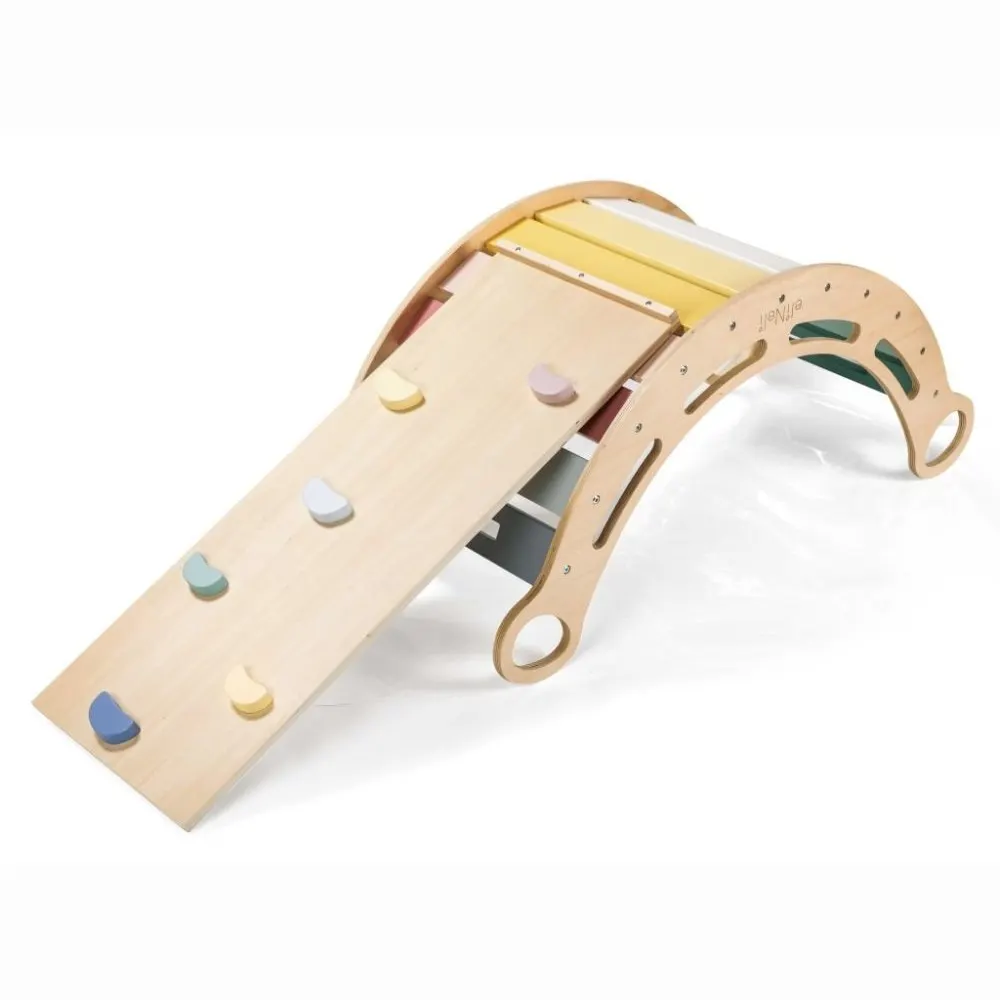
If there is room for one more large piece, a rocker offers a movement the tower does not. The child rocks on it, climbs over it, hides in it or makes a bridge from it with the board. For this rocker from the eliNeli brand the maker states a load capacity of 110 kilograms, and the set includes a double-sided board and a child's chair. The maker gives it from one year, only with adult supervision.
What is left after Christmas
You can tell a good present for a small child in January. Not by how excited they were unwrapping it, but by whether they keep coming back to it on their own. After a week the one year old is threading cubes onto the dowel again, now without hesitating. The two year old drags the tower to the worktop in the morning, knowing a banana is about to be sliced. The three year old carries paper and crayons to their table and does not want your help.
More materials by age, from birth to six, are in the article Montessori toys by age. Learning towers, Pikler triangles and rockers are together in the category Learning Towers, Pikler & Climbing.
Faborino Journal
We will send you the next article by email
First four short letters for your child’s age, then new articles from the Journal once a month.
We will send you the Faborino Journal from STENVARD s. r. o.: after you confirm, four short letters with tips for your child’s age, then once a month new articles and a selection of materials. You can unsubscribe at any time with one click in every email. More in our privacy policy.