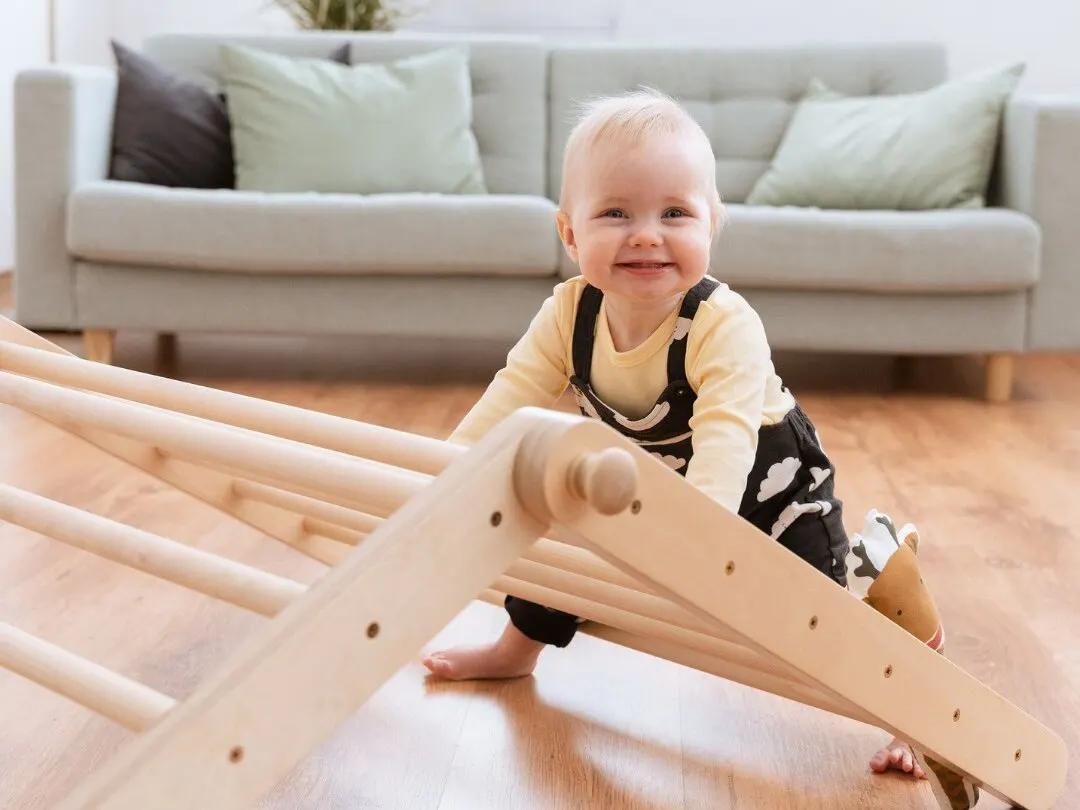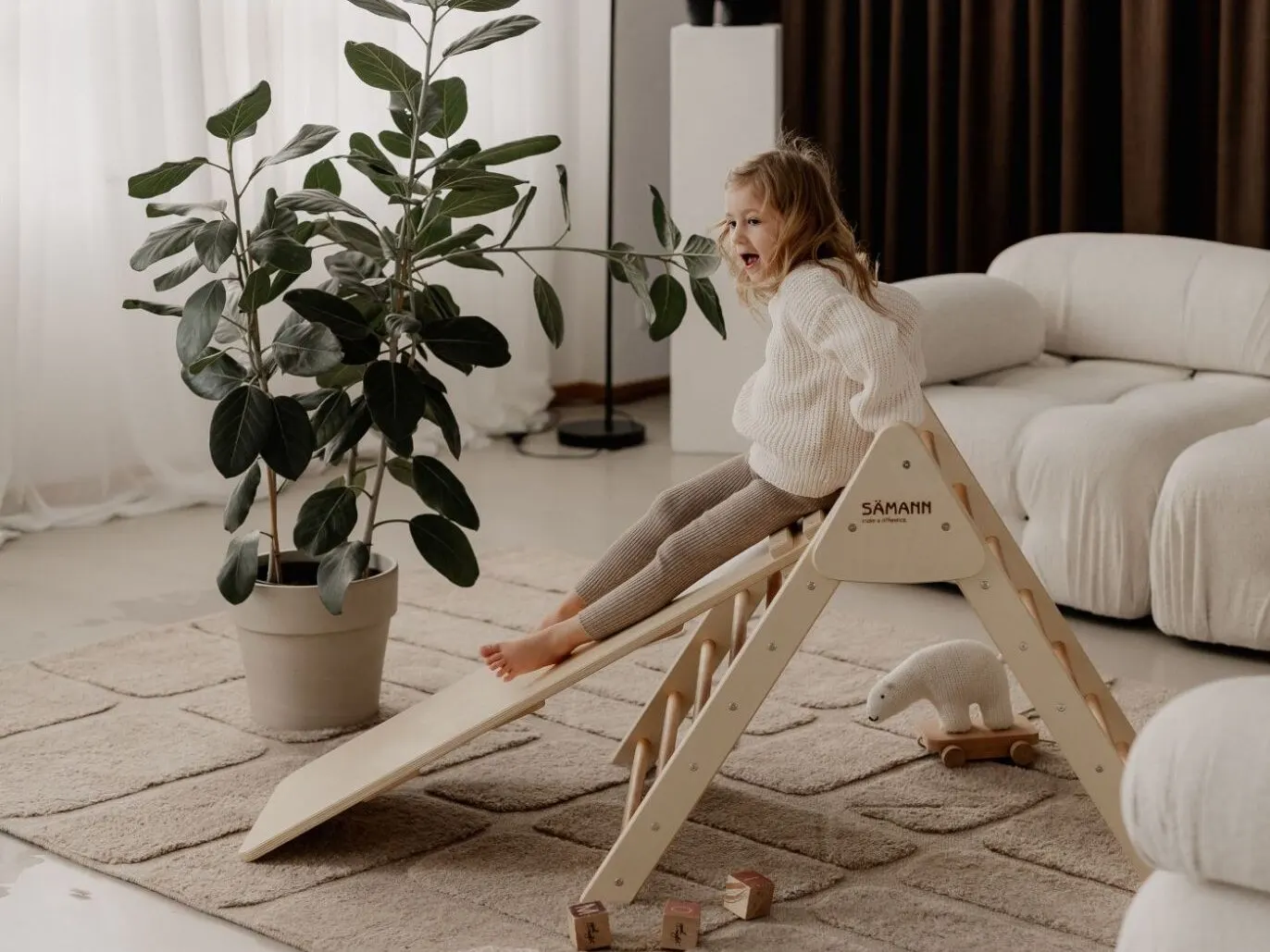

Saturday, and it has been raining since breakfast. The two-year-old pulls every cushion off the sofa, piles them under the window and climbs up them onto the sill. We lift them down. A minute later they are standing on a dining chair, and a minute after that they are kneeling on it with one leg already on the table. By lunchtime we have said “get down” twenty times.
A child of this age climbs because they need to climb. If there is no place at home where they are allowed to, they look for one everywhere else. An indoor climbing frame is not exercise equipment. It is the one place in the flat where the answer to climbing is yes. This is not about garden play sets, but about wooden climbing frames for toddlers that are designed mainly for indoor use.
Four shapes that fit in a flat
Indoors, there are four shapes to consider. The triangle is the simplest: two ladders leaning against each other, which the child climbs up and comes down on the other side. The climbing frame is made of several segments and can be set up in different shapes. The climbing cube is a small house to climb into and out of. Wall bars take up no floor space, but need a solid wall and proper fixings. We cover the triangle, Emmi Pikler and why you should not lift your child to the top in our article on the Pikler triangle. Here are the other three.
Climbing frame: one piece, many shapes
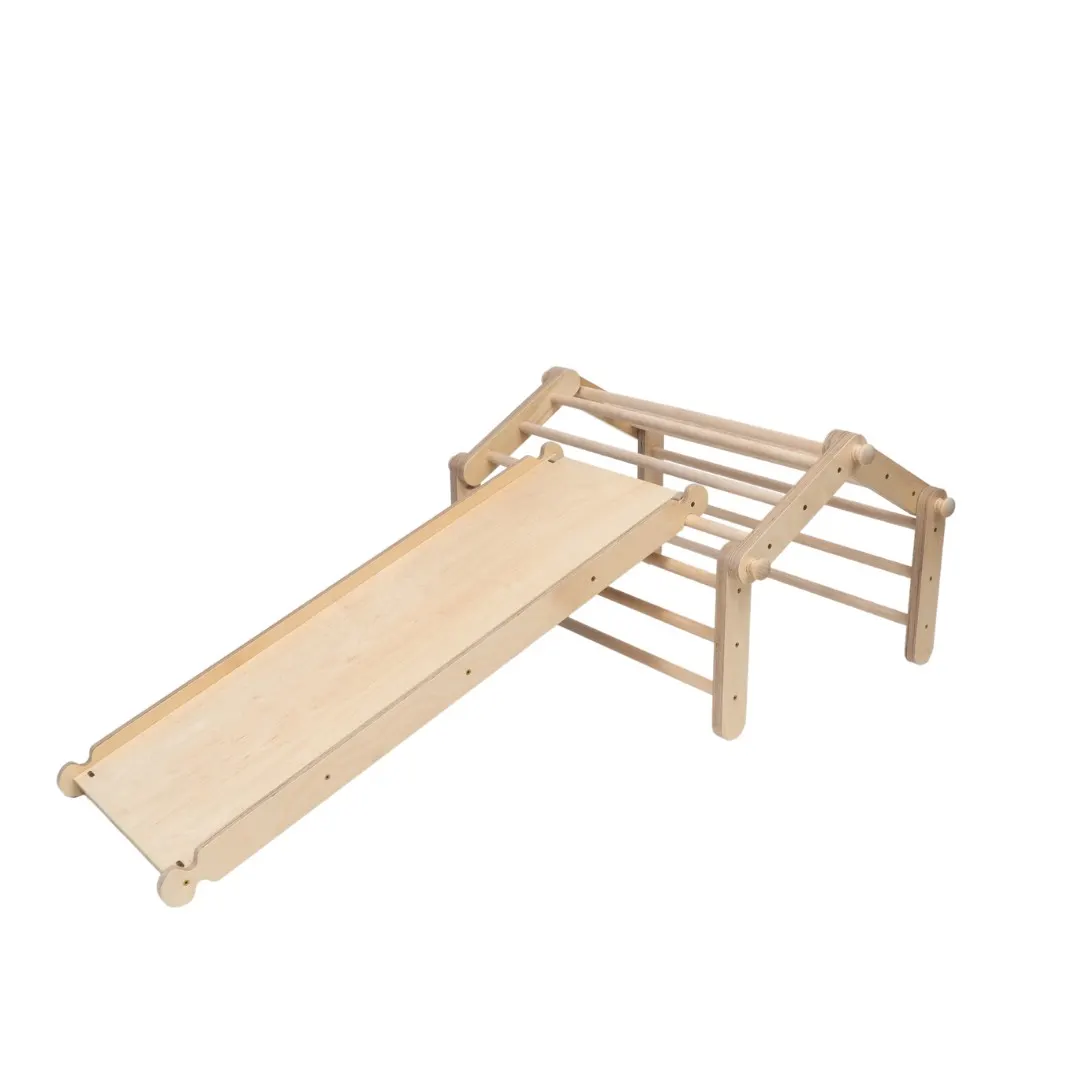
The frame from the Latvian maker Ette Tete is made of segments joined with screw handles. MOPITRI has four segments and, according to the maker, can be set up in more than ten shapes: a lower or steeper triangle, a little house, a flat platform or two small triangles. That way you match the challenge to what your child can manage right now. It is 82.5 centimetres wide and 60 centimetres high in its highest position. When it is not in use, unscrew the handles and it comes apart into pieces that fit under a bed or behind a wardrobe.
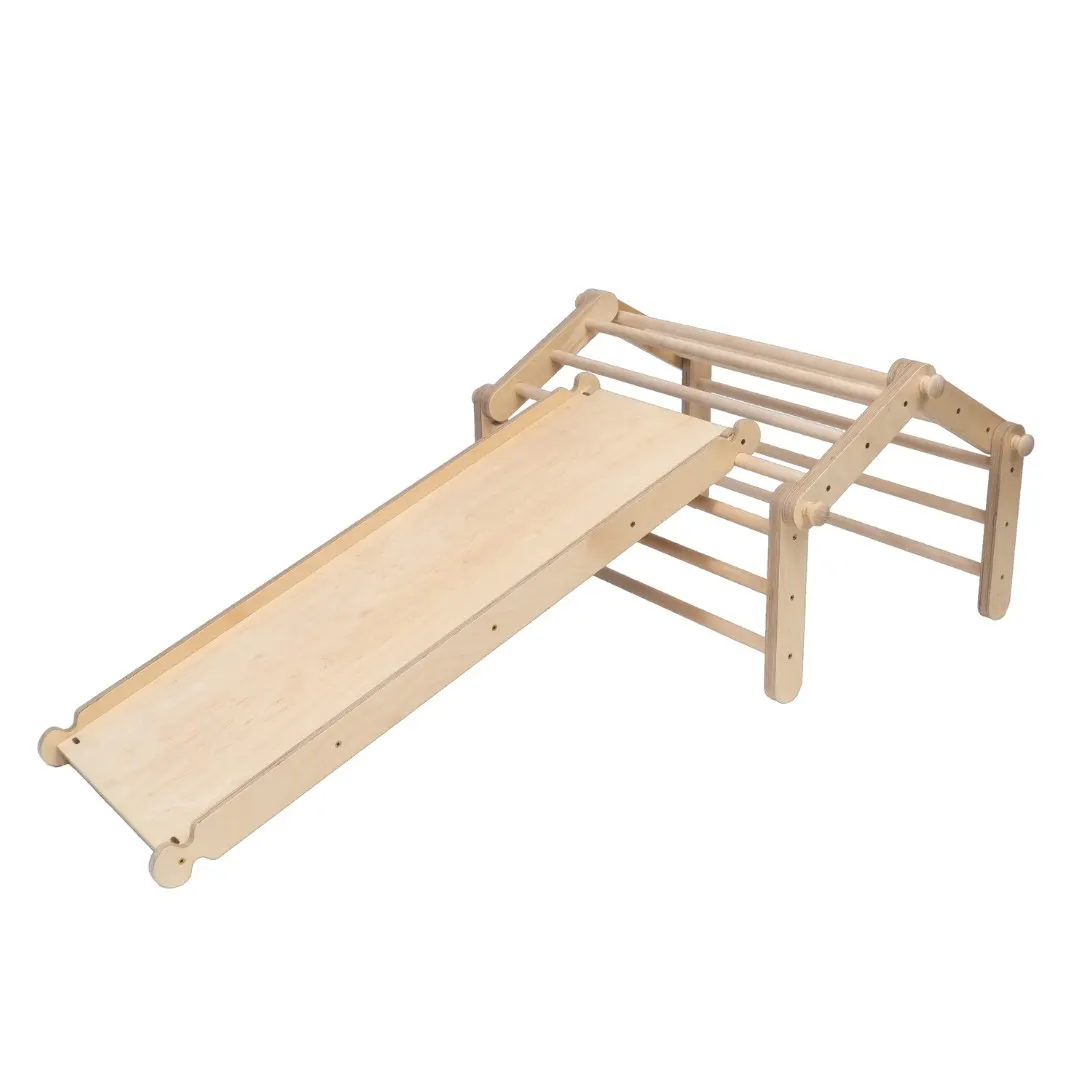
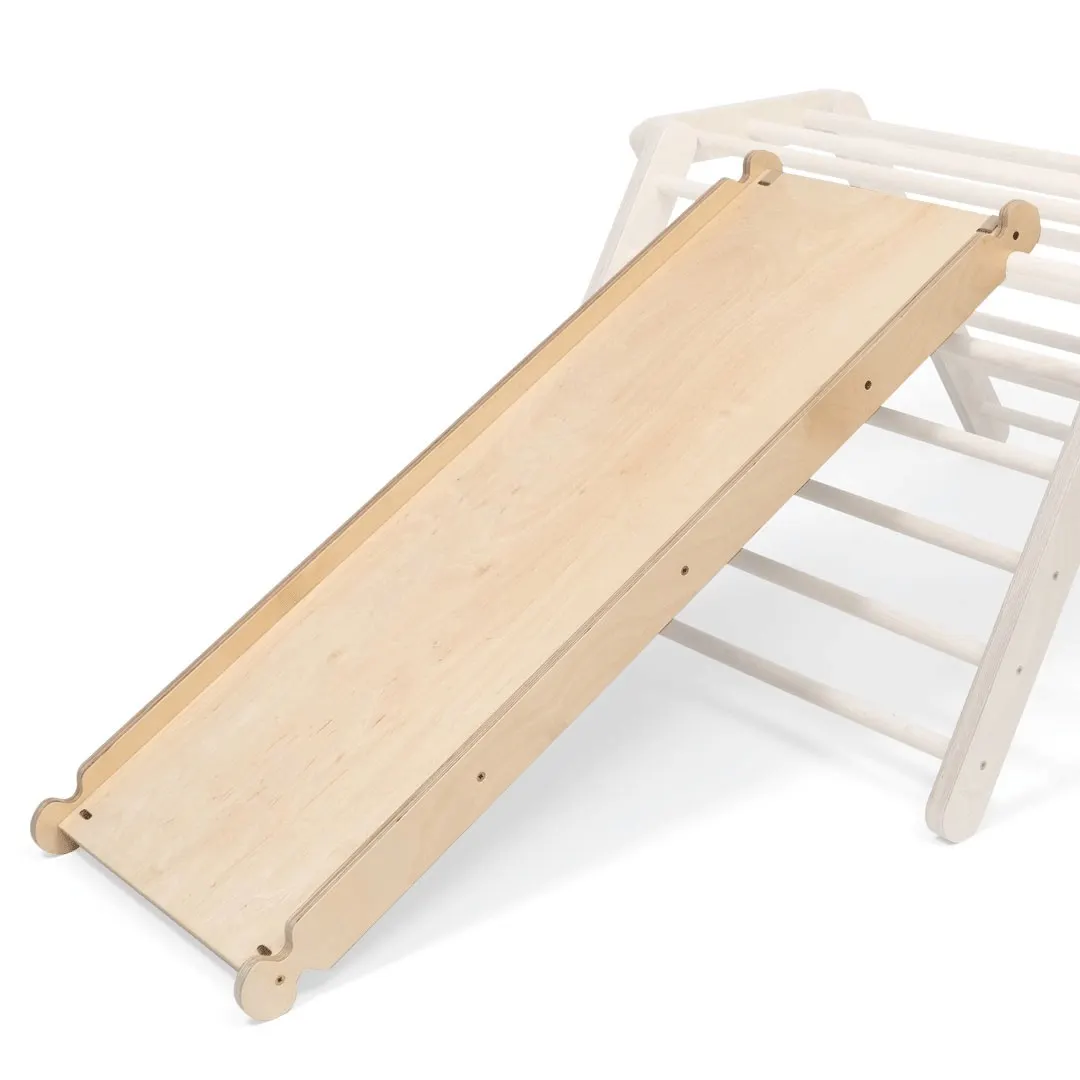
FIPITRI is the larger version with five segments and, according to the maker, more than fifteen shapes. There is more room under the frame and above it, and it can also become a little house or a flat platform. Both frames come with one ramp of 117 × 40 centimetres, a slide on one side and a climbing surface on the other. The maker recommends both from 12 months.
Climbing cube: a corner to climb into
The CUBITRI cube measures 58.4 centimetres along each edge, has rounded edges and a round tunnel on one side. Model R has one side with a rope to climb up. The child climbs in and out, sits inside and plays house or shop. The cube can be turned onto different sides. It can be taken apart for transport or longer storage, but the maker advises against doing this regularly. The maker recommends it from 12 months.
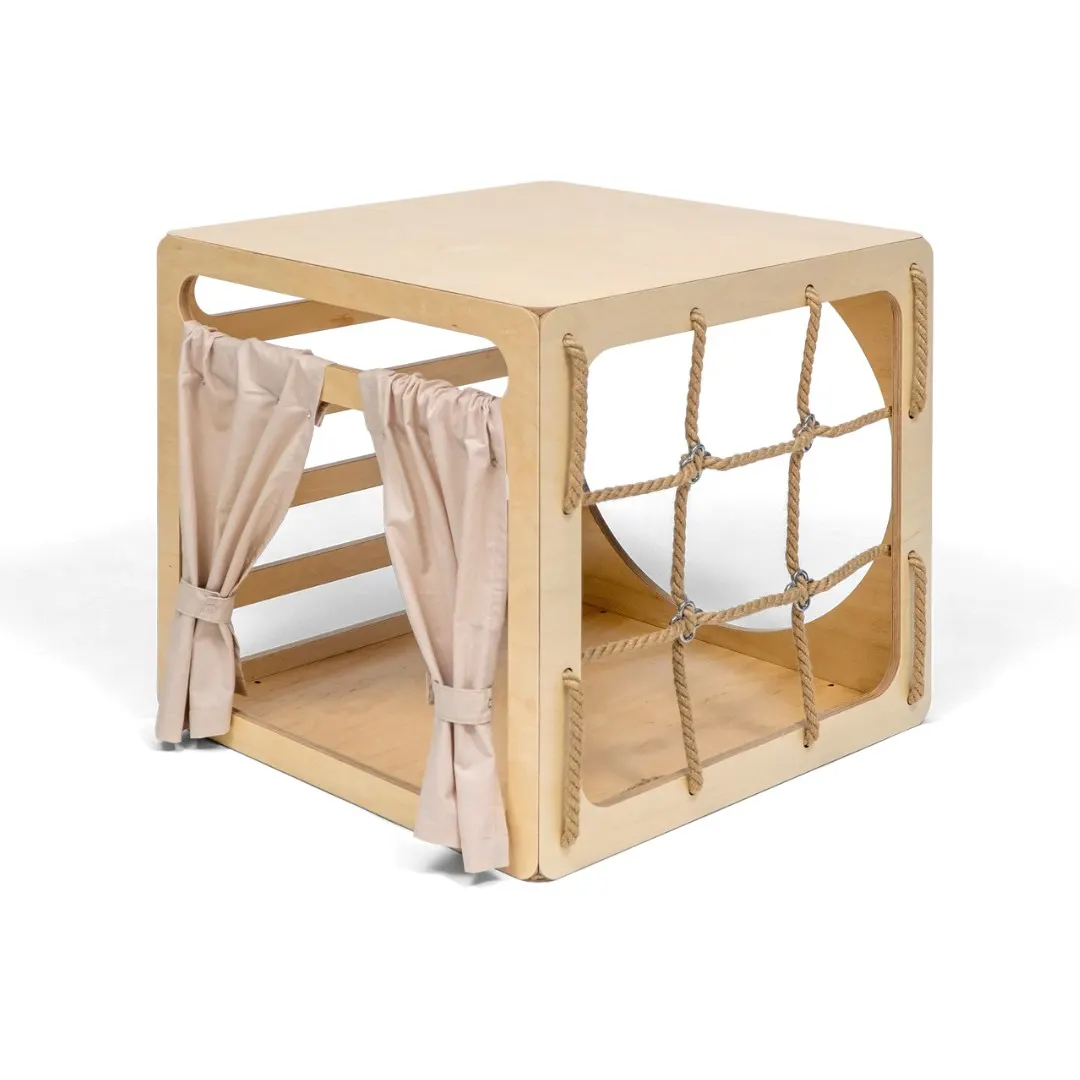
Frame and cube can be joined. The separate Ette Tete ramp fixes to the rungs with four straps with rings, and according to the maker each frame can take two ramps, one on each side. With a ramp you can join two frames, or a frame and the cube, into a larger play area.
When there is no floor space: wall bars
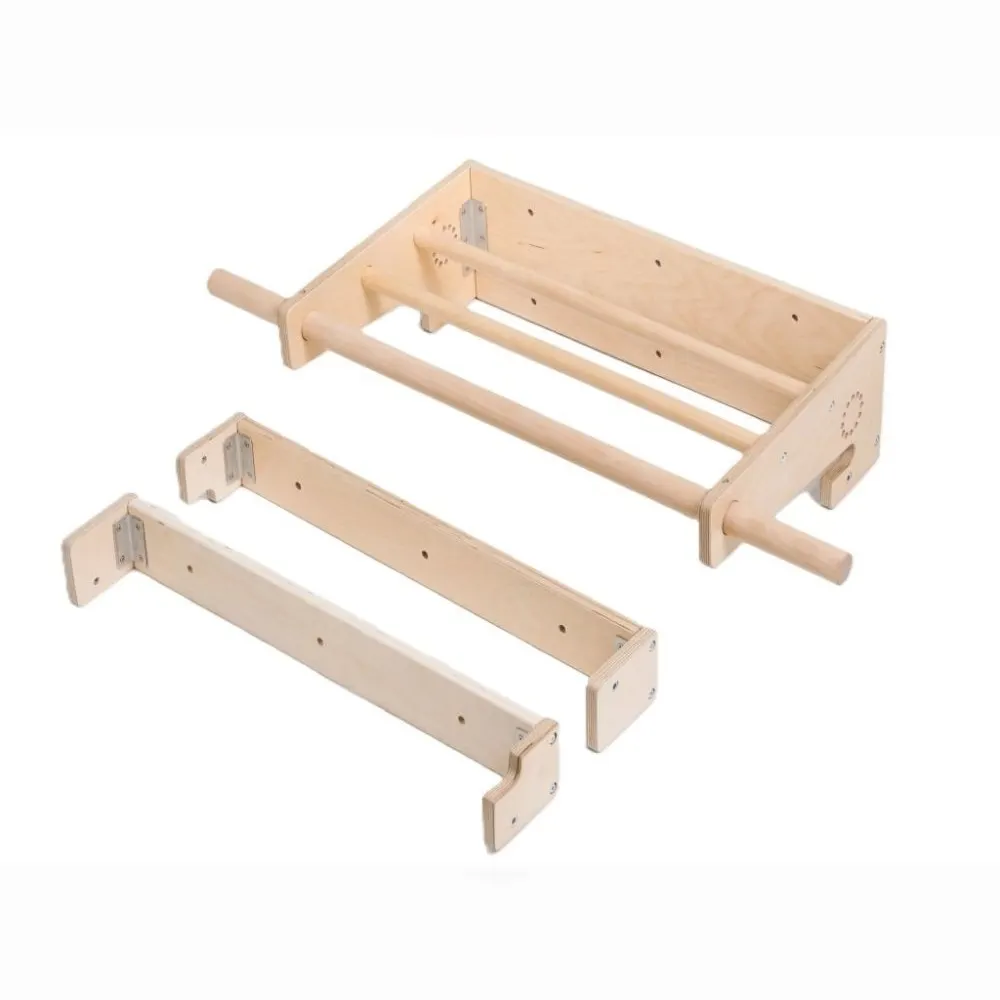
In a small flat it is usually floor space that runs out, not height. The wall-mounted bars with a pull-up bar from the Elis VARIO set fix to the wall and can be used on their own: the child grips the bar, pulls up and tries out what they can already do. They are also the part that lets the VARIO triangles be fixed to the wall. Wall plugs and fixings are not included, because they depend on the wall, and the maker recommends asking a professional about them. The maker recommends them from one year, always with adult supervision.
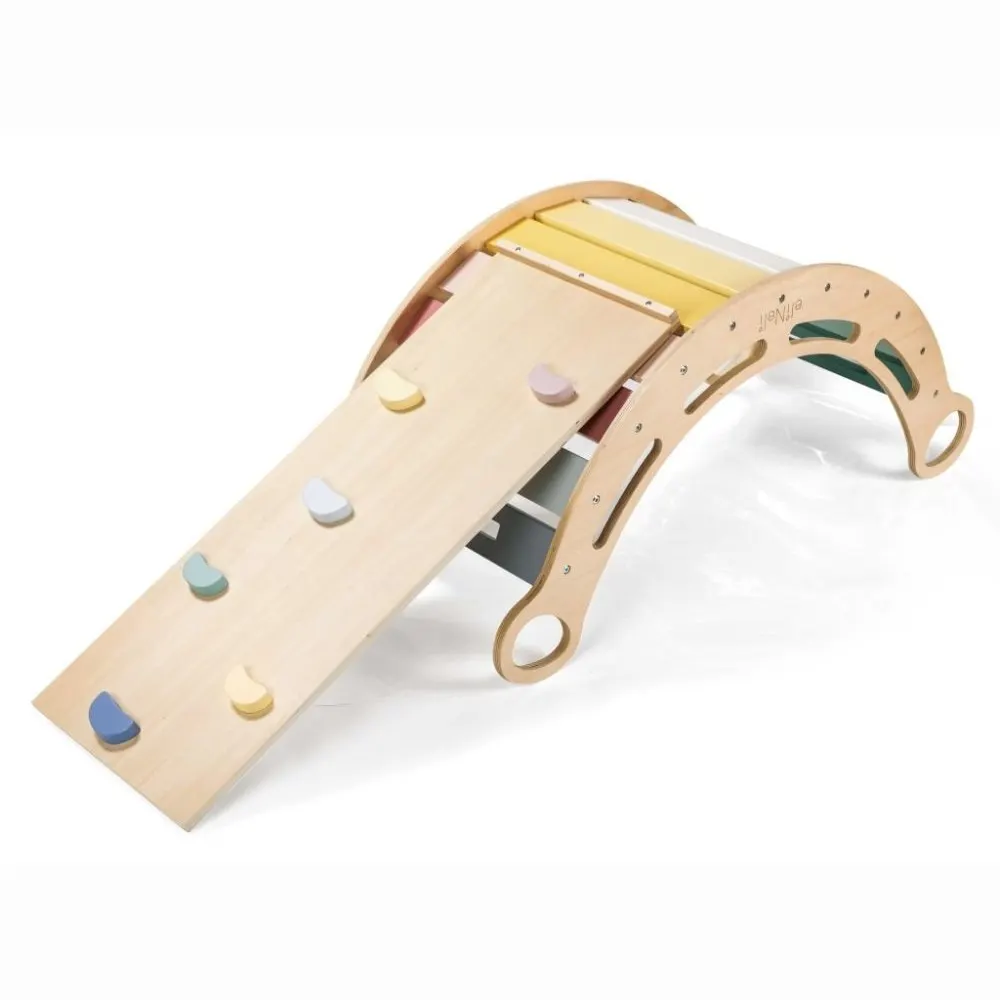
If there is floor space for one more piece, a rocker offers a different movement. The child rocks on it, climbs over it, hides in it or makes a bridge from it with the board. For this rocker from the eliNeli brand the maker states a load capacity of 110 kilograms, and the set includes a double-sided board and a child's chair.
What goes under the frame
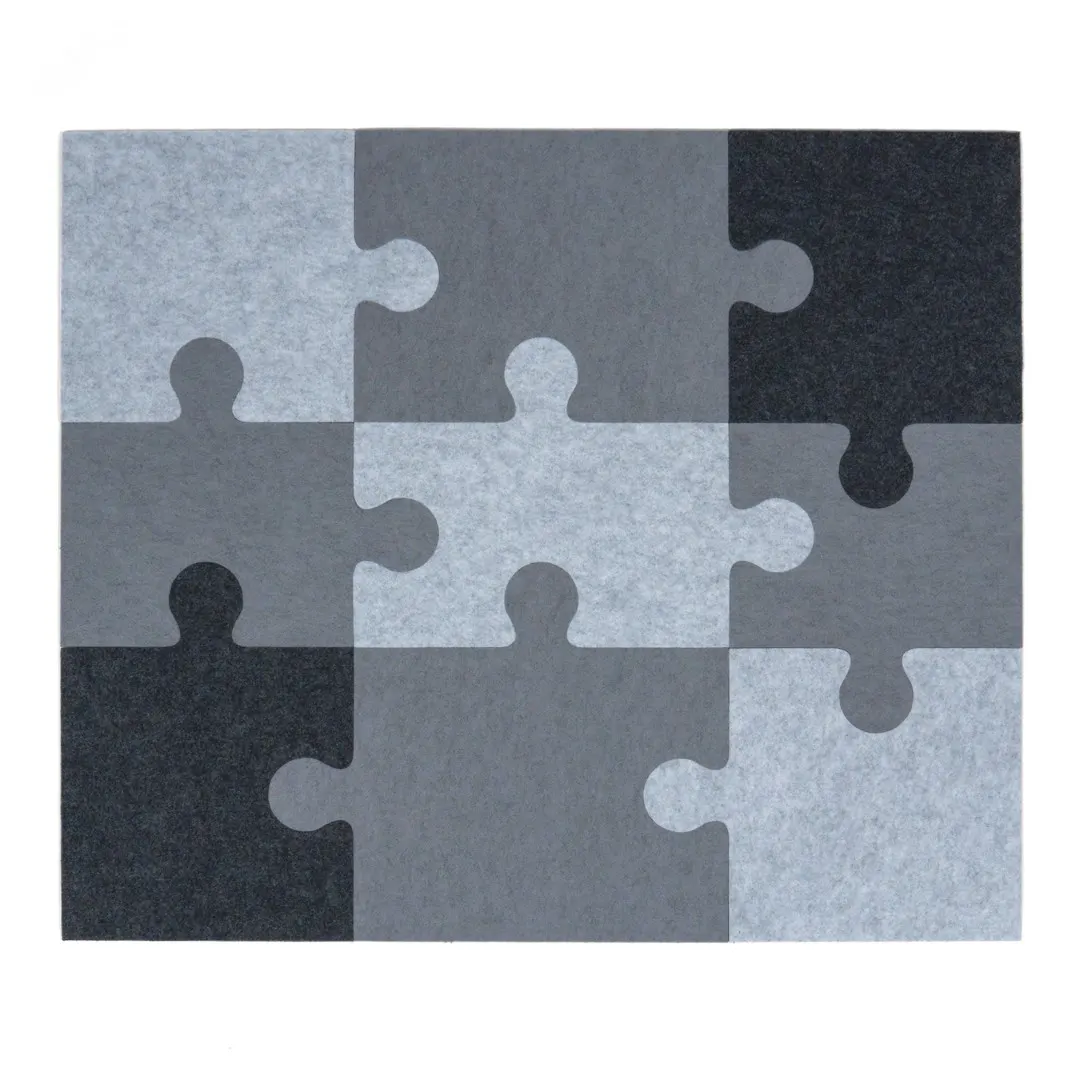
In the instructions for its frames and cube, Ette Tete says they belong on a level surface with free space around them, not on concrete or another hard surface. At home a rug or a mat is one way to manage this, but the maker does not say they protect in a fall. The felt mat from the same maker has nine pieces, 90 × 76 centimetres in all, and is 7.5 millimetres thick with a soft top layer. The maker makes it to fit its own frames, so it may not suit climbing frames from other brands. It can be wiped with a damp cloth or vacuumed.
When and how to start
For every climbing frame in this article the makers recommend a minimum age of 12 months or one year. That is a lower limit, not an invitation. We suggest a frame once your child crawls and pulls themselves up to standing on their own, not earlier. In the first weeks a low shape is enough: a frame at a gentle slope, a cube without a ramp. Only change the height and slope once your child manages the low shape without hesitating.
A few weeks later the cushions are back on the sofa. In the morning your child walks past the dining chair straight to the frame, climbs to the top, sits there for a while and slides down the ramp. “Get down” all but disappears from the morning. Climbing frames, triangles and wall bars are together in the category Learning Towers, Pikler & Climbing.
Faborino Journal
We will send you the next article by email
First four short letters for your child’s age, then new articles from the Journal once a month.
We will send you the Faborino Journal from STENVARD s. r. o.: after you confirm, four short letters with tips for your child’s age, then once a month new articles and a selection of materials. You can unsubscribe at any time with one click in every email. More in our privacy policy.