In the bottom drawer of Grandma's sitting room there is a box of wooden blocks. The edges have been rounded by three generations of hands, the paint has worn off at the corners and one block still carries tooth marks. A grandchild tips them out onto the rug and before long is building the same thing their father built thirty years ago.
Wood on its own is no guarantee. A wooden toy can be made so that it comes unglued, splinters or stops being any use within a month. You can spot the ones that last by a few things a shop photo often does not show. We will show them on the material we know best: Montessori material.
In Montessori material, the wood tells you something
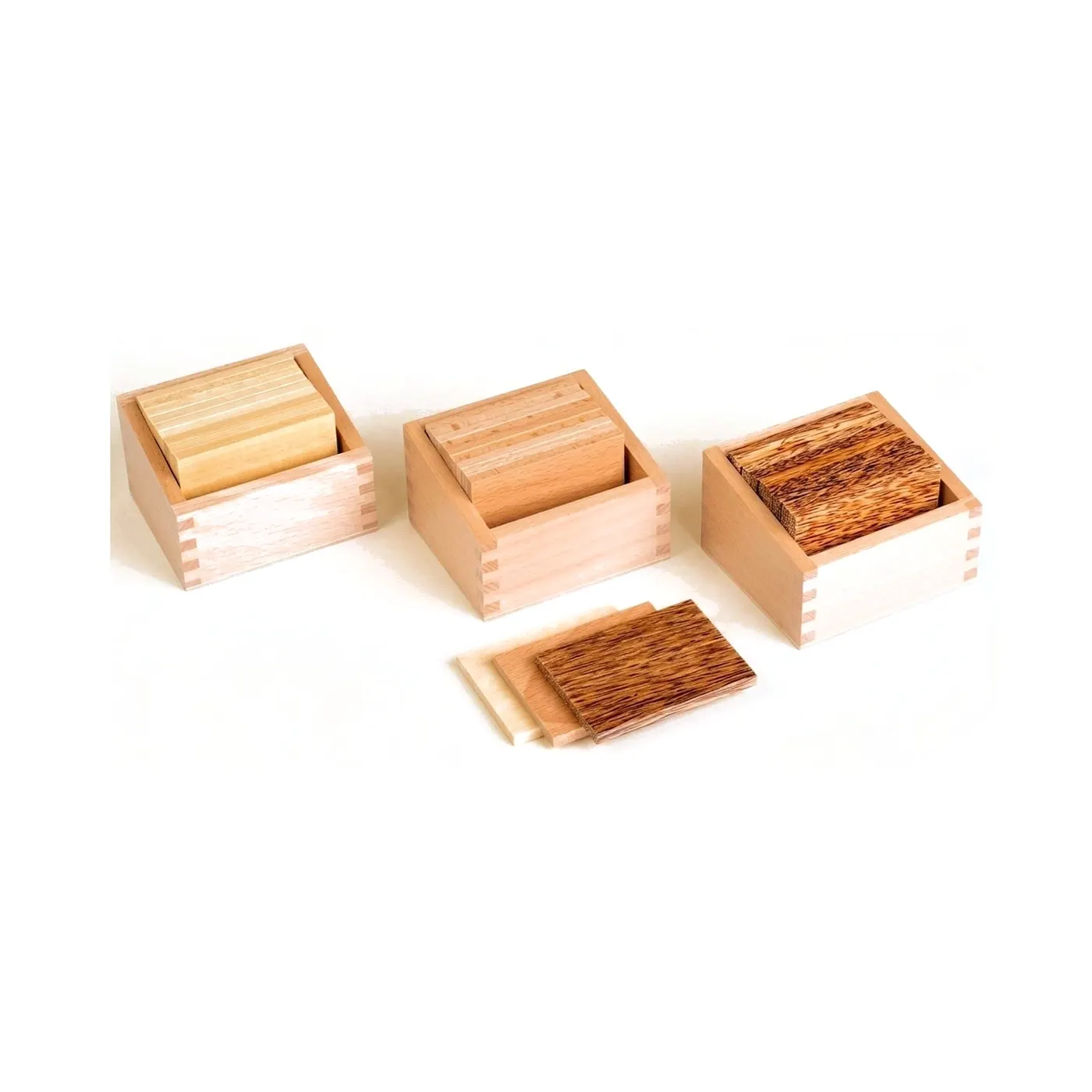
In her handbook of 1914, Maria Montessori described a set of small tablets. They are all the same size, but they are made of different kinds of wood, so they differ in weight and in colour. Blindfolded, the child weighs them on their fingertips and sorts them into heavier and lighter. When the blindfold comes off, the colour of the wood shows whether they got it wrong.
„The tablets, though of identical size, are made of wood of varying qualities, so that they differ in weight and, through the property of the wood, in color also.“
Here the wood is not decoration. It is information: weight, colour and surface that the child feels in their hand. The Nienhuis baric tablets are built on exactly that: three boxes of ten tablets in wood of three densities, from the lightest and palest to the darkest and heaviest.
What to look at when choosing
With a wooden toy it is not only what it is made of that matters, but how it is made. It helps to look at five things and, for each, to read what the maker says on the product page and the packaging.
When a cube goes missing
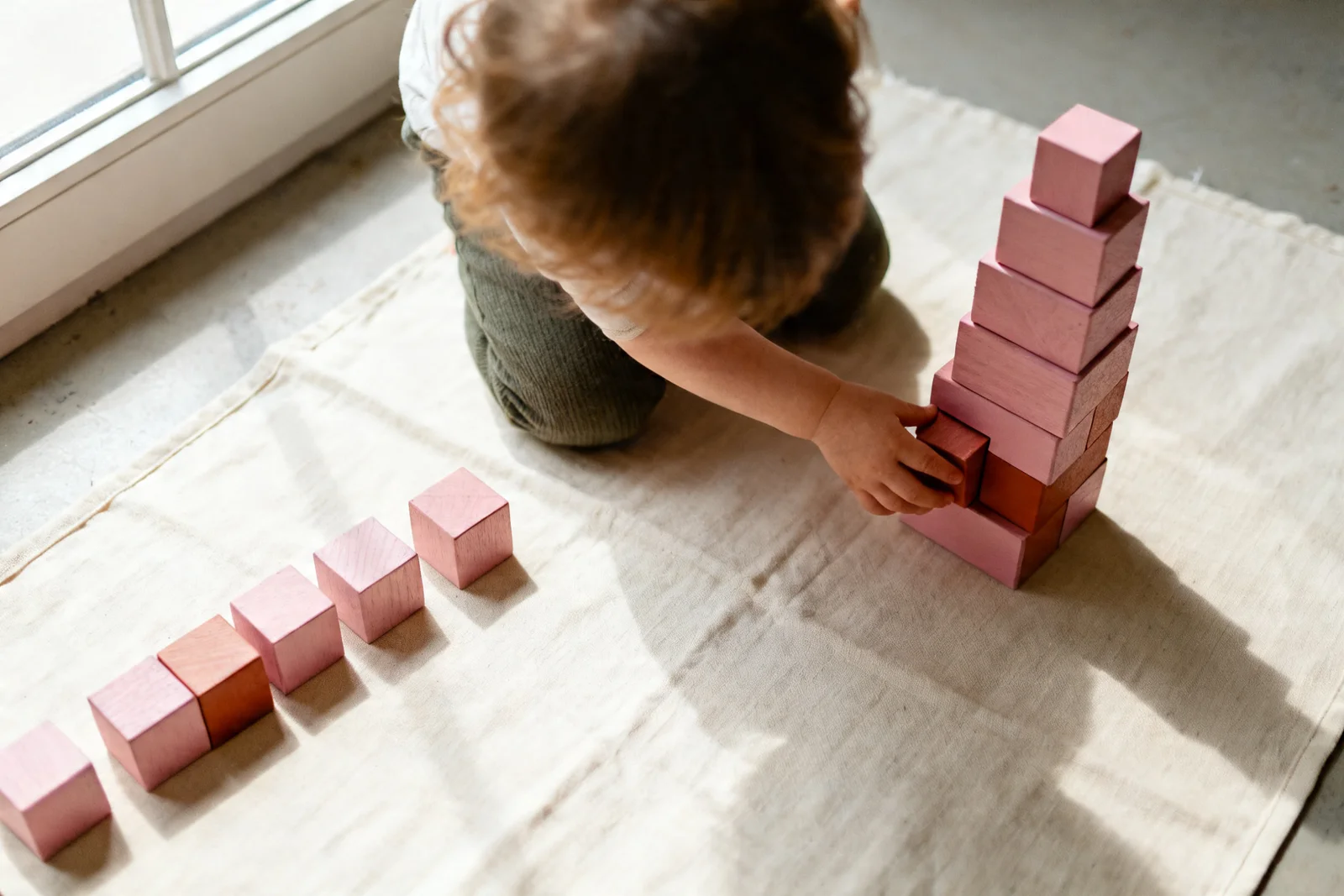
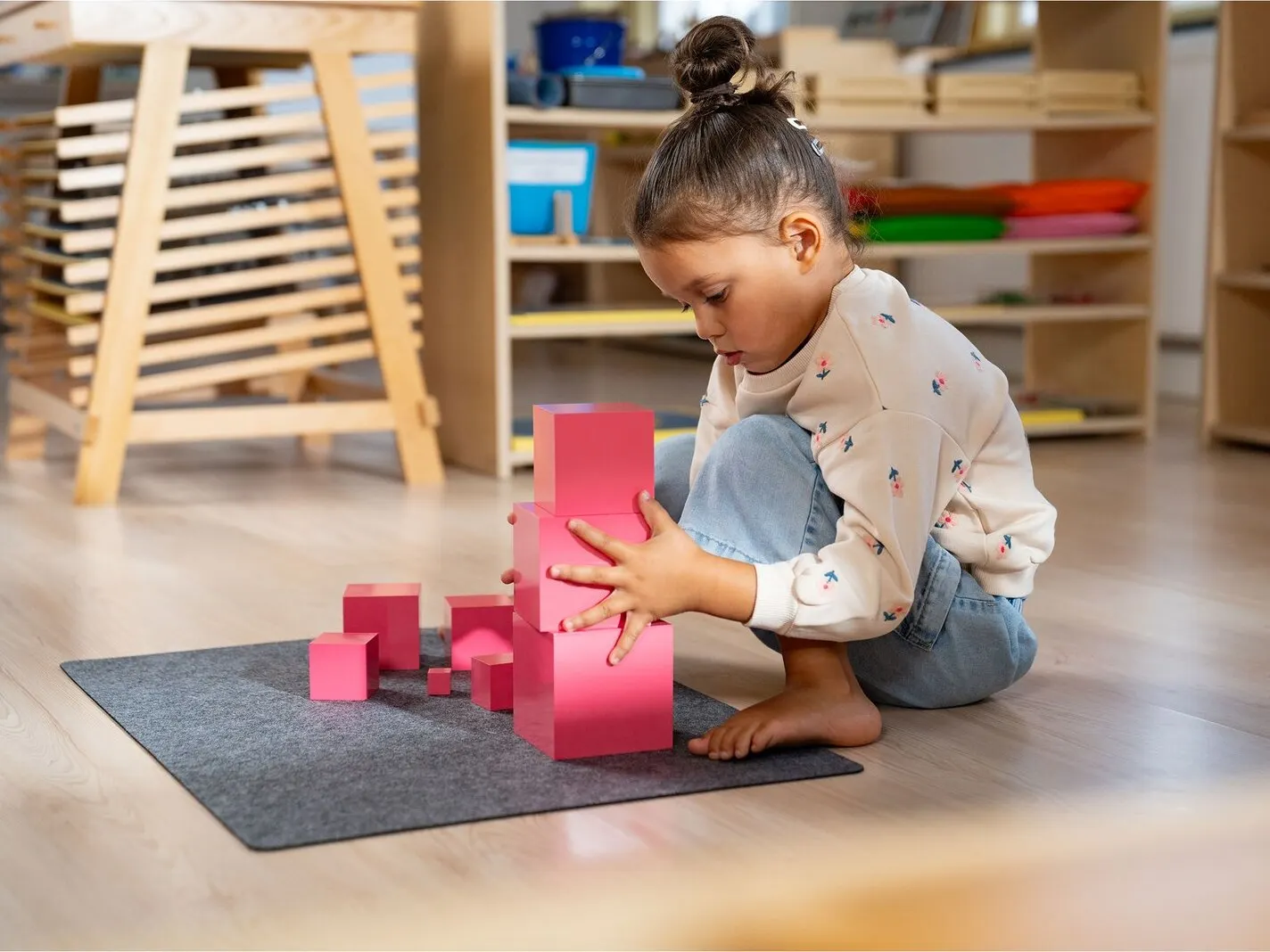
The pink tower has ten cubes with edges from one to ten centimetres. Each is one centimetre bigger than the one before, and that is the whole point: with one missing, the tower is just a pile of cubes. The smallest fit in a child's palm and roll under the shelf with ease.
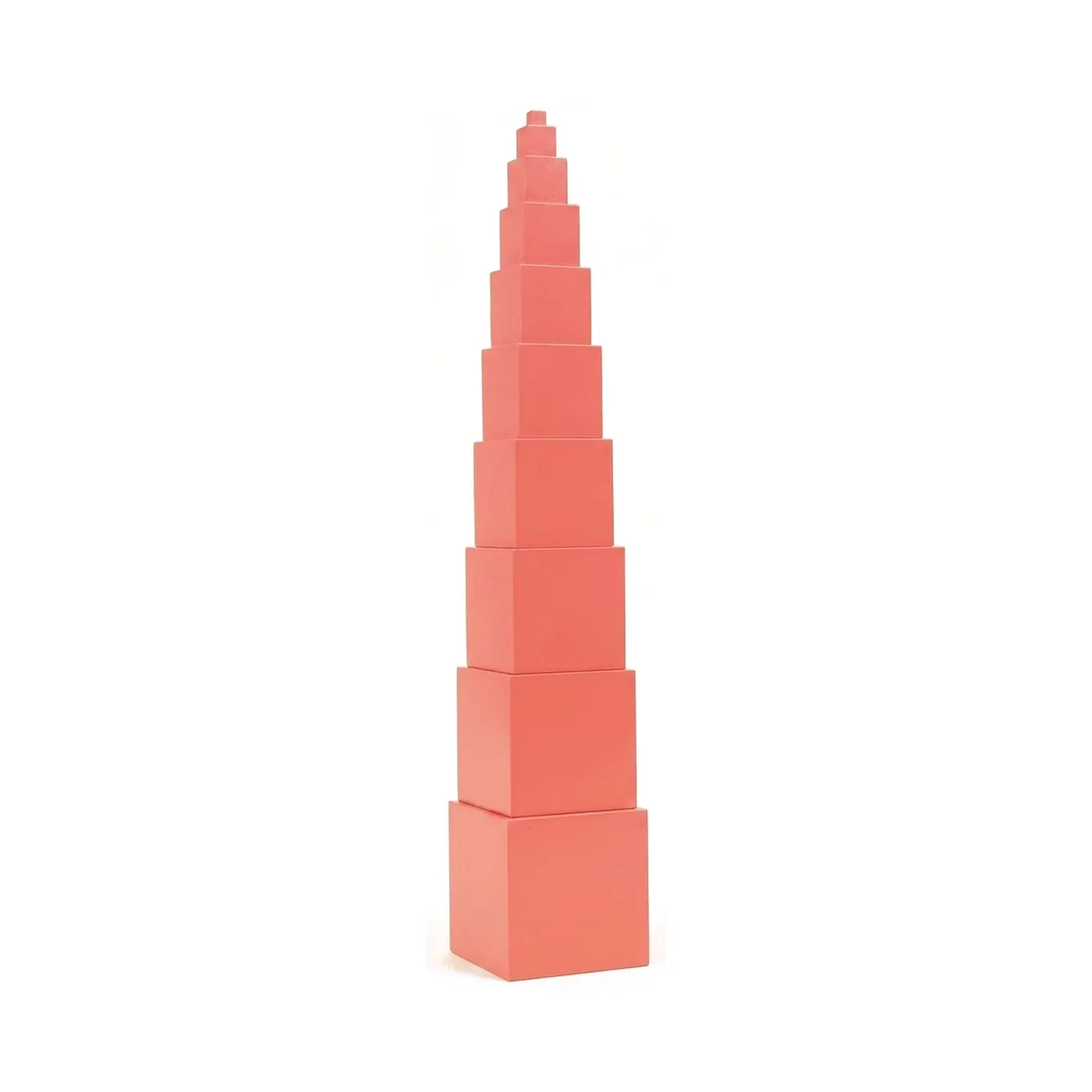
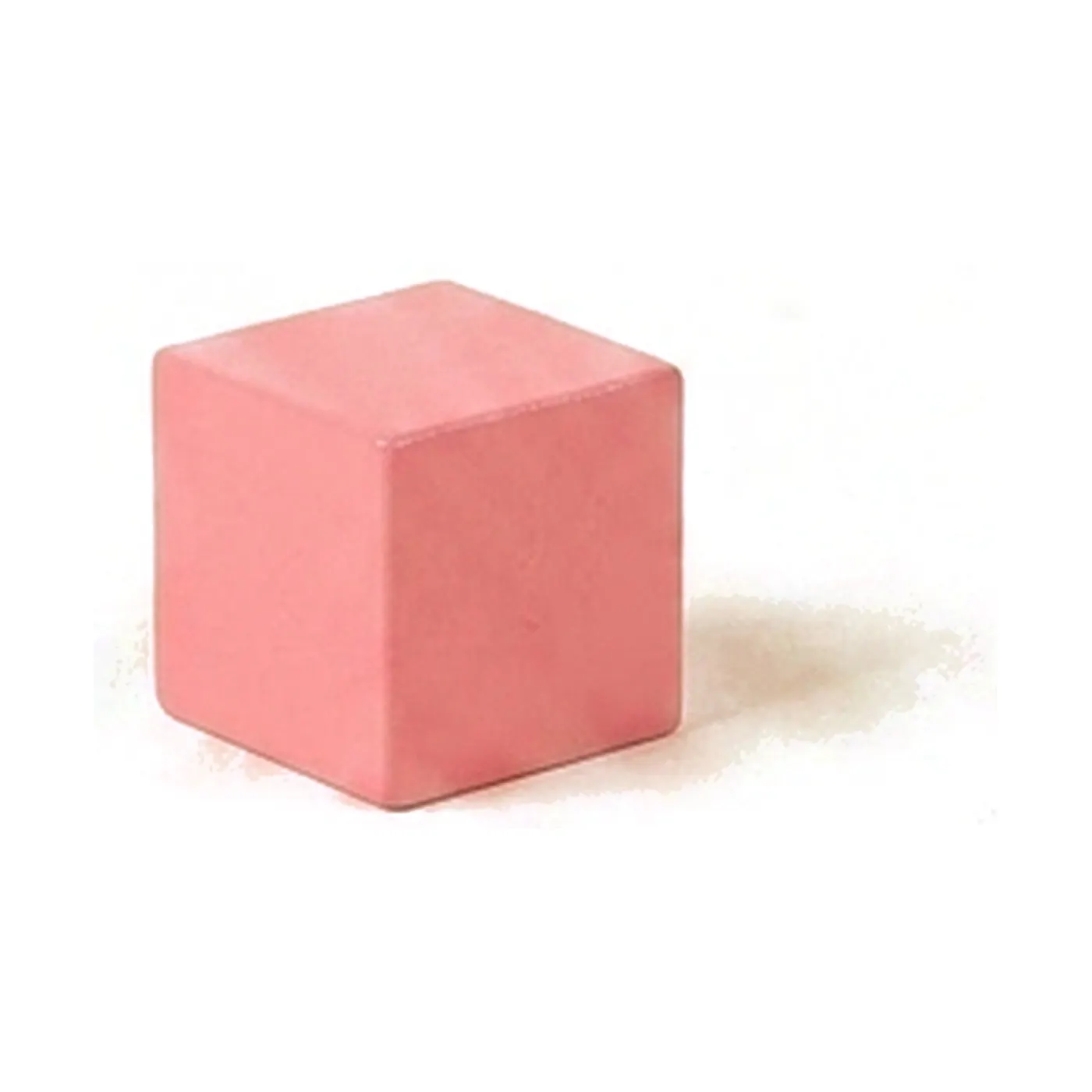
For the Nienhuis pink tower we stock, you can therefore buy the smallest cubes (1, 2 and 3 cm) on their own as well. A lost two-centimetre cube then means one cube, not a new tower. How the tower is used and why nearly every classroom starts with it is in our article on the pink tower.
For the youngest: one thing, one task
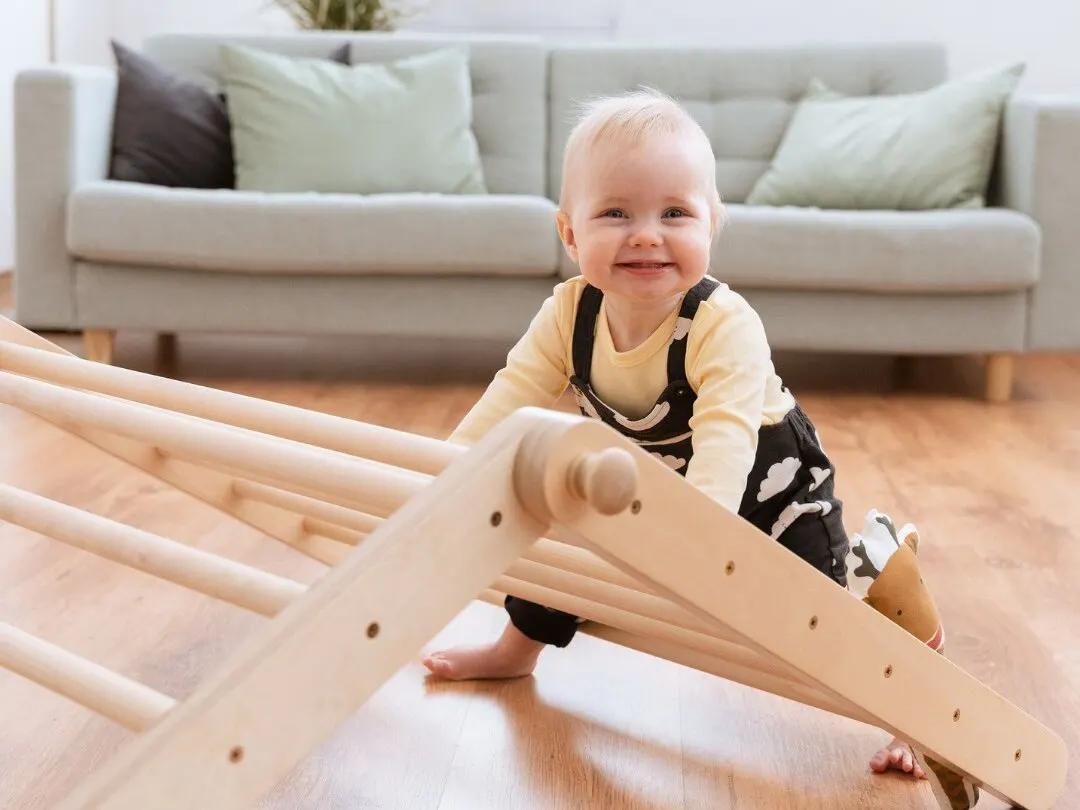
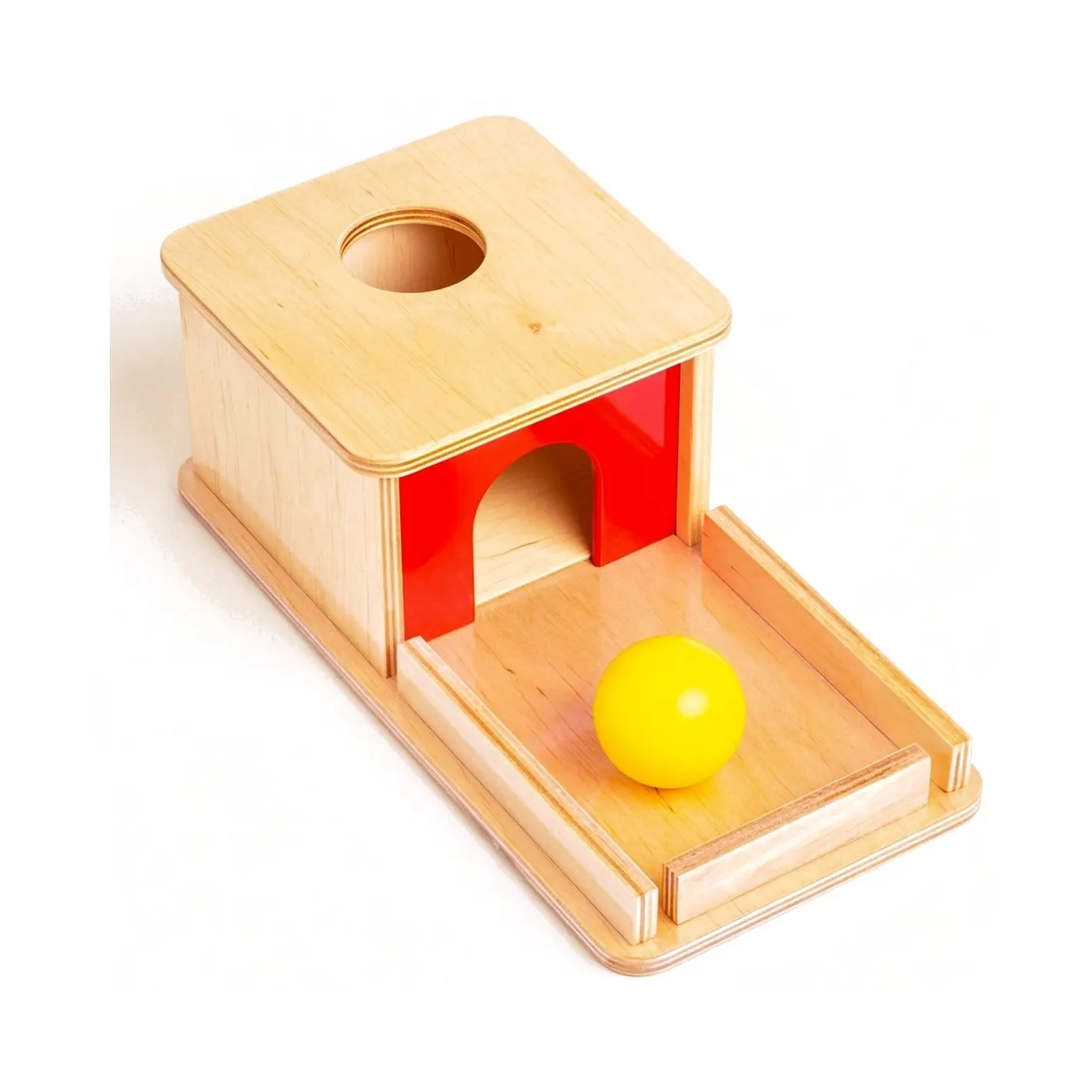
With babies and toddlers, wood works best when the toy is simple and does one thing. The object permanence box has a hole in the top: the ball drops in, disappears and a moment later rolls out onto the tray. The stacking dowel with three cubes and a ball is a task with a clear end, once everything is on the dowel. The recommended age is on the product page: 6 to 18 months for the box, 12 to 36 months for the dowel.
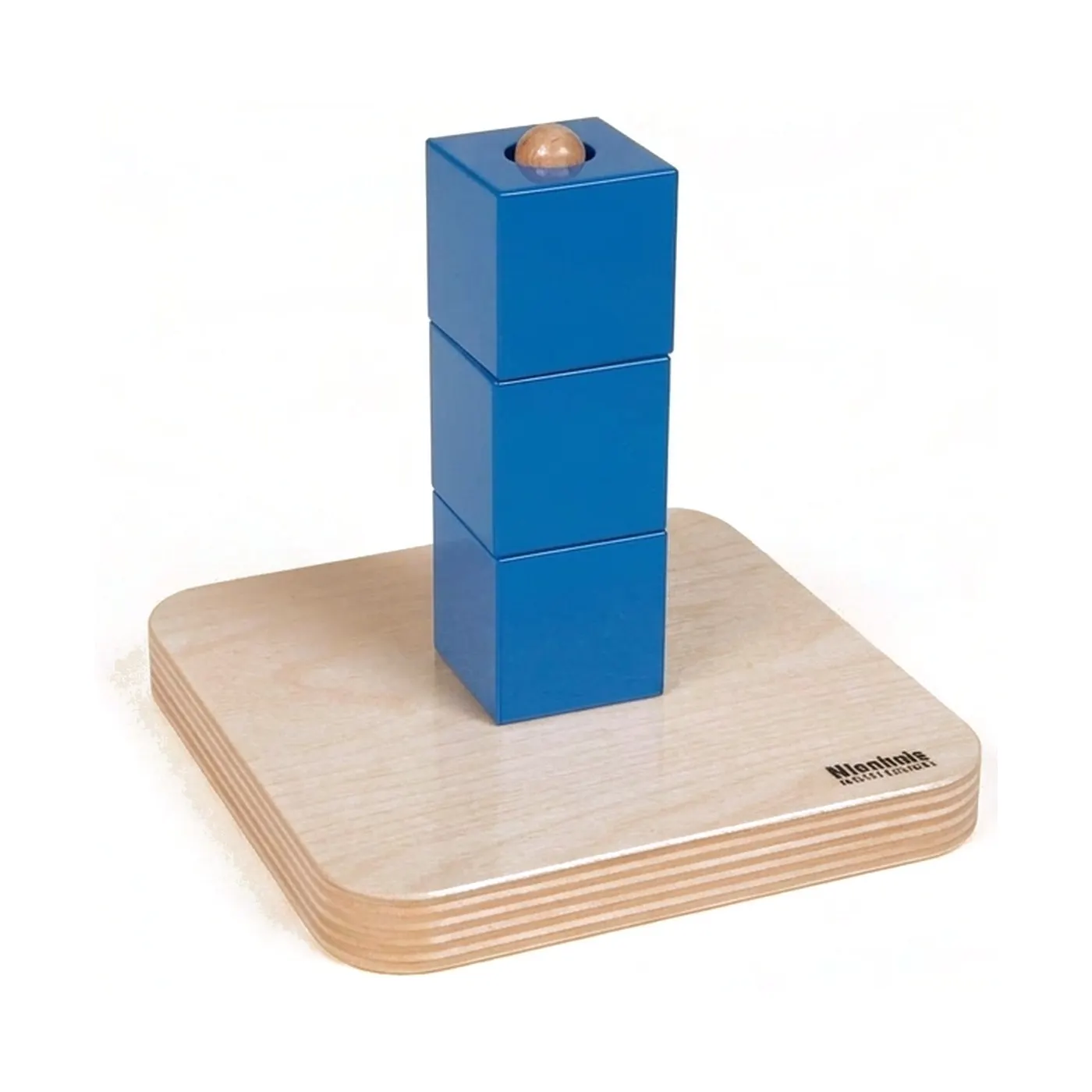
More ideas for every age are in our article Montessori toys by age.
Care: a damp cloth, not the bath
For most of the Nienhuis wooden materials we stock, the care note says the same thing: wipe with a slightly damp cloth and dry straight away. Wood soaks up water and swells, so do not soak it and do not dry it on a radiator. A few also say to keep them somewhere dry and out of direct sun, because sunlight changes the colour of wood and paint.
A worn corner or a darker patch from hands is not a fault. It shows the thing is being used. If a splinter or flaking paint appears, though, put the toy aside and check whether the part can be replaced.
Fewer things, more time with each
A wooden toy lasts for years partly because you do not need ten of them at home. A few things on a shelf that the child can see and reach are enough. When they lose interest in one, put it away and swap it for another. How to set up such a shelf is in our article Montessori at home.
In thirty years this cube will have rounded edges and worn corners too. Someone will tip it out onto the rug and start building. That is exactly what a wooden toy is for: to be handed on from one child to the next.
Faborino Journal
We will send you the next article by email
First four short letters for your child’s age, then new articles from the Journal once a month.
We will send you the Faborino Journal from STENVARD s. r. o.: after you confirm, four short letters with tips for your child’s age, then once a month new articles and a selection of materials. You can unsubscribe at any time with one click in every email. More in our privacy policy.