What Are Montessori Materials — And Why Aren't They Just Toys?
Walk into any Montessori classroom and the first thing you notice is the materials. Not plastic bins of random toys, but carefully arranged wooden objects on low shelves — each with a specific purpose, a specific order, and an invitation to be touched. These are Montessori materials: precision-engineered learning tools developed over more than a century of observation of how children actually learn.
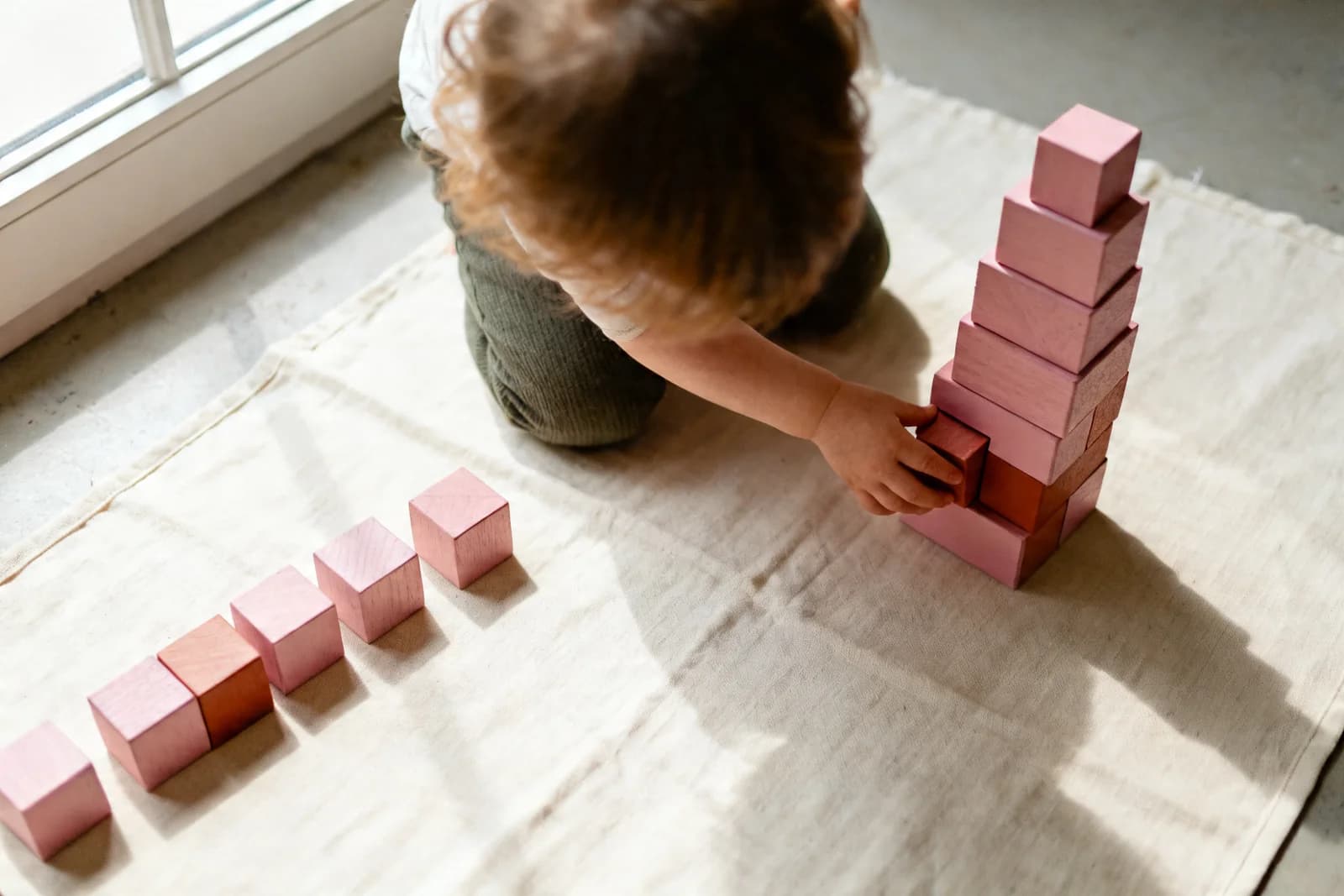
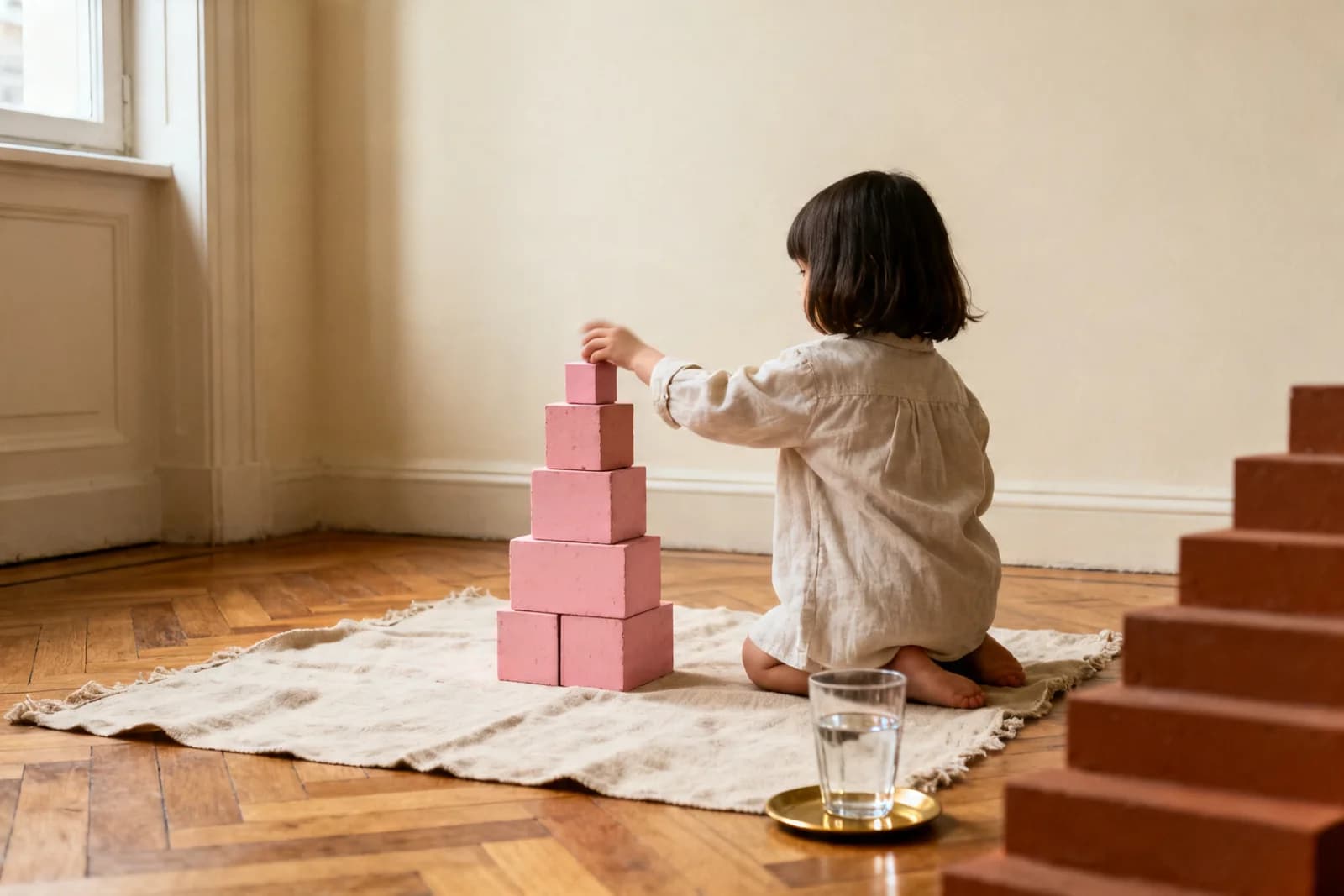
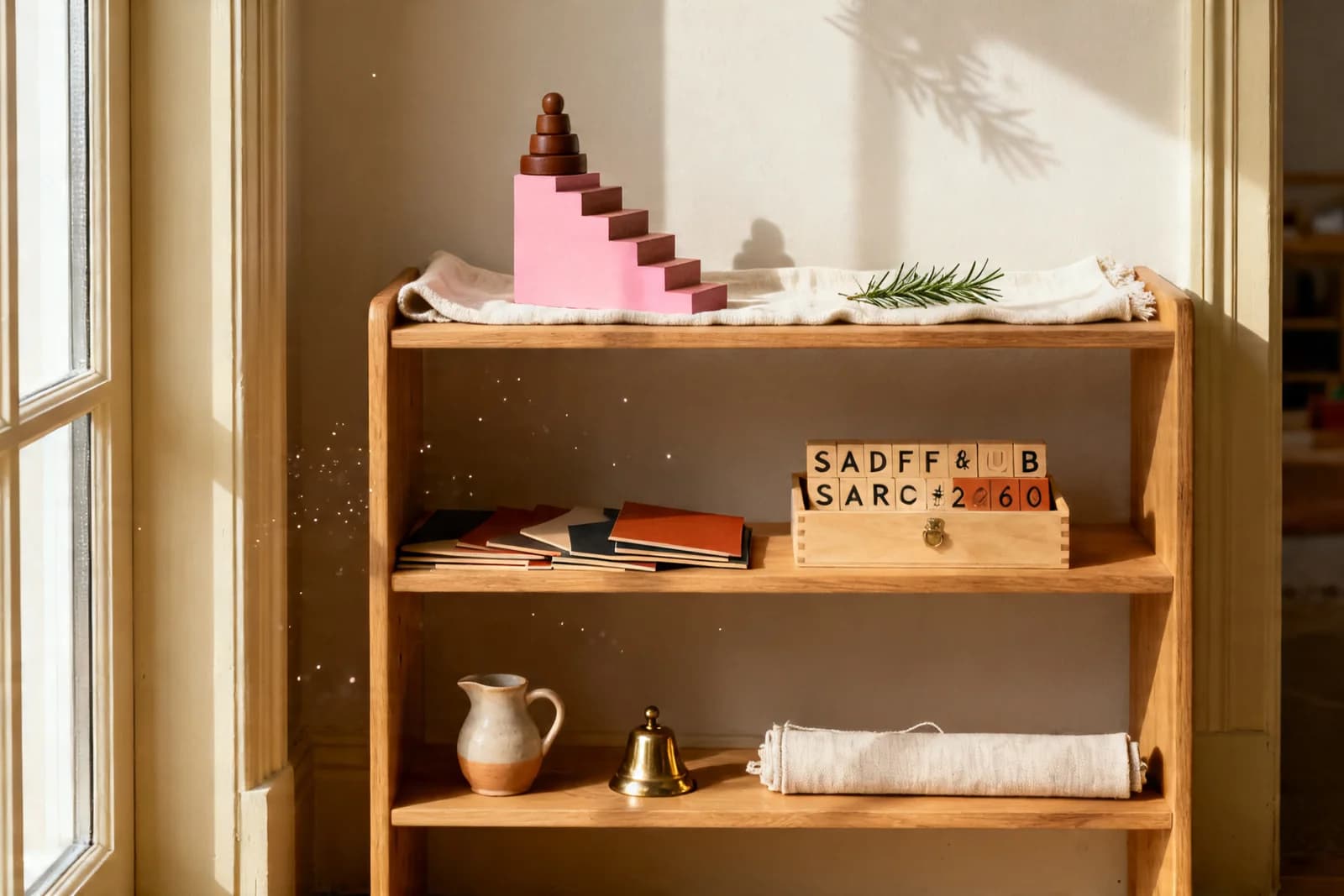
Maria Montessori didn't design toys. She designed what she called materialised abstractions — physical objects that make invisible concepts tangible. A child holding the Pink Tower isn't just stacking blocks. They're internalising the concept of dimension, experiencing the mathematical relationship between cubes whose sides increase by exactly one centimetre, and developing the fine motor control needed for writing — all without a single worksheet.
This distinction matters more today than ever. The term "Montessori" isn't trademarked. Anyone can slap it on a product. Amazon lists thousands of items as "Montessori toys" — most of which Maria Montessori would not have recognised. Understanding what makes authentic Montessori materials different is the first step toward creating an environment where your child can truly thrive.
The Five Curriculum Areas: A Map of Montessori Materials
Every Montessori classroom — whether at home or in a school — is organised into five distinct curriculum areas. Each area contains materials that build upon each other in a precise developmental sequence. This isn't arbitrary: it's based on more than a century of observation of children's sensitive periods — windows of intense interest during which specific types of learning happen almost effortlessly.
Practical Life is where every child begins. These materials — dressing frames, pouring sets, food preparation tools, cleaning equipment — teach the fundamental movements of daily living. A child practising buttoning on a wooden frame isn't just learning to dress themselves. They're developing the pincer grip, bilateral coordination, concentration, and sequential thinking that underpin all later academic work. Practical Life is the foundation on which everything else is built.
Sensorial materials isolate specific qualities — dimension, colour, weight, sound, texture, temperature, shape — so children can perceive, name, and classify the world around them. The Cylinder Blocks train visual discrimination of diameter and height. The Colour Tablets progress from matching primary colours to grading 63 shades. The Geometric Solids introduce three-dimensional forms through touch before children encounter them abstractly in mathematics.
Language materials follow a phonetic progression from individual letter sounds to reading and writing. The Sandpaper Letters engage the tactile sense — children trace each letter while saying its sound, creating a multisensory memory. The Movable Alphabet allows children to compose words before their hand is ready to write. Metal Insets develop the precise pencil control needed for handwriting.
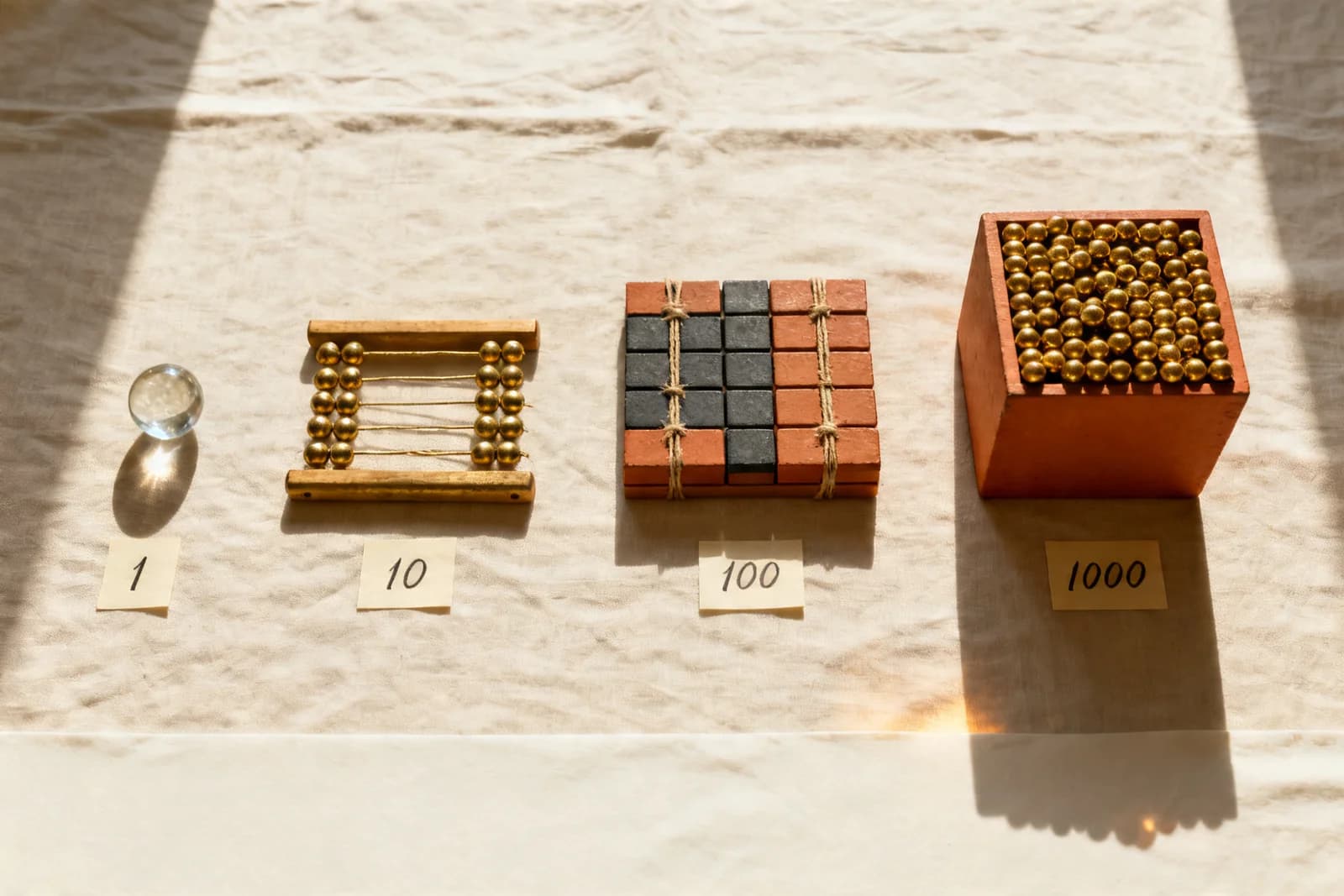
Mathematics in Montessori is concrete before it becomes abstract. The Golden Bead Material makes the decimal system tangible: one golden bead is a unit, a bar of ten beads is a ten, a square of 100 beads is a hundred, and a cube of 1000 beads is a thousand. Children physically exchange ten unit beads for one ten-bar when adding — they're not memorising algorithms, they're understanding place value through their hands.
Cultural studies — geography, science, history, art, music — use materials like Puzzle Maps (where each country or region lifts out by a small knob), Botany and Zoology puzzles that name the parts of plants and animals, and Timeline materials that give children a physical sense of historical time. These materials connect children to the wider world and cultivate what Montessori called cosmic education — an understanding of how everything in the universe is interconnected.
Authentic vs. Imitation: How to Tell the Difference
The difference between authentic Montessori materials and mass-produced imitations isn't just branding — it's in the engineering. Authentic materials from manufacturers like Nienhuis Montessori (our primary supplier, working in direct collaboration with AMI since the 1920s) are designed with what Montessori called control of error built in. The Pink Tower cubes are precisely manufactured so that a child can see immediately if they've placed a larger cube on top of a smaller one. The Cylinder Blocks have exactly the right tolerances — tight enough to require precision, loose enough not to frustrate.
Imitations often miss these crucial details. Wooden letters that are too thick to distinguish by touch. Colour tablets where the shades don't differ enough to grade. Bead materials where the beads aren't precisely uniform. These aren't just aesthetic differences — they undermine the material's pedagogical purpose. A child working with imprecise materials doesn't get the clear feedback that drives independent learning.
When choosing materials, look for these markers of authenticity: precision manufacturing with tight tolerances, natural materials (solid hardwood, glass beads, metal), isolation of one quality at a time (a material teaches one concept, not five), and — most importantly — a manufacturer's connection to the AMI (Association Montessori Internationale) tradition.
Montessori Materials by Age: What Belongs When
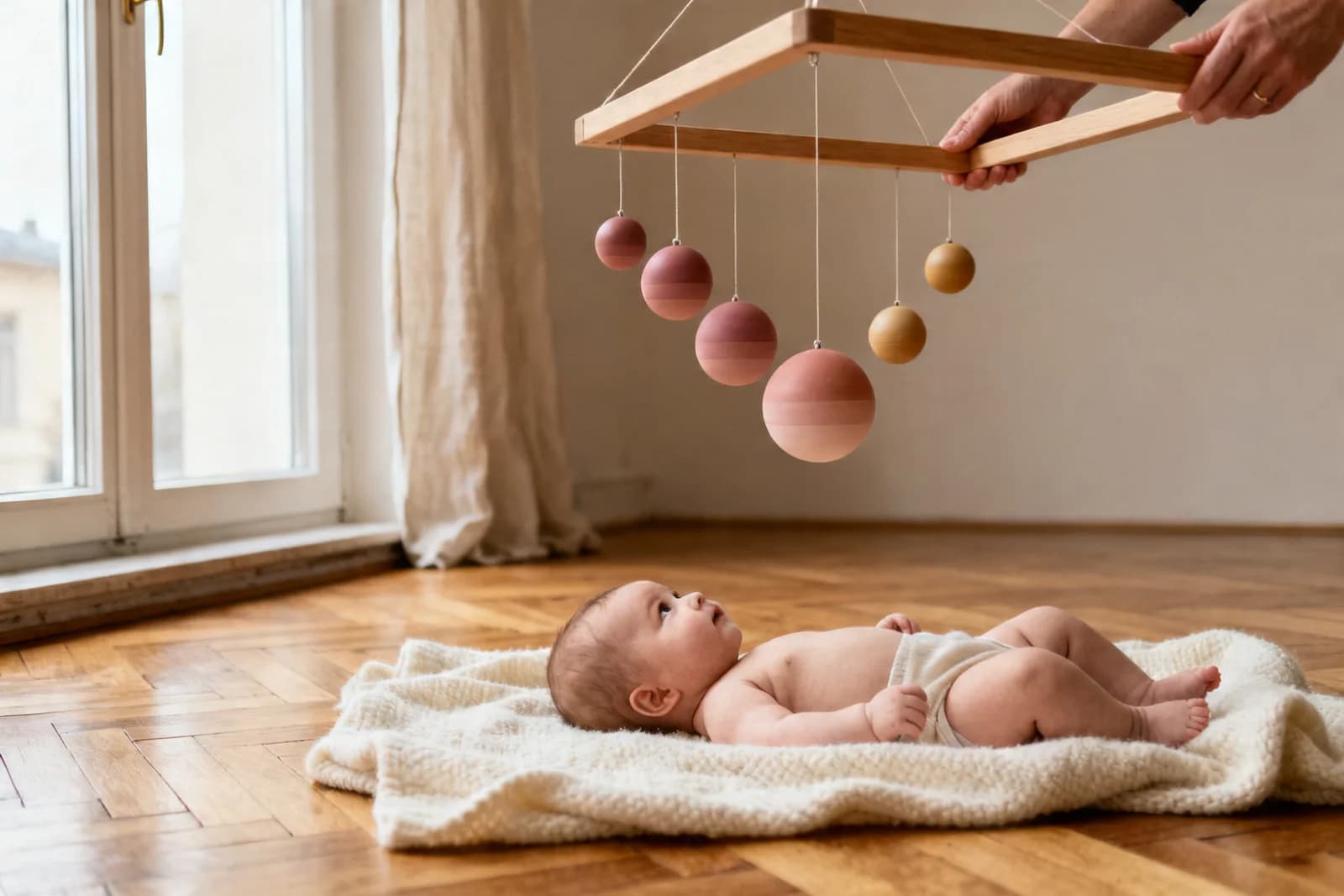
0–3 years (Infant and Toddler): Practical Life materials dominate this period. Object permanence boxes, stacking rings, simple shape sorters, and first pouring exercises. Sensorial exploration through tactile materials, sound cylinders, and simple colour matching. The emphasis is on gross and fine motor development, hand-eye coordination, and developing concentration.
3–6 years (Primary / Casa dei Bambini): This is the golden age of Montessori materials. All five curriculum areas are active. Children progress through the Sensorial materials (Pink Tower, Brown Stair, Red Rods, Colour Tablets, Geometric Cabinet), begin the Language sequence (Sandpaper Letters → Movable Alphabet → reading), enter Mathematics (Number Rods → Spindle Boxes → Golden Bead Material → Stamp Game), expand Practical Life complexity, and explore Cultural materials.
6–12 years (Elementary): Materials become more abstract and research-oriented. The Bead Frame replaces the Golden Bead Material for larger calculations. Grammar materials (Grammar Symbols, Sentence Analysis) deepen language understanding. The Timeline of Life, Great Lessons materials, and advanced Geography work expand the child's understanding of their place in the cosmos.
Setting Up a Montessori Environment at Home
You don't need a full classroom to bring Montessori materials into your home. Start with Practical Life — these use everyday objects and cost almost nothing. A child-sized pitcher for pouring water. A small broom and dustpan. Real kitchen utensils for food preparation. The key is accessibility: materials should be on low, open shelves where your child can choose independently.
When you're ready to add manufactured materials, begin with one or two from each area rather than trying to replicate a full classroom. A set of Cylinder Blocks and the Pink Tower from Sensorial. Sandpaper Letters and the Movable Alphabet from Language. The Golden Bead Material from Mathematics. Each of these will serve your child for months or years — authentic Montessori materials are designed for deep, repeated engagement, not novelty.
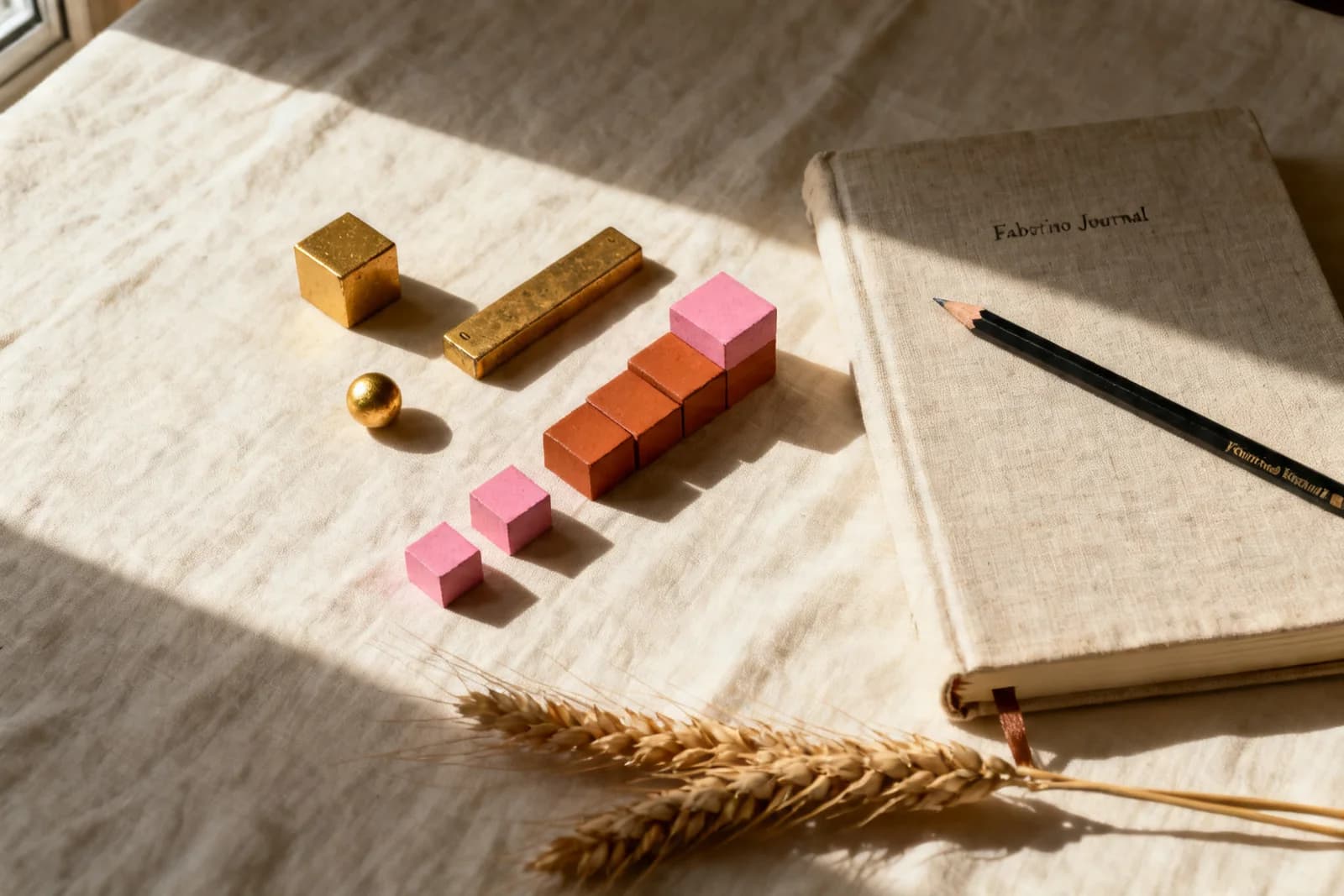
At Faborino, every product in our catalogue is sourced directly from Nienhuis, GAM, and Educo — manufacturers with decades of experience producing materials that meet the exacting standards of AMI-trained educators. We believe that children deserve the real thing, not approximations. Browse our complete collection of Montessori materials and discover the difference that authentic quality makes.
“The hands are the instruments of man's intelligence.”
Maria Montessori, The Absorbent Mind